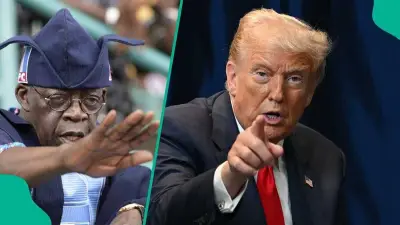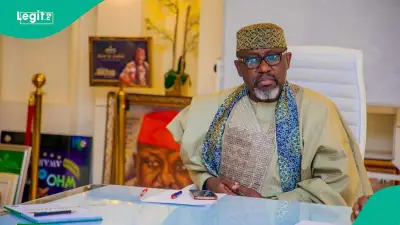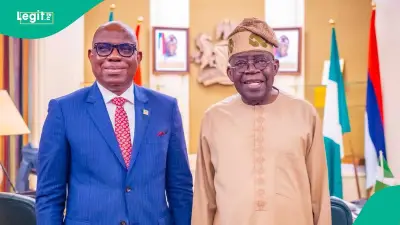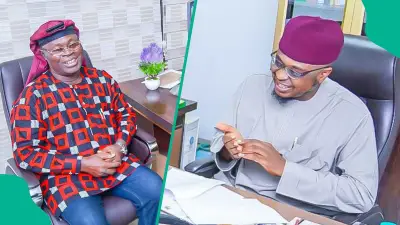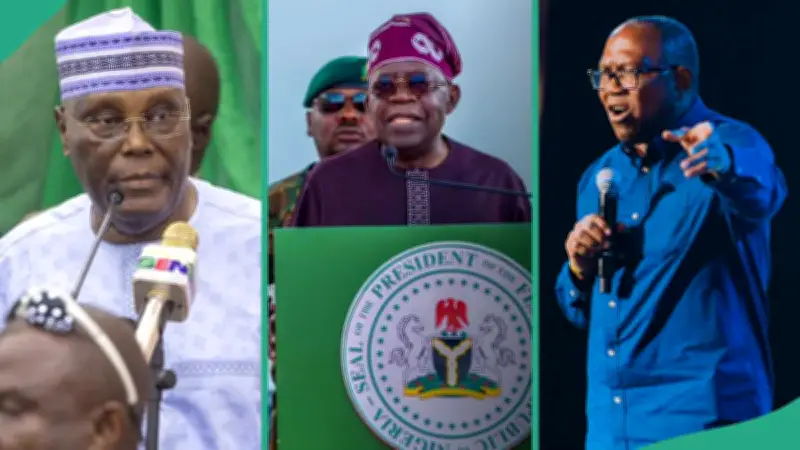
Peter Obi, the presidential candidate of the Nigeria Democratic Party (NDC), formally launched his 2027 presidential campaign on Friday, August 21, at a press conference held at his Onitsha residence, challenging President Bola Tinubu, Atiku Abubakar and other rivals to defend their records publicly before Nigerian voters.
Obi declared that no candidate seeking the presidency should shelter behind "the high walls of power or rely on proxies and surrogates" during the campaign period, insisting that all aspirants must face citizens directly to justify their bid for the country's highest office.
Obi and Kwankwaso to Campaign Personally Across Nigeria
The former Anambra State governor, who is running alongside Senator Rabiu Kwankwaso as his deputy, said both men would personally carry their message to Nigerians in every part of the country, pledging to listen to citizens and engage them openly rather than delegate that responsibility to others.
Obi described the 2027 election as a critical moment for voters to weigh the records, ideas and proposals of all candidates against what he called "grave economic and security challenges." His central message was that "Nigeria can work, and Nigeria must work."
Obi's Assessment of Nigeria's Challenges
Obi named poverty, food insecurity, internal displacement, unemployment, poor infrastructure, unreliable electricity, insecurity and the high cost of doing business as the most pressing problems facing the country. He argued that Nigeria still held the people, resources, talent and market capacity needed to build a strong economy.
On the economy, Obi said his administration would move Nigeria away from being heavily consumption-driven towards a model built on production, investment, enterprise and human-capital development. He added that every naira of government spending should carry a clear purpose, with major public investments yielding measurable results.
Obi's Policy Proposals on Security, Health and Regional Development
Addressing insecurity, Obi said no economy could thrive when citizens could not farm, travel, trade or do business safely. He called for better intelligence sharing among security agencies, stronger policing and border control, wider use of technology and community-based approaches to detecting threats early.
On healthcare, he pledged to improve maternal and child health, expand access to essential medicines and better equip health workers, describing Nigeria's poor health indicators as a serious drag on productivity and development.
Obi also laid out a regional development approach, saying the North-West could grow through expanded agriculture, livestock, irrigation and agro-processing, while the North-East should focus on reconstruction, education and enterprise growth, with every region exploiting its own comparative advantages.
He urged voters to press candidates with hard questions, demand evidence for every promise made, and called on all parties to run campaigns free of hatred and violence, with a commitment to respecting the final outcome of the election.