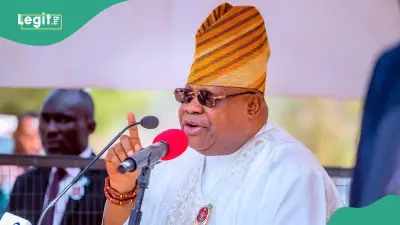
Deputy House Spokesperson Philip Agbese Resigns from APC, Joins Labour Party
In a significant political development, Philip Agbese, the deputy spokesperson of the House of Representatives, has officially resigned from the ruling All Progressives Congress (APC) and defected to the Labour Party. This move comes ahead of the highly anticipated 2027 general elections, signaling a notable shift in Nigeria's political landscape.
Defection Announced During House Plenary
The lawmaker, who represents the Ado/Okpokwu/Ogbadibo Federal Constituency of Benue State, made his defection public on the floor of the House during the plenary session on Tuesday, March 31, 2026. Speaker Tajudeen Abbas read Agbese's defection letter, which detailed the reasons behind this dramatic political realignment.
According to the statement, Agbese's decision to leave the APC stems from the persistent internal crises that have been rocking the party in Benue State, a north-central region of Nigeria. These ongoing disputes have created an unstable environment, prompting the deputy spokesperson to seek a new political home with the Labour Party.
Commitment to Tinubu's Agenda Remains Strong
Despite his departure from the APC, Agbese reaffirmed his unwavering commitment to the mandate of President Bola Tinubu and the Renewed Hope agenda. In his statement, he emphasized that his federal constituency remains fully aligned with this vision, and he pledged to continue lending his steadfast support to the administration's goals.
This assurance highlights a nuanced approach to his defection, as Agbese seeks to maintain a cooperative stance with the federal government while aligning himself with a different political party at the state and national levels. His move is seen as a strategic effort to navigate the complex political dynamics in Benue State and beyond.
Implications for the 2027 Elections
Agbese's defection to the Labour Party is expected to have ripple effects on the upcoming 2027 general elections. As a prominent figure in the House of Representatives, his shift could influence voter sentiment and party strategies in Benue State and other regions. Political analysts are closely watching this development, as it may signal broader realignments within Nigeria's political parties ahead of the polls.
The Labour Party, which has been gaining traction in recent years, stands to benefit from Agbese's experience and influence. His defection adds to the party's growing roster of defectors and could bolster its campaign efforts in the north-central zone and across the country.
In summary, Philip Agbese's resignation from the APC and defection to the Labour Party marks a pivotal moment in Nigerian politics, driven by internal party crises and strategic positioning for the 2027 elections. While he maintains support for President Tinubu's agenda, this move underscores the fluid nature of political allegiances in the country.