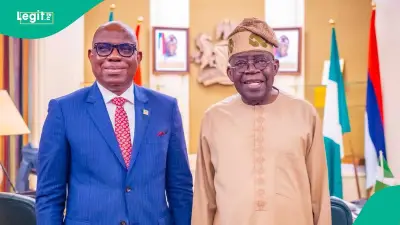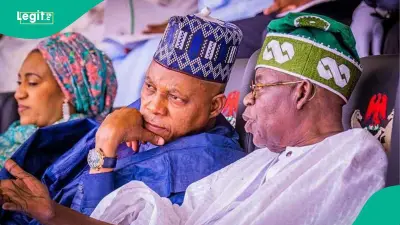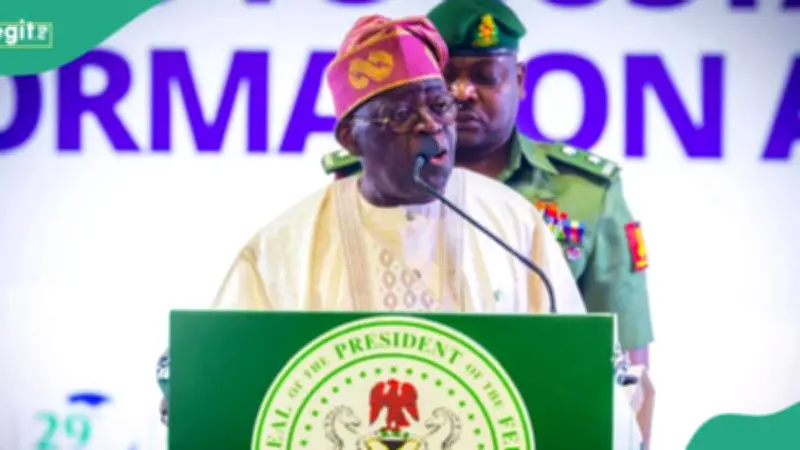
President Bola Tinubu, represented by Secretary to the Government of the Federation (SGF) George Akume, signed a peace accord in Abuja on Tuesday, August 18, 2026, ahead of the 2027 general elections. The accord commits political parties and candidates to reject violence and uphold democratic principles before, during, and after the polls.
Tinubu, the ruling All Progressives Congress (APC) candidate for the 2027 presidential election, was unable to attend in person, so Akume delivered his remarks on his behalf at the ceremony. The event was convened by the National Peace Committee (NPC), chaired by former Head of State General Abdulsalami Abubakar, with the Sultan of Sokoto and Bishop Matthew Hassan Kukah also present.
Peace Accord Details and Commitments
The peace accord specifically calls on all political parties and candidates to reject violence, intimidation, and any conduct capable of disrupting or delegitimising the democratic process. By signing, participants signal their commitment to engage in the electoral process within agreed boundaries and pursue grievances through lawful channels rather than confrontation.
In his full remarks, Tinubu acknowledged the NPC's steadfastness since 2014 in promoting peace accords during national and off-cycle state elections. He noted that since Nigeria returned to democratic governance in 1999, every election period has brought anxiety due to intense political competition.
Tinubu praised the Independent National Electoral Commission (INEC) for improvements in election management, citing the introduction of permanent voter cards and the Bimodal Voter Accreditation System (BVAS) as measures that have eliminated voting manipulation, ballot stuffing, and snatching at polling units. He said these improvements have restored power to voters, making politicians more accountable.
Tinubu's Call for Issue-Based Campaigns
Between October 2025 and August 15, 2026, Nigeria witnessed three off-season polls in Anambra, Ekiti, and Osun States, which Tinubu noted were won by different parties and described by observers as free, credible, and transparent. He added that transparent processes lead to less post-election litigation.
"We have gathered today to commit ourselves to a peaceful and transparent electoral process," Tinubu said. "Signing this peace accord is a solemn pledge to the Nigerian people that we, as leaders, will put the nation's interest above personal or partisan ambitions."
He called on all Nigerians, civil society organisations, foreign partners, and the media to join in deepening democracy, emphasising that democracy involves citizen participation, trust in public institutions, and civic engagement for good governance.
Commitment to Reject Violence and Hate Speech
Tinubu urged political actors to avoid divisive sentiments based on ethnicity or religion, stating, "Let us campaign on superior ideas. Let us debate issues and promote the best policies to expand opportunities for our people and accelerate Nigeria's journey from a developing nation to a first-world country."
He committed himself and the APC to the accord's tenets, rejecting violence, hate speech, misinformation—including through artificial intelligence—and all forms of incitement, especially via social media. He encouraged other parties to do the same, reminding them that "elections are not a do-or-die affair" and that Nigeria must be the ultimate winner.
The ceremony took place as Nigeria's political landscape grows increasingly active ahead of the 2027 elections, with multiple parties positioning candidates. Earlier, Legit.ng reported that ChatGPT predicted the APC would likely win the 2027 presidential election, citing possible low voter turnout and the Tinubu administration's economic stabilisation efforts.