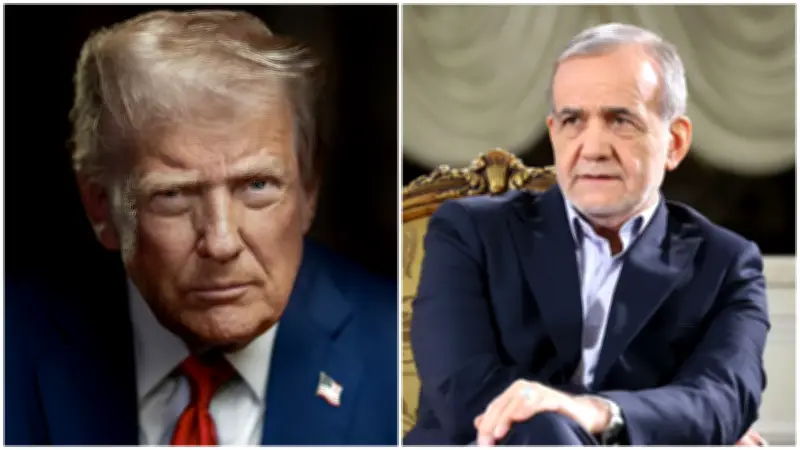
The United States and Iran have signed a Memorandum of Understanding (MoU) to halt the war between the two countries, declaring an immediate and permanent cessation of military operations on all fronts, including in Lebanon. The deal, signed on Thursday, also calls for the reopening of the Strait of Hormuz, which had been closed during the conflict, causing a global spike in oil prices.
Background of the Conflict
The war began on 28 February when the US and Israel launched attacks on Iran. Iran retaliated by targeting American interests in Gulf states. Hezbollah, the armed Lebanese group, joined the war on Iran's behalf, attacking Israel, which led to Israeli strikes on Lebanon. Although a ceasefire was agreed in April, hostilities continued. The closure of the Strait of Hormuz, through which about 20 per cent of the world's oil passes, caused a global increase in oil and derivative prices.
Key Provisions of the MoU
The 14-point MoU, read out by a senior US official to journalists including the BBC, outlines a 60-day window for negotiating a final deal. Key points include:
- Point 1: Immediate and permanent termination of military operations on all fronts, including Lebanon, with respect for Lebanon's territorial integrity and sovereignty.
- Point 2: Mutual respect for sovereignty and territorial integrity, and non-interference in internal affairs.
- Point 3: Commitment to negotiate a final deal within 60 days, extendable by mutual consent.
- Point 4: The US will begin removing its naval blockade within 30 days, and fully end it within that period. Vessel traffic will be restored proportionally. US forces will be removed from Iran's proximity within 30 days after the final deal.
- Point 5: Iran will ensure safe passage for commercial vessels free of charge for 60 days, with full traffic restored within 30 days after de-mining. Iran will discuss Strait of Hormuz administration with Oman and other Gulf states.
- Point 6: The US will work with regional partners on a $300 billion reconstruction and economic development plan for Iran, to be finalised within 60 days.
- Point 7: The US will terminate all sanctions against Iran, including UN Security Council resolutions, IAEA Board of Governors resolutions, and unilateral US sanctions, on an agreed schedule.
- Point 8: Iran reaffirms it will not procure or develop nuclear weapons. The parties will resolve disposition of enriched material under IAEA supervision, and discuss enrichment and other nuclear needs based on a satisfactory framework.
- Point 9: Pending the final deal, both sides maintain the status quo: Iran keeps its nuclear program unchanged, and the US imposes no new sanctions or deploys additional forces.
- Point 10: The US Treasury will issue waivers for exports of Iranian crude oil, petroleum products, and associated services.
- Point 11: The US will make available frozen Iranian funds and assets, with procedures to be mutually agreed.
- Point 12: An executive mechanism will monitor implementation and compliance.
- Point 13: Negotiations on the final deal will begin after implementation of points 1, 4, 5, 10, and 11.
- Point 14: The final deal will be endorsed by a binding UN Security Council resolution.
Impact and Next Steps
The deal aims to end a conflict that caused significant human suffering and economic disruption. The reopening of the Strait of Hormuz is expected to stabilize global oil markets. The 60-day negotiation period will determine the specifics of sanctions relief, nuclear program oversight, and reconstruction funding. Implementation of the MoU's immediate measures is underway.