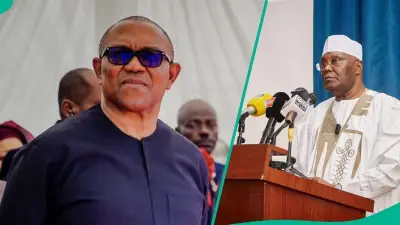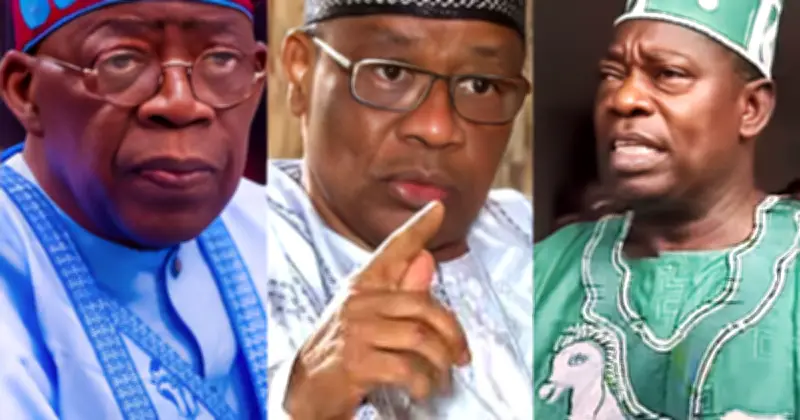
As Nigeria commemorates another June 12, the legacy of the 1993 presidential election remains a defining moment in the nation's democratic history. More than three decades after the annulment of the freest election in Nigeria's history, the key figures involved have taken vastly different trajectories—from activism and exile to ministerial roles and the presidency. Some, like MKO Abiola and Gani Fawehinmi, have become enduring symbols of the struggle, while others remain subjects of debate and controversy.
MKO Abiola: The Winner Who Never Became President
Moshood Kashimawo Olawale Abiola won the June 12, 1993 presidential election, but the military annulled the results. He declared himself president in June 1994, was arrested for treason, and spent four years in detention without trial. He died on July 7, 1998, the same day he was scheduled to meet with US officials pushing for his release. The official cause of death was a heart attack, but his family and supporters never accepted that explanation. His daughter Hafsat Abiola founded the Kudirat Initiative for Democracy (KIND), named after her mother, and remains active in democracy and women's rights advocacy. His son Kola Abiola entered partisan politics in 2022, joining the Peoples Redemption Party, keeping the Abiola name in public discourse.
Ibrahim Babangida: The Man Who Annulled the Election
Ibrahim Babangida, who annulled the election, turns 85 in August. He has never faced a court, been charged, or left public life with less than the deference due a former head of state. In February 2025, he published a memoir titled A Journey in Service, in which he described the annulment as a mistake and acknowledged that Abiola genuinely won. The book was launched at a major event attended by Nigeria's political class. The regret came 32 years after the fact and cost him nothing.
Wole Soyinka: Still Demanding Answers
Nigeria's Nobel laureate was among the most visible voices against the Abacha regime. He went into exile and has never stopped speaking out. As recently as June 2025, he was at Freedom Park in Lagos calling on President Tinubu to reopen investigations into the unsolved killings of Kudirat Abiola, Bola Ige, and journalist Dele Giwa. He accepted national honours from the Tinubu administration, a decision that drew criticism from activists who felt it legitimised a government with its own credibility questions. He remains the last major living voice from the original struggle, still publicly demanding accountability.
Bola Tinubu: From NADECO Activist to President
Tinubu was a NADECO member who fled Nigeria during the Abacha years and returned after the 1999 transition. He became governor of Lagos, built one of Nigeria's most powerful political machines, and won the 2023 presidential election. He is now the president of the country he once helped protest into existence. However, he has faced persistent unresolved allegations, including questions about his academic credentials from Chicago State University, which became a major controversy during the 2023 election cycle, and earlier drug-related forfeiture proceedings in the United States in the 1990s. NADECO itself publicly called on him to resign over the certificate allegations, but none resulted in prosecution.
Adeyinka Adebayo: The Soldier Who Joined the Resistance
Major General Adeyinka Adebayo was one of the founding signatories of the NADECO declaration against the Abacha regime, a significant act for someone with a military background. He died in 2008. His son, Otunba Adeniyi Adebayo, took a different path, becoming Ekiti State's first democratically elected governor in 1999, later serving as National Deputy Chairman of the APC and Minister of Industry, Trade and Investment under President Buhari from 2019 to 2023.
Gani Fawehinmi: The Activist Who Never Crossed Over
Gani Fawehinmi was arrested, detained, and harassed across so many regimes that his cumulative time in detention exceeded twelve years. He never took a government appointment. In 2008, a year before his death, he rejected one of Nigeria's highest national honours in protest at the country's years of misrule. He remained a practising lawyer and activist until illness stopped him. His eldest son Mohammed continued the work, running the Gani Fawehinmi Chambers and staying active in civil society until his own death in 2021. His second son Saheed described Mohammed as someone who 'lived a very decent life' and 'died with clean hands.' Of all the major June 12 figures, the Fawehinmi line is the one that never crossed to the other side.
The June 12 struggle produced very different outcomes for the people involved. Some never lived long enough to see democracy restored. Some became part of the governments they once opposed. Others remained critics until the end.