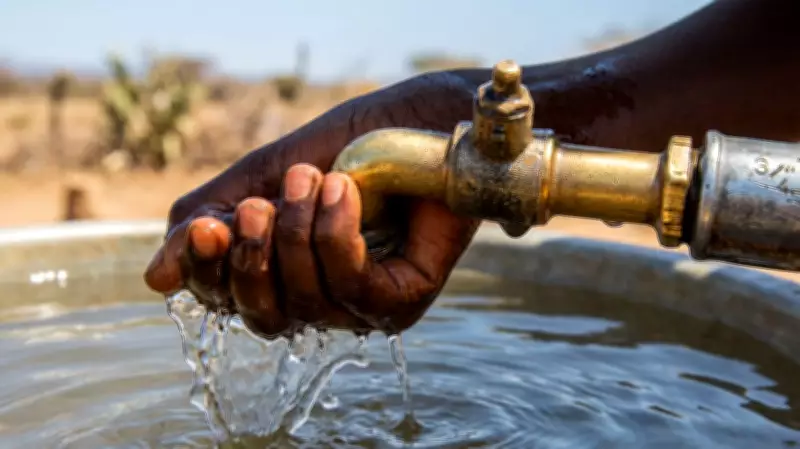
Only 249 of 774 Nigerian Local Council Areas Have Access to Pipe-Borne Water, Exacerbating Inequality and Slowing Economic Growth
A stark revelation has emerged from a recent multi-sector stakeholders meeting in Abuja, highlighting a critical infrastructure deficit in Nigeria. According to water specialist Norbert Shialsuk, only 249 out of the country's 774 local council areas currently have access to pipe-borne water. This alarming statistic underscores a widening gap in basic services, directly contributing to increased inequality, reduced productivity, and constrained economic development across the nation.
Functional Water Facilities at a Mere 20% Nationwide
Speaking at the event convened by Lokoja Dialogues to commemorate the 2026 World Water Day, Shialsuk provided further distressing details. He reported that only approximately 20 percent of the roughly 1,200 water facilities spread across Nigeria remain operational. The specialist attributed this widespread dysfunction to the high costs associated with water provision, emphasizing that successful projects require robust collaboration between the public sector, private investors, and international development partners.
The meeting, which gathered government officials, diplomats, academics, development partners, and community representatives, aimed to advance national discourse on water security. Discussions centered on implementing solutions driven by gender considerations and community-led initiatives, aligning with the global theme for the year: 'Water and Gender.'
Women and Girls Bear the Heaviest Burden of Water Insecurity
A central reality highlighted during the proceedings was the disproportionate impact of water insecurity on women and girls. While the issue affects all demographics, participants stressed that females often endure the most severe consequences, spending significant time and effort sourcing water, which limits educational and economic opportunities.
Minister of Budget and Economic Planning, Abubakar Bagudu, underscored the fundamental importance of water to Nigeria's development. In a keynote address delivered by the Permanent Secretary, Dr. Deborah Odoh, the minister stated that water is pivotal for agriculture, public health, energy production, and overall community stability. "As we reflect on current realities, we are reminded that access to water is not only a development issue, but also a matter of social equity, one that disproportionately affects women and girls," the minister's representation conveyed.
Calls for Community-Rooted Solutions and Addressing Disparities
United Nations Resident Representative Elsie Attafuah expressed deep concern over the inequality in water access within Nigerian households. She pointed out that this disparity has created a substantial gap in life opportunities and the ability to achieve a good quality of life, particularly for women.
Earlier, the Convener of Lokoja Dialogues, Mrs. Polly Alakija, framed the water challenge in tangible terms. "Water challenges are not abstract. They are lived every day in communities across Nigeria," she asserted. Alakija advocated for a bottom-up approach to reform, stating, "If we are to fix the system, we must start from the local and build solutions that reflect real needs and realities."
Participants unanimously emphasized that addressing Nigeria's water crisis requires solutions deeply rooted in lived experiences, especially at the community level. The consensus pointed towards an urgent need for integrated, gender-sensitive strategies that involve all stakeholders to bridge the alarming access gap and unlock the nation's full economic potential.