
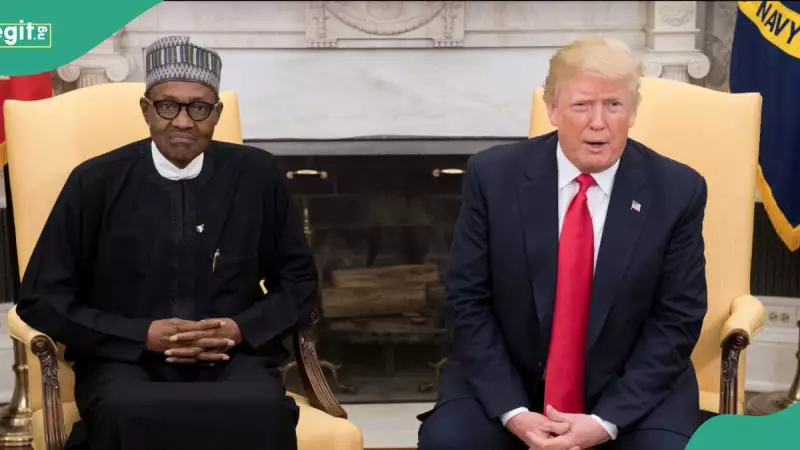
In a revealing account of international diplomacy, former Nigerian President Muhammadu Buhari has shared details of his tense exchange with then-US President Donald Trump concerning allegations of Christian persecution in Nigeria.
The dramatic confrontation occurred during Buhari's official visit to the White House in April 2018, where what was supposed to be a routine bilateral meeting turned into a heated discussion about Nigeria's security situation.
The White House Showdown
According to Buhari's recollection, President Trump directly confronted him with allegations that the Nigerian government was not doing enough to protect Christian communities from violent attacks. The American leader presented what he claimed was evidence of systematic killings targeting Christians across several Nigerian states.
"He was very blunt about it," Buhari noted, describing how Trump pressed him on the security challenges facing religious communities in Nigeria.
Buhari's Firm Response
The former Nigerian leader didn't back down from the challenge. He presented Nigeria's official position, emphasizing that the security issues were more complex than religious persecution alone.
Buhari explained to Trump that the violence affecting both Christian and Muslim communities stemmed from broader security challenges including farmer-herder conflicts, banditry, and economic factors rather than purely religious motivations.
"I made it clear that our government was working tirelessly to protect all citizens, regardless of their faith," Buhari stated, highlighting his administration's efforts to address security concerns across the nation.
Broader Implications for Nigeria-US Relations
This exchange highlights the delicate nature of international diplomacy when it comes to addressing sensitive internal matters. The conversation between the two leaders touched on fundamental questions about sovereignty, religious freedom, and counter-terrorism cooperation.
Despite the tense moment, both leaders managed to navigate the discussion while maintaining diplomatic decorum and focusing on areas of mutual interest in the bilateral relationship.
The revelation provides rare insight into how African leaders handle pressure from Western counterparts on domestic issues that often have complex historical and social dimensions beyond what international observers might initially perceive.




