
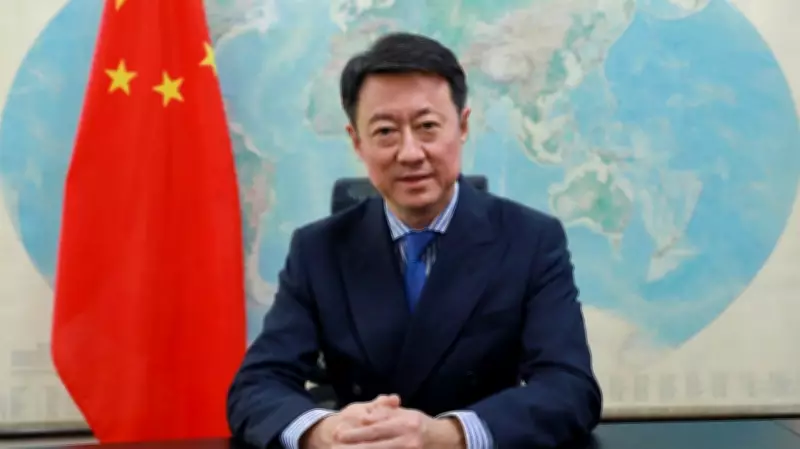
Chinese Ambassador Applauds UN Resolution on Transatlantic Slave Trade
The Chinese government has expressed strong approval for a recent United Nations resolution that officially recognizes the trafficking and enslavement of Africans as the most severe crime against humanity. Ambassador Yu Dunhai, China's envoy to Nigeria, conveyed this sentiment in a congratulatory article released to the media on March 26, 2026, emphasizing that justice may be delayed but is never absent.
Historic UN Declaration
The resolution was adopted on March 25 during the 80th Session of the UN General Assembly, coinciding with the International Day of Remembrance of the Victims of Slavery and the Transatlantic Slave Trade. Ambassador Dunhai noted that this marks the first time the global body has issued such a definitive declaration on the issue. He congratulated African nations and the broader international community, describing the development as a significant step toward addressing historical wrongs and reaffirming human dignity.
Dunhai highlighted that the resolution reflects growing international acknowledgment of the lasting impacts of slavery and colonial exploitation. He observed that this move aligns with the African Union's agenda, particularly its focus on justice and reparations for Africans and people of African descent. The outcome, he said, demonstrates the sustained commitment of African countries to advancing reparatory justice globally and making progress against racial discrimination and historical inequality.
Support from China and Global Community
Commending African countries and other developing nations for their collective efforts in achieving the resolution, the envoy stressed that the pursuit of justice might face delays but is never denied. China, alongside over 120 other countries, supported the resolution, reinforcing its stance on acknowledging historical responsibility and promoting fairness in global affairs.
In his statement, Ambassador Dunhai said, "As the Chinese Ambassador to Nigeria, I extend warm congratulations on the adoption of the UNGA Resolution and pay high tribute to African countries and the broader developing world for upholding justice and working hand in hand to achieve this outcome." He added that China supports the legitimate demands of African countries and people of African descent in their quest for equal rights and fair justice.
Impact and Historical Context
Dunhai described the transatlantic slave trade as one of the darkest chapters in human civilization, where tens of millions of Africans suffered trafficking, enslavement, and slaughter. He noted that the wounds from racialized enslavement have spanned centuries and continue to profoundly affect Africa's development and the rights of people of African descent.
The UNGA Resolution, he held, fairly restores historical truth, effectively counters contemporary racial discrimination and structural injustice, and lays an important legal and moral foundation for advancing historical reparations, the return of looted cultural artifacts, and trauma healing. "It demonstrates the common will of the international community to safeguard equal human rights and oppose any form of enslavement and oppression," Dunhai stated.
China-Africa Relations and Cooperation
This year marks the 70th anniversary of diplomatic relations between China and Africa. Dunhai emphasized that China's policy toward Africa has remained consistent over the decades, based on respect, support, and assistance for development. "We do not interfere in the internal affairs of African countries nor do we impose our will on others, let alone engage in predatory exploitation or hegemonic coercion," he said. China-Africa cooperation is founded on equality, aims at development, and focuses on people's well-being, responding to Africa's urgent needs and enhancing its capacity for independent development through tangible cooperation.
Recently, China announced the full implementation of zero-tariff treatment for all African countries with diplomatic relations, showcasing a vivid example of mutually beneficial cooperation and common development. Dunhai added that though China and Nigeria are separated by vast oceans, they share a common destiny and are of one mind, having both endured foreign oppression and colonial plunder. "We both deeply understand the precious value of independence, dignity, and development and are firmly committed to safeguarding national sovereignty and the equal rights of all ethnic groups," he noted.
Strengthening China-Nigeria Ties
In recent years, under the strategic guidance of leaders from both countries, China-Nigeria relations have been upgraded to a comprehensive strategic partnership. The two nations are working together to build a high-level community of shared future, with political mutual trust deepening, practical cooperation yielding fruitful results, and people-to-people exchanges growing closer. This year also marks the 55th anniversary of diplomatic relations between China and Nigeria. China is ready to work with Nigeria to further align development strategies, transform cooperation outcomes into tangible benefits for their peoples, and inject strong momentum into Nigeria's economic and social development.
Global Challenges and Multilateralism
Dunhai addressed current global challenges, noting that the world is experiencing turbulent times with hegemonism and power politics undermining the international order. He criticized a few countries for clinging to colonial mindsets and hegemonic logic, adhering to the law of the jungle and the principle of "might makes right," and resorting to unilateralism and maximum pressure. "History has long proven that power politics finds no popular support, unilateral bullying leads nowhere, and any attempt to gain benefits through oppression or seek hegemony through bullying will ultimately be discarded by the times," he asserted.
He called for upholding multilateralism, respecting the sovereignty and independent choices of all countries, and opposing racial discrimination and hegemonic bullying to truly safeguard human rights and dignity and achieve common security and development.
Future Commitments
Concluding his remarks, Ambassador Dunhai reiterated that justice may be delayed but will never be absent. The adoption of this historic UNGA Resolution has added a significant chapter to the cause of global justice and injected new momentum into deepening solidarity and cooperation between China and Africa. "China will, as always, stand side by side with Nigeria and all African countries, firmly support African nations in defending their national dignity and achieving independent development, continuously deepen practical cooperation across various fields, jointly oppose hegemonism and unilateral actions, jointly safeguard international fairness and justice, and jointly promote the building of a community with a shared future for mankind," he said.
He added that China will continue to speak up for Africa on the international stage, support Africa in enhancing its voice and representation in global governance, and strive for the full realization of historical justice. "We will let the sunshine of equality, development and dignity illuminate the African continent, and make new and greater contributions to the prosperity and revitalization of Africa as well as to a better future for all humanity," the envoy concluded.




