
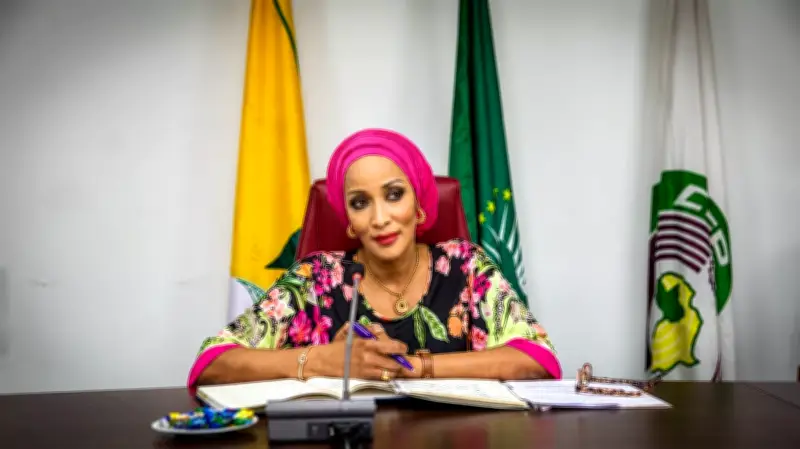
The Federal Government has clarified the rationale behind its recent signing of the Transfer of Sentenced Persons Agreement with the Federal Democratic Republic of Ethiopia. Minister of Foreign Affairs, Ambassador Bianca Odumegwu-Ojukwu, also assured Nigerians in South Africa that no citizen willing to return home will be abandoned, as the June 30 deadline for undocumented foreigners to leave the country approaches.
Prisoner Transfer Agreement
In a statement issued by Dr. Magnus Eze, Special Assistant on Communication and New Media to the Minister, Odumegwu-Ojukwu explained that the diplomatic milestone aligns with the citizen diplomacy policy of President Bola Tinubu's Renewed Hope Administration, which prioritizes the Nigerian Diaspora. She noted that efforts are underway to intervene in other cases involving Nigerians in distress abroad.
The minister dismissed as fake a purported list circulating on various media platforms claiming to show the names and numbers of Nigerian inmates in Ethiopian prisons. She insisted that Nigeria does not have 136 inmates in that country and described some of the crimes attributed to them as a “wild tangent.”
Odumegwu-Ojukwu stated that the government is determined to bring the inmates home to serve their sentences with dignity, without exposing them to inhuman conditions. She disclosed that efforts to secure the prisoner transfer deal began long ago, as Nigerian inmates in Ethiopia had repeatedly complained about precarious conditions.
“We have been working for many years to get these prisoners back home to Nigeria. We faced difficulties because it was hard to ascertain the exact number of prisoners in Ethiopia. They were spread across the Kaliti and Aba Samuel prisons, which are maximum-security facilities. We needed to sign this agreement on the transfer of sentenced persons,” she said.
“Essentially, this means that prisoners sentenced and jailed in one country can return to their state or country of origin to serve out their sentences. This is crucial because the inmates have been agitating for years to return to complete their jail terms, given their precarious living conditions, health challenges, inadequate medical facilities, poor feeding, and denial of visitation rights. They also lacked adequate legal services and faced language barriers. So, we had to expedite action.”
Repatriation from South Africa
Regarding South Africa, the first batch of 258 repatriated Nigerian nationals arrived in Lagos on the penultimate Thursday. A second batch was expected on Monday but was later postponed. Four more repatriation flights are scheduled. In a statement by Eze, the minister noted that President Tinubu issued a directive mandating that every Nigerian who voluntarily indicates willingness to return home must leave before the deadline. About 1,000 Nigerians have expressed interest in returning, according to the minister.
Odumegwu-Ojukwu said Nigeria is actively engaging South African authorities through diplomatic channels and broader actions. However, she noted that the National Assembly “has a constitutional role” to play in determining Nigeria’s response should diplomatic engagements fail to halt attacks on Nigerians and their businesses.
“When it comes to situations like this, it is necessary to be temperate and cautious. But when your citizens are being harassed—people who have spent years there, some married to South Africans and with children who know no other home—then it becomes a serious concern,” the minister said.
“Now, they are asking not just Nigerians but also their South African spouses and children to leave South Africa. As I indicated, there are over 120 South African companies operating in Nigeria. Nobody is asking them to provide proof of identity, nor asking South African staff whether they are South Africans or Nigerians, and nobody is taking over their shops or businesses.”
She cited MTN, MultiChoice, Stanbic, Protea, and many other South African brands across multiple sectors, noting that Nigeria might be forced to review its options.




