
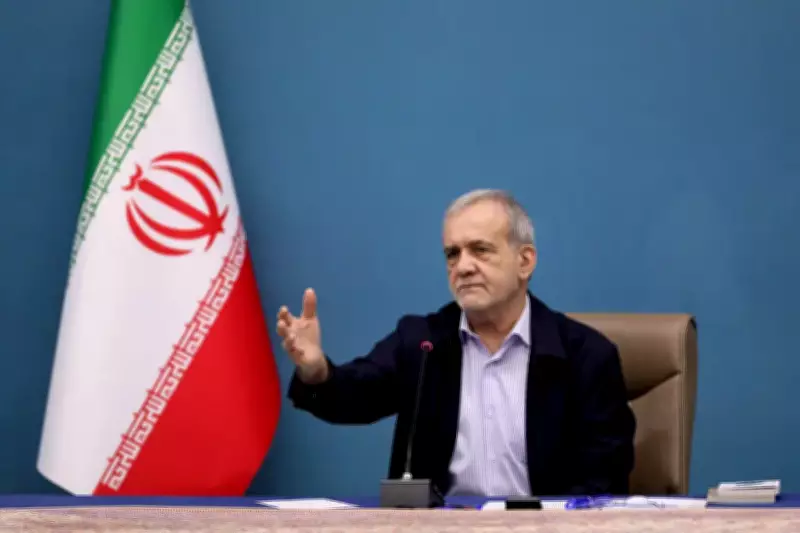
Iran's President Advocates for Diplomatic Engagement in Open Letter to American Public
Iranian President Masoud Pezeshkian has signaled a potential shift toward diplomacy in a significant open letter directed at the American public, emphasizing that continued confrontation is becoming increasingly costly and ineffective. The letter, released on Wednesday, marks a notable moment in the ongoing tensions between the two nations.
Call for a New Path Forward
In the letter, Pezeshkian stated, "the path of confrontation is more costly and futile than ever before," while suggesting that engagement could pave the way for a better future. He framed the current global situation as a critical juncture, writing, "Today, the world stands at a crossroads. The choice between confrontation and engagement is both real and consequential; its outcome will shape the future for generations to come." This message was delivered just hours before U.S. President Donald Trump was scheduled to address the nation with what he described as an important update on the ongoing war.
Context of Tensions and Denials
Earlier, Trump had claimed that Iran was seeking a ceasefire, a statement that Iran's foreign ministry later dismissed as "false and baseless." This backdrop adds complexity to Pezeshkian's diplomatic overture, highlighting the deep-seated mistrust between the two governments. While the tone of the letter leaned toward diplomacy, it also carried elements of defiance, with Pezeshkian underscoring Iran's history of resisting foreign aggression. He asserted that Iran has never initiated war but has consistently defended itself against attacks, framing the country's military actions as legitimate self-defense rather than aggression.
Uncertainties in Leadership and Response
The letter did not outline specific steps toward ending the conflict, and it remains unclear whether it reflects a unified position within Iran's leadership. Under Iran's political system, ultimate authority rests with the Supreme Leader, Ayatollah Mojtaba Khamenei, who has the final say on major decisions such as negotiations and war strategy. Since the conflict began, the Islamic Revolutionary Guards Corps has also gained increased influence, with senior military figures playing a more prominent role in directing operations, potentially complicating diplomatic efforts.
International Engagements and Conditions
There has been no official response from Tehran regarding a reported 15-point peace plan proposed by the United States. However, Trump has indicated that potential talks could involve senior U.S. officials if negotiations move forward. In a recent development, Pezeshkian held a phone conversation with European Council President António Costa, during which he stated that Iran would be willing to end the war if key conditions are met, including guarantees to prevent future aggression. This suggests a willingness to engage internationally, albeit with specific demands.
Distinguishing Between Government and People
The letter also addressed long-standing tensions between Iran and the United States while drawing a clear distinction between the American government and its people. Pezeshkian wrote, "The Iranian people harbor no enmity toward other nations, including the people of America, Europe or neighboring countries." He defended Iran's military actions as measured responses grounded in legitimate self-defense, insisting they were not acts of aggression. This nuanced approach aims to appeal directly to the American public, potentially bypassing governmental channels to foster understanding and reduce hostilities.




