
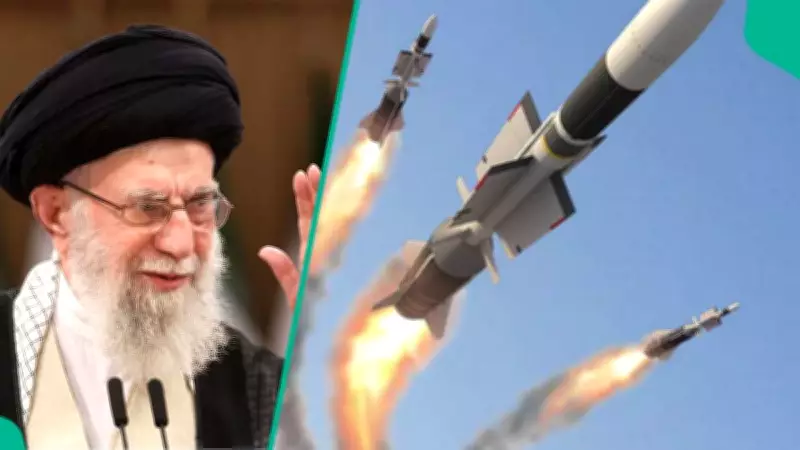
Complete List of Top Iranian Leaders Eliminated in US-Israel Strikes Since War Began
Published on March 18, 2026, at 7:22 PM by Ezra Ukanwa, this detailed report reveals the extensive elimination of Iranian leadership figures through coordinated military actions by the United States and Israel since the conflict's escalation. Iranian state media and international sources have confirmed a systematic targeting of the nation's highest-ranking officials, resulting in significant disruptions to Iran's political and military command structures.
Supreme Leadership and Security Council Decimated
Ayatollah Ali Khamenei, Iran's Supreme Leader, was confirmed killed in a joint US-Israeli strike on Tehran on February 28, 2026. State broadcaster IRIB announced his "martyrdom" in the attack, prompting President Masoud Pezeshkian to denounce the assassination as an "open declaration of war against Muslims." The loss of Khamenei, along with close family members, has forced Iran to establish an emergency leadership council while determining his successor, creating unprecedented political instability.
Major General Ali Larijani, head of Iran's Supreme National Security Council, was eliminated in an Israeli airstrike on March 18, 2026. Israeli Defense Minister Israel Katz confirmed Larijani's elimination in overnight raids. As one of the few remaining senior regime insiders following Khamenei's death, Larijani's elimination represents a devastating blow to Iran's security leadership. The Iranian government confirmed both Larijani and his son were killed together in the attack, potentially hardening Tehran's resolve in the ongoing conflict.
Military Command Structure Severely Weakened
Major General Abdolrahim Mousavi, Chief of Staff of Iran's Armed Forces, was among approximately 30 regime leaders targeted in the February 28 strikes. Iranian state television confirmed his death, noting his critical role in expanding Iran's missile, drone, and space capabilities. Mousavi's elimination creates a significant vacuum in coordinating between Iran's regular army and the Islamic Revolutionary Guard Corps.
Brigadier General Mohammad Pakpour, recently appointed Commander-in-Chief of the Islamic Revolutionary Guard Corps, was killed in the same early-morning strikes. The Israeli Defense Forces identified Pakpour as the IRGC leader responsible for missile and drone operations against Israel. His death leaves the elite IRGC without its highest-level commander, disrupting Iran's proxy operations and military strategy.
Additional Key Figures Eliminated
General Ali Shamkhani, former secretary of Iran's Supreme National Security Council and head of the post-war Defense Council, was killed in the February 28 strikes. As a veteran commander and long-time security adviser to Ayatollah Khamenei, Shamkhani's assassination removes one of the Supreme Leader's closest confidants and a key coordinator of Iran's defense policy.
General Aziz Nasirzadeh, Iran's Defense Minister and former IRGC air force commander, was slain in the coordinated strikes. Israeli sources identified Nasirzadeh as responsible for industries producing long-range missiles and weapons transferred to regime proxies. His elimination significantly impacts Iran's military leadership and weapons infrastructure.
Major General Mohammad Shirazi, head of the Supreme Leader's military office for decades, was eliminated in strikes targeting Iran's command network. Shirazi served as the crucial liaison between senior armed forces commanders and the Supreme Leader, and his death severs a key link in Iran's defense hierarchy.
Intelligence and Specialized Capabilities Targeted
Brigadier General Saleh Asadi, a senior military intelligence official heading intelligence in Iran's Armed Forces General Staff Emergency Headquarters, was confirmed killed by IDF statements. Asadi had helped shape Iran's operational plans against the US and Israel, and his assassination weakens the intelligence apparatus supporting Iran's war efforts.
Dr. Hassan Jabal-Amelian, chair of Iran's SPND defense technology agency responsible for developing advanced weapons including nuclear, biological, and chemical projects, was reportedly killed. While Iran has not publicly confirmed his death, Israeli sources described him as the chief of "advanced weapons programmes," representing a potential loss of significant strategic weapons expertise.
Gholamreza Soleimani, commander of the Basij volunteer militia, was killed in a strike on March 17, 2026, according to Iranian media. The IRGC confirmed Soleimani's death in an "attack by the American-Zionist enemy," removing a key enforcer of internal security who had led domestic security operations including protest suppression.
Recent Developments and Leadership Changes
Iranian President Masoud Pezeshkian has confirmed that Israel killed the country's Intelligence Minister, Esmail Khatib, in an overnight strike, marking the third assassination of a senior Iranian official within 48 hours. This latest elimination continues the pattern of decapitation strikes against Iran's command structure.
In response to these leadership losses, Iran's new Supreme Leader Mojtaba Khamenei has appointed former Revolutionary Guards commander Mohsen Rezaei as his military adviser, according to Iranian state-linked media. The appointment, reported by Mehr News Agency, represents Tehran's attempt to stabilize its military command amid ongoing attacks.
The systematic elimination of Iran's leadership figures has created multiple vacuums across the nation's political, military, and security structures. With emergency measures implemented and new appointments being made, Iran faces unprecedented challenges in maintaining operational continuity while responding to continued military pressure from the United States and Israel.




