
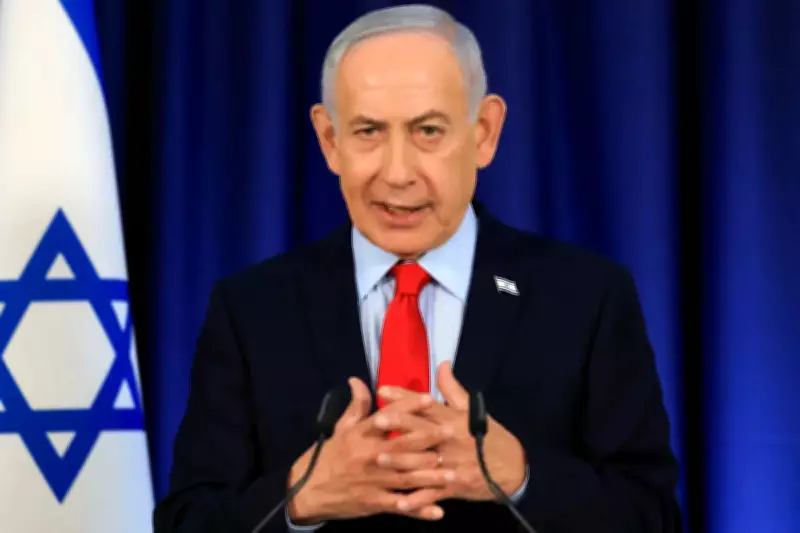
Netanyahu Reaffirms Israel's Commitment to Strike Hezbollah 'Wherever Necessary'
Israeli Prime Minister Benjamin Netanyahu has firmly declared that Israel will persist in its military operations against the militant group Hezbollah "wherever necessary," despite the announcement of a fragile two-week ceasefire between the United States and Iran. This statement was made on Thursday, underscoring Israel's unwavering stance in the ongoing conflict.
Massive Airstrikes and Casualties in Lebanon
Netanyahu's comments came in the wake of a massive wave of Israeli airstrikes on Wednesday, which targeted numerous sites across Lebanon. According to reports from the Lebanese health ministry, these attacks resulted in the deaths of at least 254 people and left over 1,100 others wounded. The Prime Minister emphasized that Israel's primary objective is to restore security for residents in the northern regions by dismantling the force and determination of Hezbollah.
The Israeli military recently launched what it described as its most powerful attacks of the war, targeting over 100 sites within a 10-minute window as part of an escalation referred to as Operation Eternal Darkness. During these operations, the IDF announced the killing of Ali Yusuf Harshi, a personal aide to Hezbollah leader Naim Qassem. Additional strikes focused on critical infrastructure, including crossing points on the Litani River and approximately 10 weapons storage facilities, command centers, and rocket launchers.
Lebanon's Response and National Mourning
In response to the heavy casualties, the Lebanese Prime Minister's office declared Thursday a national day of mourning. Public administrations were ordered to close, and flags were lowered to half-mast to honor the civilians killed in the attacks. This move highlights the significant human toll of the conflict and the widespread impact on Lebanese society.
Impact on Regional Ceasefire Efforts
These ongoing strikes have cast a significant shadow over the Islamabad Accords, a two-week truce mediated by Pakistan between the U.S. and Iran. While Pakistani Prime Minister Shehbaz Sharif stated that the ceasefire is intended to be effective everywhere, including Lebanon, both the Israeli leadership and U.S. President Donald Trump have maintained that Lebanon is excluded from the agreement. This discrepancy raises concerns about the stability of regional de-escalation efforts.
Hezbollah's Retaliation and Escalating Tensions
Hezbollah responded to the Israeli strikes on Thursday morning by firing several rounds of rockets into northern Israel, triggering sirens in local communities. The group characterized these launches as a necessary response to ceasefire violations, further escalating tensions in the region. As the two-week negotiation period begins, the conflict in Lebanon remains the primary threat to broader peace initiatives.
Humanitarian Concerns and International Calls
Amnesty International and other human rights groups have issued urgent calls to protect civilians, noting that the death toll in Lebanon has surpassed 1,500 since intensified ground and air operations began in early March. These organizations emphasize the need for immediate action to prevent further loss of life and ensure the safety of non-combatants caught in the crossfire.
The situation remains volatile, with Netanyahu's firm stance indicating that Israel is prepared to continue its military actions against Hezbollah, regardless of international ceasefire agreements. This ongoing conflict underscores the complex dynamics at play in the Middle East and the challenges of achieving lasting peace in the region.




