
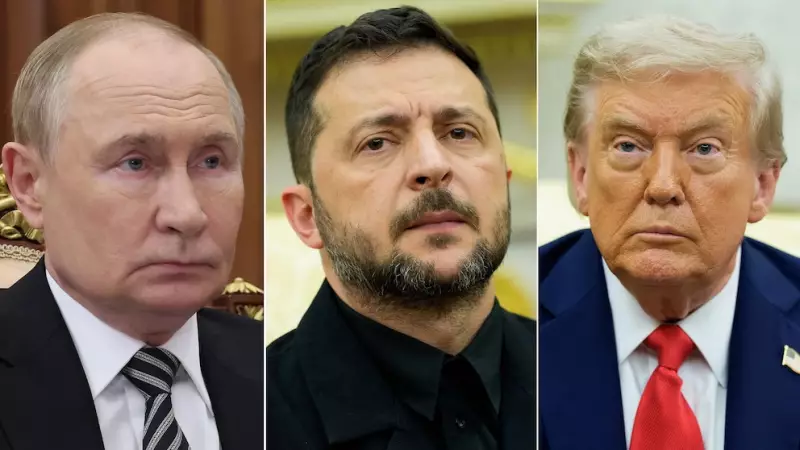
In a major escalation of hostilities, Russian forces launched a large-scale overnight assault on Ukraine's capital, Kyiv, with a barrage of missiles and drones. The attack, which occurred on the night of December 26-27, 2025, resulted in at least eight civilians being injured and caused significant damage to residential areas and critical infrastructure.
Strikes Amidst Diplomatic Preparations
This aggressive military move came less than a day after Ukrainian President Volodymyr Zelensky publicly announced plans to meet with former US President Donald Trump. The meeting, set to take place in Florida, is a key part of American-mediated efforts to find a pathway to end the war, which is now approaching its fourth year. The timing of the attack is seen by many analysts as a deliberate signal from Moscow, aimed at undermining diplomatic efforts and demonstrating military pressure ahead of the crucial talks.
Throughout the night, air defence systems were active across Kyiv as the city's residents were once again forced to seek safety in shelters. The strikes highlighted the ongoing vulnerability of Ukrainian cities despite improved defensive capabilities.
The 20-Point Peace Framework
According to Ukrainian officials, a revised 20-point peace proposal is now "90% ready" following weeks of detailed discussions with Washington. President Zelensky has shown a notable willingness to consider compromises to achieve a settlement. These potential concessions include showing flexibility on the issue of NATO membership and certain matters related to troop deployments.
However, the Ukrainian leader remains steadfast on one core demand: securing firm, long-term security guarantees for his country to prevent future aggression. The planned discussion with Trump is expected to focus on this proposed framework, with the hope of garnering support for a viable peace process.
Broader Consequences of Continued Conflict
Beyond the immediate human cost of injuries and trauma, the persistent warfare is deepening a series of interconnected crises. Repeated missile attacks are causing widespread destruction to homes, transportation networks, and energy systems. This damage is leading to increased environmental pollution, higher greenhouse gas emissions, and a staggering long-term financial burden for reconstruction.
The ongoing instability is also weakening climate resilience, threatening food security in the region, and hindering essential cross-border cooperation across Eastern Europe. The war's ripple effects extend far beyond the battlefield, impacting global markets and regional stability.
Diplomatic activity is intensifying in the lead-up to the Zelensky-Trump meeting. European leaders are coordinating their positions closely, although no direct representatives from the European Union are expected to attend the Florida discussions. Ukrainian officials have issued a clear warning: if Moscow rejects the proposed peace framework, additional international pressure on Russia will become necessary.
The world now watches closely as high-stakes diplomacy collides with renewed military aggression, determining the next phase of this prolonged and devastating conflict.




