
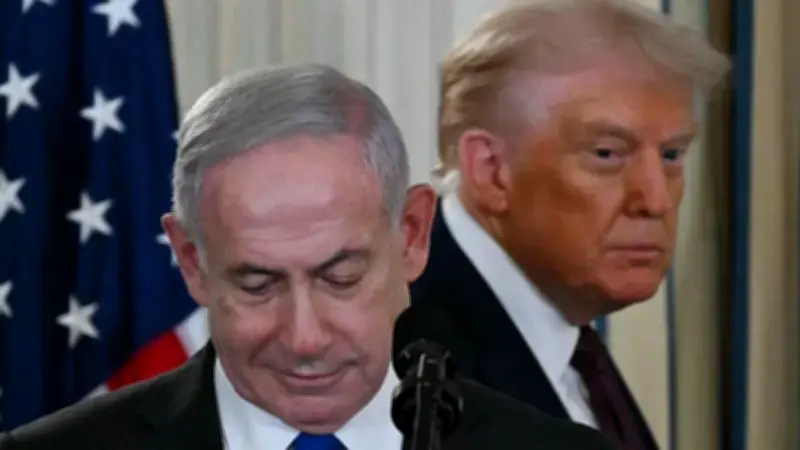
Israeli Prime Minister Benjamin Netanyahu has stated that he and US President Donald Trump "don't always see eye-to-eye" after Trump expressed frustration over Israel's attacks on Lebanon. During a press conference, Netanyahu addressed his relationship with Trump, who had earlier signed a peace agreement with Tehran.
Trump's Frustration and Netanyahu's Response
Trump had previously described Netanyahu as a "very difficult guy" who should be "very thankful" to the US. However, Netanyahu emphasized that they are partners, often agreeing but sometimes disagreeing. Trump announced that the peace deal with Iran is "all signed" and that the Strait of Hormuz is fully open to traffic, following weeks of tense negotiations during a fragile ceasefire.
Details of the Iran Deal
Speaking shortly after arriving in Evian, France, for a G7 meeting, Trump stated that the full text of the Iran deal would be released after a signing ceremony on Friday. A senior administration official clarified that Israel's withdrawal from Lebanon is not a condition of the deal. The official added that if Iran cannot control Hezbollah and prevent attacks on northern Israel, the Israeli army retains the right to respond.
The breakthrough agreement, digitally co-signed by President Trump, Vice President JD Vance, and Iranian Parliamentary Speaker Mohammad Bagher Ghalibaf, stipulates the immediate reopening of the Strait of Hormuz to global shipping in exchange for lifting the US maritime blockade on Iranian ports. The framework also outlines a conditional path toward broader sanctions relief and asset unfreezing, tied to strict international policing of Iran's nuclear program.
Remaining Fault Lines and Reactions
Major diplomatic and security fault lines remain. International markets responded with plunging oil prices and rising stock indexes, but domestic reactions in Israel have been deeply fractured. Opposition leaders criticized the accord as a major foreign policy failure that leaves Iran's regional missile infrastructure intact.
Netanyahu and his cabinet have aggressively pushed back, stating that Israeli forces will maintain "deep security zones" and remain positioned indefinitely inside southern Lebanon, Gaza, and Syria to counter ongoing threats, regardless of the bilateral Washington-Tehran deal.




