
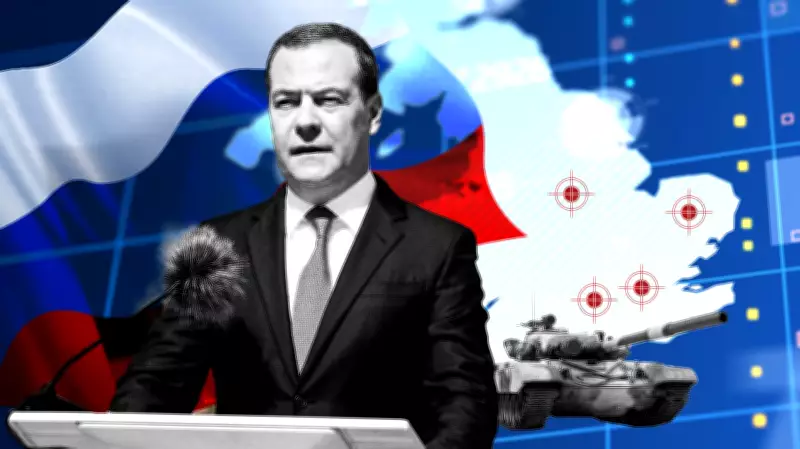
Russia Identifies UK Locations as Potential Military Targets Over Ukraine Support
Russia has issued a stark and direct warning to several locations across Europe, explicitly naming four sites within the United Kingdom as potential military targets. The threat is linked to allegations that these facilities are involved in producing drones and military equipment for Ukraine, a move Moscow claims risks a dangerous escalation of the ongoing conflict.
Medvedev's List of Potential Targets
Dmitry Medvedev, the deputy head of Russia's Security Council, publicly released a detailed list containing 23 European sites. He asserted these locations are connected to the manufacturing of drones and other military hardware destined for Ukrainian forces. In a message disseminated online, Medvedev stated unequivocally, "The list of European facilities which make drones and other equipment is a list of potential targets for the Russian armed forces... When strikes become a reality depends on what comes next." This statement frames the threat as conditional but imminent, dependent on future Western actions.
Specific UK Sites Named
Among the named locations are specific areas within the UK, highlighting the direct nature of the warning. The identified sites include:
- Areas in Reading
- Locations in London
- Sites in Leicester
- A road near RAF Mildenhall, a significant strategic base operated by the United States Air Force
Russian authorities also pointed to companies they allege are engaged in drone production. The broader list extends beyond the UK, encompassing additional facilities across Germany, Poland, the Netherlands, Spain, Italy, Turkey, and Israel, indicating a wide-ranging focus on European support networks.
Official Russian Statements and Warnings
The Russian Ministry of Defence released an official statement amplifying these threats. It accused European nations of intensifying their support for Ukraine's drone capabilities, characterizing this as a provocative act that dangerously escalates the war. The ministry warned that such continued support could lead to "unpredictable consequences" and accused European leaders of "dragging" their countries deeper into the conflict.
The statement further argued that the growing involvement of European states effectively transforms them into a "strategic rear" for Ukraine, thereby increasing their own exposure and vulnerability to potential military retaliation from Russian forces. This warning arrives amidst already heightened geopolitical tensions between Russia and Western nations, fueled by persistent military, financial, and logistical aid to Ukraine.
Concerns Over Non-Military Retaliation
Adding another layer of concern, exiled Russian businessman Mikhail Khodorkovsky cautioned that the United Kingdom might also face non-military forms of retaliation. He suggested the possibility of covert operations designed not necessarily to cause mass casualties, but to instill fear and create instability within Western societies.
Khodorkovsky referenced previous incidents, such as the 2018 poisoning in Salisbury, as examples of such tactics. The objective, he indicated, would be to generate "a sense of vulnerability" among the populations and governments of supporting nations, undermining public confidence and political resolve.
Broader Implications and Escalating Tensions
These developments underscore rapidly growing international apprehensions about the potential for the Ukraine conflict to spill beyond its current borders. The explicit naming of targets within NATO member states like the UK represents a significant escalation in rhetoric and threat posture. As geopolitical tensions continue to intensify, the warnings from Moscow highlight the fragile and volatile nature of the current international security environment, with the risk of a wider confrontation becoming an increasingly discussed reality.




