
Senator Shehu Sani Advocates for Learning from India and China on Travel Advisories
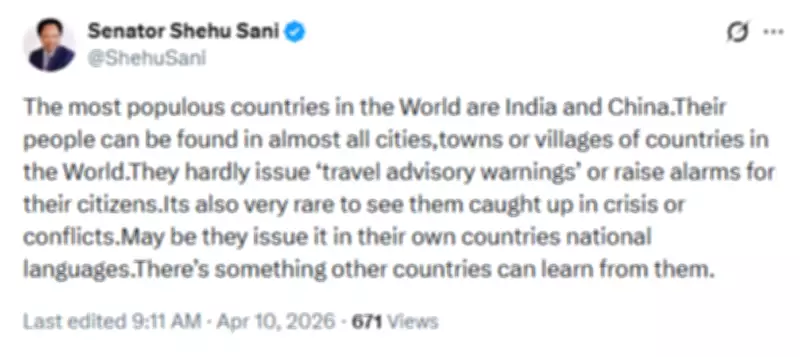
In a thought-provoking social media post, former Nigerian Senator Shehu Sani has called on countries that regularly issue travel advisories to take a lesson from the practices of India and China. His comments come in direct response to a recent travel advisory issued by the United States embassy to its citizens residing in or traveling to Abuja, Nigeria's capital.
A Contrast in Global Citizen Protection Strategies
Senator Sani highlighted that India and China, as the world's two most populous nations, have their citizens dispersed across virtually every corner of the globe. "Their people can be found in almost all cities, towns, or villages of countries in the world," he noted. Despite this widespread presence, these nations "hardly issue 'travel advisory warnings' or raise alarms for their citizens."
He further observed that it is exceptionally uncommon to see Indian or Chinese nationals becoming entangled in international crises or conflicts. This, he implied, might be attributed to their distinct diplomatic and protective approaches. "Maybe they issue it in their own countries' national languages," Sani speculated, suggesting a more discreet or internal method of communication that does not garner international attention.
The Impetus: US Embassy's Abuja Advisory
The catalyst for Sani's remarks was the advisory released by the US embassy in Abuja. While the specific details of the US warning were not elaborated upon in his post, such advisories typically caution citizens about potential security risks, health concerns, or political instability in host countries.
By juxtaposing the US's public advisory system with the perceived restraint of India and China, Sani prompts a reevaluation of how nations safeguard their diaspora. "There's something other countries can learn from them," he concluded, advocating for a shift towards more subdued or culturally nuanced methods of citizen protection.
Broader Implications for International Relations and Security
This commentary touches on significant themes in global diplomacy and national security protocols. The frequent issuance of travel advisories by Western nations, particularly the US, can sometimes strain bilateral relations, as they may be perceived as casting doubt on the host country's safety and governance.
In contrast, the approach attributed to India and China could reflect:
- Discreet Diplomacy: Utilizing private channels or native languages to alert citizens without causing public alarm or diplomatic friction.
- Risk Assessment Models: Possibly employing different criteria that result in fewer public warnings.
- Cultural Considerations: Tailoring communication styles to align with national practices that avoid overt international scrutiny.
Senator Sani's insights, shared via his social media platform, encourage a dialogue on optimizing the balance between ensuring citizen safety and maintaining harmonious international relations. As global mobility increases, the strategies nations employ to protect their citizens abroad will continue to be a critical aspect of foreign policy and public safety discourse.




