
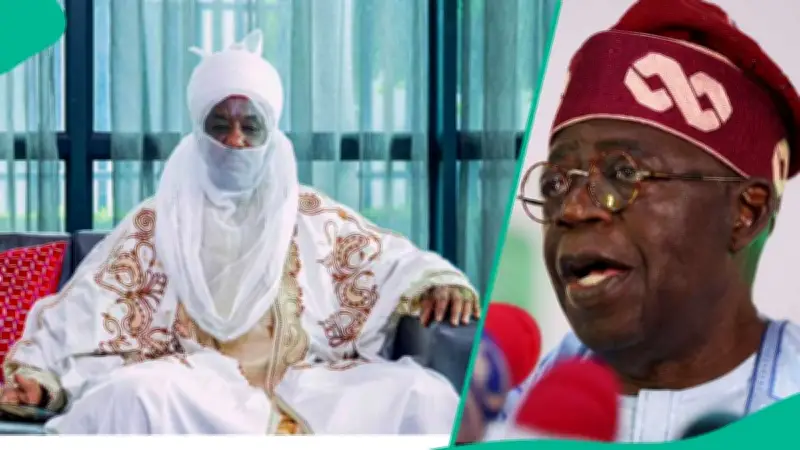
Muhammadu Sanusi II, the Emir of Kano, has declared that no economic policy can be effective if it does not improve the welfare of the people it is designed to serve. The traditional ruler made this statement on Thursday, July 16, while addressing a conference organized by PowerShift Africa in Kano. The event, themed “Revisiting the Past, Reconciliation and Building the Future,” brought together stakeholders to discuss Nigeria's pressing socio-economic and political challenges.
Sanusi Highlights Nigeria's Persistent Challenges
Speaking through his representative, Abubakar Aliyu Sanusi, the Danmadamin Kano and Professor of Economics at Bayero University, Kano, the Emir noted that the conference was timely given the current state of the nation. He identified insecurity, corruption, poverty, and infrastructure decay as the central obstacles holding Nigeria back more than six decades after independence. Sanusi argued that sustainable national progress is impossible without an honest reckoning with the past and a commitment to resolving long-standing grievances. He stressed the importance of building strong institutions, learning from history, and grounding governance in justice.
Criticism of Tinubu's Economic Reforms
The Emir has been a consistent critic of President Bola Tinubu's economic reforms. While he has expressed support for the removal of fuel subsidies and the unification of the currency, Sanusi has repeatedly questioned the administration's borrowing practices and the growing poverty across the country. His latest remarks underscore a call for leadership that prioritizes public welfare over political expediency. He urged leaders to move away from the politics of domination and toward accountability, competence, and inclusive growth.
Call for Unity and Competent Leadership
Sanusi also pushed for a fundamental reorientation of political culture. He called on those in power to abandon what he termed the politics of domination in favor of service, accountability, and competence. On the question of power-sharing, he stated: “Power-sharing should not only be about geographical rotation but about ensuring that credible, competent and compassionate leaders emerge to serve the people.” The Emir appealed to Nigerians of all religious and political persuasions to embrace unity, tolerance, and shared responsibility in nation-building. He warned that the country stands at a pivotal moment that demands genuine reflection on its past. More than 60 years after independence, Nigeria continues to wrestle with foundational questions of nationhood, equity, justice, inclusion, and development—issues that must be confronted directly to build a better future.
Sanusi Recalls Service Under Yar'Adua and Jonathan
In previous remarks, Sanusi, a former governor of the Central Bank of Nigeria, recalled his tenure under two former presidents: the late Umar Musa Yar'Adua and Goodluck Jonathan. He noted that neither president ever put him under pressure during his time at the apex bank. This revelation has sparked discussions among Nigerians, particularly given Sanusi's past criticisms of Jonathan's administration.




