
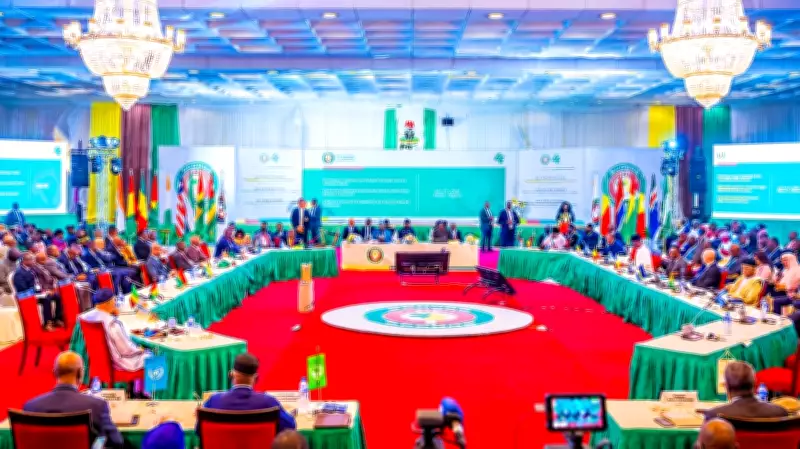
Experts from the West African Tax Administration Forum (WATAF) and Tax Justice Network Africa (TJNA) have called for tax harmonization as the fiscal foundation for financial integration within the Economic Community of West African States (ECOWAS). Speaking during an interactive session with ECOWAS Parliamentarians at the 2026 First Ordinary Session in Abuja, they argued that without such measures, the region will continue to lose revenue through loopholes, smuggling, opacity, and profit shifting.
Harmful Tax Practices and Revenue Loss
The experts decried harmful tax practices such as tax evasion, tax avoidance, and tax mis-invoicing, which have been identified as key factors behind Africa's persistent domestic resource mobilization gap of approximately $194 billion annually. They noted that reports highlight an annual loss of about $89 billion by the continent to illicit financial flows (IFFs) that could have been prevented.
Commercial Drivers of Illicit Flows
According to the experts, “Africa has a prevalent problem of illicit financial flows, and at least 65 percent of these could be categorized as commercially driven. The main practices that could lead to IFFs include tax evasion, tax avoidance, tax misinvoicing, and other harmful tax practices. These harmful tax practices hemorrhage the available resources that could have been deployed for development of the continent.”
Strategic Opportunity for Harmonization
Advancing tax harmonization within the ECOWAS sub-region presents a strategic opportunity for WATAF to strengthen regional integration, enhance domestic resource mobilization, and support sustainable development. However, the effectiveness of such efforts will depend largely on strong political commitment, effective implementation at the national level, and active parliamentary oversight.
Role of Parliament and Stakeholders
Research Manager at WATAF, Dr. Nita Belemaobgo, highlighted the session’s expected outcomes, stating that the organization’s objective is to support ECOWAS’ transition on tax directives aimed at harmonizing fiscal policies across member states. “Regional cooperation and evidence-based tools can significantly enhance accountability and reform outcomes,” she noted.
WATAF’s Manager of Communications and Information Technology, Danicius Sengbeh, stressed the importance of setting regional tax harmonization and domestic resource mobilization. According to him, the ECOWAS Parliament has a crucial role to play in the oversight function of tax administration. He added that the engagement is about sovereignty, fairness, accountability, and West Africa’s future.




