
Nigeria's UN Envoy Jimoh Ibrahim: Tinubu Committed to Resolving Grievances Fuelling Insecurity
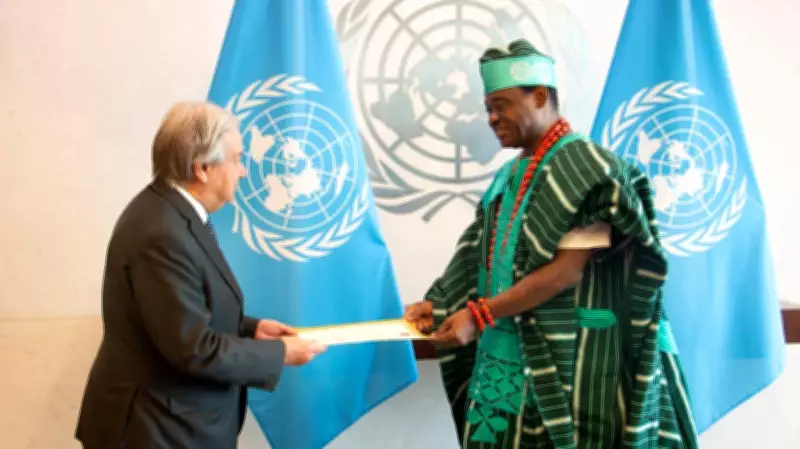
Nigeria's Ambassador and Permanent Representative to the United Nations, Jimoh Ibrahim, has declared that President Bola Ahmed Tinubu is firmly dedicated to resolving the deep-rooted grievances that are fueling widespread insecurity across the nation. The envoy made this significant statement during a formal ceremony in New York, where he presented his letters of credence to the United Nations Secretary-General, António Guterres.
Addressing Generational Grievances and Security Challenges
According to Ambassador Ibrahim, President Tinubu remains intensely focused on tackling what he described as "generational grievances" that have long contributed to domestic instability. He emphasized that the administration is equally committed to confronting both domestic and global security threats, underscoring a comprehensive approach to peace and stability.
Advocating for African Representation at the UN
In his address, Jimoh Ibrahim strongly reiterated Africa's strategic importance in global governance. He renewed urgent calls for a permanent African seat on the United Nations Security Council, arguing that such a move is essential to strengthen collective security mechanisms and to better reflect the contemporary realities of the global landscape.
Key points from his advocacy include:
- Enhancing Africa's voice in international security decisions.
- Promoting more equitable global governance structures.
- Supporting peace-building efforts across the continent.
Mobilizing International Support and Economic Reforms
The ambassador outlined Nigeria's ongoing efforts to mobilize international support to combat insecurity, particularly in the Sahel region and throughout West Africa. He affirmed that Nigeria will sustain its peace-building initiatives on the continent, working collaboratively with international partners.
On the economic front, Jimoh Ibrahim highlighted several key reforms implemented under the Tinubu administration, which are designed to stabilize and grow the Nigerian economy:
- The removal of the longstanding fuel subsidy.
- The unification of exchange rates to create a more transparent financial system.
- The implementation of tighter monetary policies aimed at curbing inflation.
He noted that early indicators are showing promising progress, with improvements in debt sustainability and a gradual easing of inflationary pressures. Additionally, investments in critical infrastructure and the power sector are being rigorously maintained to support economic development.
Commitment to Multilateral Cooperation and Global Peace
Ambassador Ibrahim further reaffirmed Nigeria's steadfast commitment to multilateral cooperation, especially in promoting peace in sensitive and strategically important regions such as the Strait of Hormuz. He assured the United Nations of Nigeria's readiness and willingness to actively support global peace initiatives and to engage in diplomatic efforts that foster international stability.
UN Secretary-General's Response
In his remarks, Secretary-General António Guterres warmly welcomed Jimoh Ibrahim's appointment, expressing that the United Nations is "excited to work with him in advancing shared global goals." Guterres described the envoy's role as both timely and critically important, voicing strong confidence in the potential to strengthen cooperation between Nigeria and the global body.
This diplomatic engagement underscores Nigeria's proactive role on the world stage, as it seeks to address internal challenges while contributing to global peace and economic stability.




