
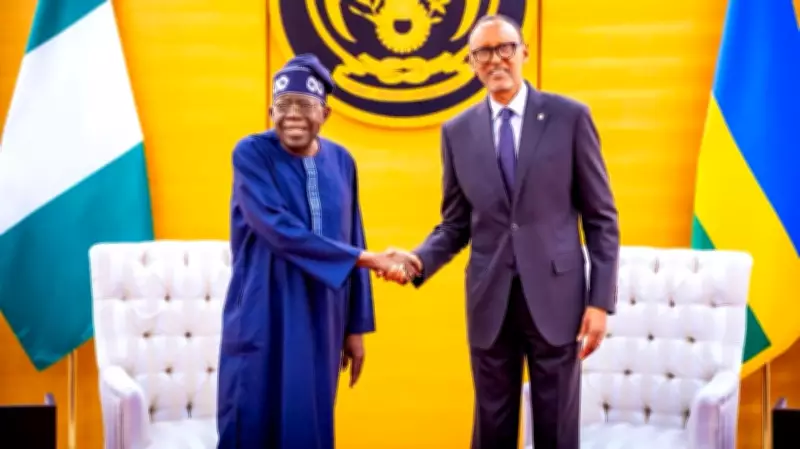
President Bola Tinubu has welcomed the outcome of the 10th France-Nigeria Business Council Meeting, held yesterday at the Africa Forward Summit in Nairobi, Kenya, describing it as a clear signal that Nigeria and France are moving from dialogue to delivery. According to him, the bilateral agreement between the two countries is now at the execution phase.
This development comes as French President Emmanuel Macron unveiled €23 billion ($27 billion) in investment commitments for Africa, covering infrastructure, energy transition, agriculture, artificial intelligence, healthcare, and the cultural and creative industries. With trade between both countries reaching $4.7 billion in 2025 and Nigeria remaining the top destination for French investment in sub-Saharan Africa, Tinubu stated that the relationship now carries real economic weight and must be translated into more jobs, industries, infrastructure, and shared prosperity.
The meeting, also attended by Nigeria’s Minister of Industry, Trade and Investment, Dr. Jumoke Oduwole, and French Minister Delegate Nicolas Forissier, saw leading Nigerian and French businesses provide updates on key projects and commit to further expanding collaboration. President Tinubu commended the Chairman of the France-Nigeria Business Council, Aigboje Aig-Imoukhuede, for convening a productive session that brought together prominent private-sector players from both nations.
He acknowledged the participation of Aliko Dangote, Abdul Samad Rabiu, Tony Elumelu, Wale Tinubu, Kola Karim, Kashim Bukar, Patrick Pouyanné of TotalEnergies, Rodolphe Saadé of CMA CGM, Danone, Accor, and other partners, whose presence reflects growing confidence in Nigeria’s reform direction and long-term competitiveness. Tinubu particularly welcomed the signing between Accor and Shoreline Group for Nigeria’s first national hotel platform, describing it as a major vote of confidence in Nigeria’s hospitality, tourism, services, and investment future.
“This is the partnership Nigeria is ready for. We are ready for investment that builds, capital that produces, and an enterprise that creates jobs. Nigeria and France are no longer simply exchanging goodwill. We are opening a new chapter of serious economic execution,” Tinubu said.
France’s Investment Commitments
The commitments from France were unveiled at the Africa Forward Summit in Nairobi, co-hosted by Macron with Kenyan President William Ruto. The summit is being held in an anglophone nation for the first time, as France seeks to expand economic and diplomatic ties with African countries beyond its historical “sphere of influence.”
Shipping and logistics giant CMA CGM signed the summit’s largest deal: a €700 million ($821 million) agreement with Kenya to expand capacity at the Port of Mombasa. CMA CGM said the partnership aims to modernize freight management systems and improve inland logistics networks. Meanwhile, Proparco, the private-sector arm of the Agence Française de Développement (AFD), announced multiple partnerships.
- €300 million ($352 million) facility with Ecobank to strengthen agricultural value chains
- €200 million cross-currency facility with the West African Development Bank (BOAD) to ease Euro/CFA franc trade flows
- €300 million ($352 million) partnership with AXIAN Group targeting telecom connectivity and renewable-energy expansion
- €20 million ($23.4 million) investment in South Africa’s Biovac
Macron stressed that these deals turn the old development model on its head. Instead of aid flowing in one direction with donors dictating to recipients, French investors will co-invest alongside African investors. Of the €23 billion to be mobilized, €14 billion ($16.4 billion) will come from France’s private sector, while African partners will mobilize €9 billion ($10.5 billion).
France’s Pivot from Aid to Investment
France’s pivot from aid to investment reflects both opportunity and necessity. Rising anti-French sentiment in former colonies has compelled French firms to diversify to other regions of Africa. Many are now seeking growth in stabler, more commercially vibrant Anglophone markets. Trade data shows that France is doing more business today with English-speaking economies like Nigeria and South Africa than with its former colonies.
Macron emphasized that France seeks a “partnership of equals” with African countries, which face “common challenges” with Europe. “The challenges of Africa and Europe are shared challenges. We all want peace, prosperity and sovereignty,” he noted.




