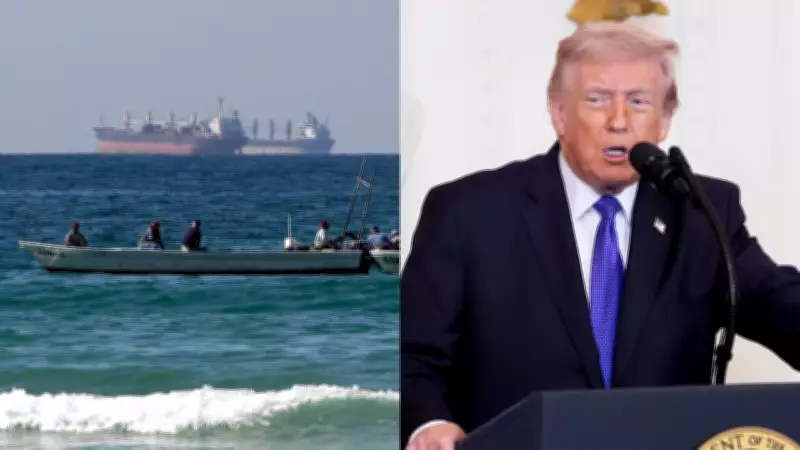
Trump Pledges US Military Protection for Ships in Strait of Hormuz
Former United States President Donald Trump has committed to providing military protection for global energy shipments passing through the strategically vital Strait of Hormuz. This announcement comes amid escalating tensions in the Middle East and growing threats to international maritime trade routes.
Public Declaration at National Prayer Breakfast
Speaking during the National Prayer Breakfast event held at the Washington Hilton in Washington, DC, Trump later elaborated on his administration's position through his social media platform, Truth Social. In a post published on Tuesday, he wrote: "If necessary, the United States Navy will begin escorting tankers through the Strait of Hormuz, as soon as possible."
Trump emphasized the critical importance of maintaining uninterrupted energy flows, stating: "No matter what, the United States will ensure the FREE FLOW of ENERGY to the WORLD."
Comprehensive Maritime Security Measures
As part of a broader response to regional instability, Trump has directed the United States International Development Finance Corporation (DFC) to provide specialized risk insurance and financial guarantees for maritime trade operations in the Persian Gulf region. While the primary focus remains protecting energy cargoes, administration officials have confirmed that this support will extend to other commercial shipping companies navigating these crucial waters.
Strategic Importance of the Strait of Hormuz
The Strait of Hormuz, situated between Iran and Oman, represents one of the world's most strategically significant shipping corridors. This narrow waterway serves as the exclusive maritime passage connecting the Persian Gulf to international waters, making it indispensable for global oil and gas distribution networks.
Major energy-producing nations bordering the Persian Gulf include:
- Iran
- Saudi Arabia
- Iraq
- Kuwait
- Qatar
- Bahrain
- United Arab Emirates
Market Impact and Regional Tensions
Escalating conflict dynamics and reported threats from Iran targeting commercial vessels have created significant uncertainty in global energy markets. These developments have triggered sharp increases in oil and gas prices as traders anticipate potential disruptions to one of the world's busiest and most economically critical trade routes.
The combination of military protection promises and financial support mechanisms represents a comprehensive approach to safeguarding international shipping interests during this period of heightened geopolitical tension in the Middle East region.