
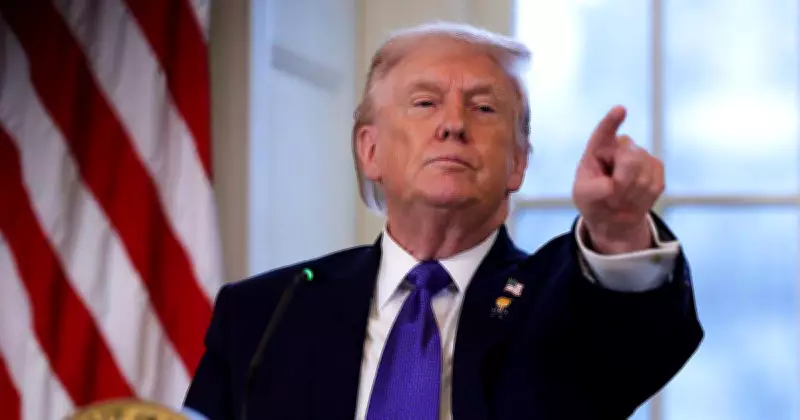
Trump's 'Cuba is Next' Declaration Ignites International Alarm
Former United States President Donald Trump has generated significant controversy with his recent declaration that "Cuba is next" during a public address where he praised American military operations. This statement comes at a particularly volatile moment as tensions continue to mount in the Middle East, creating a dual-front scenario of potential conflict that has captured global attention.
Miami Forum Remarks Add Fuel to Geopolitical Fire
Speaking at an investment forum in Miami, Florida, Trump highlighted what he described as successful U.S. military actions in various regions, specifically mentioning countries like Iran and Venezuela. While emphasizing America's military strength and global influence, he made the provocative remark about Cuba, adding "but pretend I didn't say that" in what appeared to be an attempt at humor or casual dismissal.
The statement, which circulated rapidly on social media platforms including a tweet from Al Jazeera Breaking News, contained no specific details about any planned military action against Cuba. However, the timing is particularly sensitive as the Caribbean nation grapples with a severe economic crisis characterized by energy shortages and diminished support from traditional allies.
Middle East Tensions Reach Critical Point
Simultaneously, the situation in the Middle East has deteriorated significantly. The Iran-backed Houthi group in Yemen has issued warnings that it may join the ongoing regional conflict, stating readiness for direct military engagement. This development has heightened fears among analysts and diplomats that the conflict could expand into a broader regional war with potentially catastrophic consequences.
The continuing hostilities involving Iran have resulted in ongoing strikes and counter-strikes across multiple Middle Eastern territories. Security experts suggest that the entry of additional militant groups into the conflict could dramatically widen its scope and impact, potentially drawing in more international actors.
Cuba's Complex Relationship with the United States
Cuba has maintained a historically complicated relationship with the United States, shaped by decades of political disagreements, economic sanctions, and ideological differences. Any indication of renewed American pressure or military action against the island nation would likely trigger significant international response, particularly given the current fragile state of global diplomacy.
Trump's remarks, delivered in the context of celebrating U.S. military capabilities, have introduced another layer of uncertainty to an already unstable international landscape. While no official policy shift toward Cuba has been announced by current U.S. administration officials, the statement suggests a potential expansion of American foreign policy focus beyond the Middle East to include Caribbean concerns.
Global Implications and Future Scenarios
As these parallel developments continue to unfold, international attention remains divided between the escalating Middle East conflict and the renewed focus on U.S.-Cuba relations. The combination of rising military tensions and strong political rhetoric creates a precarious situation where diplomatic engagement becomes increasingly challenging yet critically necessary.
The coming weeks are likely to prove decisive in determining whether these developments lead to further military escalation or create opportunities for diplomatic resolution. Global leaders and international organizations are monitoring both situations closely, aware that miscalculation in either region could have far-reaching consequences for international stability and security.




