Trump Issues Stark Warning to Iran Over Strait of Hormuz Security
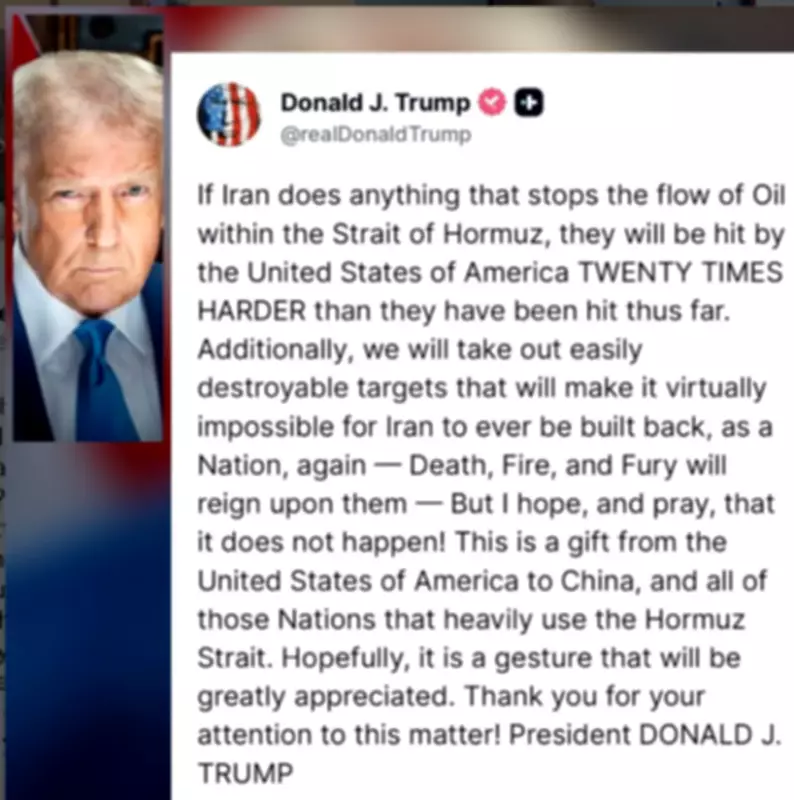
Former U.S. President Donald Trump has delivered a strong and direct warning to Iran concerning the security of the strategically vital Strait of Hormuz. In a post on his social media platform, Trump emphasized that the United States would respond with overwhelming force if Iran takes any action that disrupts the flow of oil through this critical maritime chokepoint.
Threat of Severe Retaliation
Trump explicitly stated that any attempt by Iran to halt oil movement in the Strait of Hormuz would result in the country being struck "twenty times harder" than in previous confrontations. He elaborated that the U.S. military could target key infrastructure sites, making it exceedingly difficult for Iran to recover and rebuild as a nation in the aftermath of such an attack.
"Death, fire and fury will reign upon them," Trump wrote in his social media message, while also expressing a hope that such a dire scenario would not come to pass. This rhetoric echoes his previous warnings to adversaries during his presidency, underscoring his continued hardline stance on international security matters.
Protecting Global Energy Supplies
Trump framed his warning as a protective measure for nations that heavily depend on the Strait of Hormuz for their oil shipments. He specifically mentioned China and other countries that rely on the uninterrupted transit of energy supplies through this narrow waterway, which handles approximately one-fifth of the world's oil consumption.
The former president's statement highlights the ongoing geopolitical tensions in the region, where the Strait of Hormuz serves as a flashpoint for conflicts involving global energy security and U.S.-Iran relations. Trump's remarks come amid persistent concerns over Iran's military activities and potential threats to maritime trade routes.
Broader Implications for International Relations
This warning from Trump adds to the complex dynamics of Middle Eastern politics and U.S. foreign policy. It signals a continued assertive approach toward Iran, which has historically been a focal point of Trump's administration. The statement may influence current diplomatic efforts and military posturing in the region, as stakeholders assess the credibility and potential consequences of such threats.
Observers note that while Trump is no longer in office, his vocal positions on international issues continue to resonate within political circles and among his supporters, potentially shaping public discourse and policy debates. The emphasis on protecting oil flows underscores the economic and strategic importance of the Strait of Hormuz to global markets.