
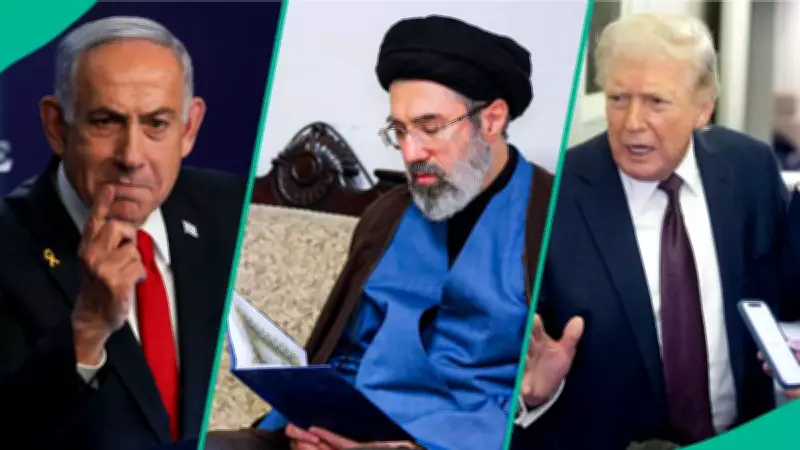
Trump's Controversial Remarks During US-Israel Military Campaign Against Iran
United States President Donald Trump has generated significant controversy by making no less than nine contradictory statements since initiating joint military operations with Israeli Prime Minister Benjamin Netanyahu against Iran on Saturday, February 28, 2026. The military campaign, which resulted in the death of Iranian Supreme Leader Ali Khamenei and thousands of casualties including women and children, has been marked by Trump's conflicting public declarations that have drawn international scrutiny.
The Initial Attack and Escalating Conflict
The coordinated US-Israel assault not only eliminated Iran's Supreme Leader but also caused substantial collateral damage, including the tragic deaths of over 150 schoolgirls at a girls-only educational institution within the Islamic Republic. In response to this aggression, Iran has launched retaliatory strikes against Israeli territory and American military installations throughout the Middle East, creating an increasingly volatile regional situation.
According to detailed analysis by Al Jazeera, President Trump has consistently made statements that directly contradict his administration's actions, observable battlefield realities, or established facts that remain unsubstantiated by evidence. These controversial remarks have spanned multiple aspects of the ongoing conflict and diplomatic efforts.
Nine Controversial Statements Analyzed
Diplomacy Claims Versus Military Action: "My preference is to solve this problem through diplomacy. A short time ago, the United States military began major combat operations in Iran." This statement proved particularly contradictory as Trump claimed diplomatic intentions while simultaneously launching military strikes during active negotiations with Iranian representatives.
Premature Victory Declaration: "You know, you never like to say too early that we won. We won, but in the first hour it was over." The US president asserted victory within the conflict's initial stages, despite the military engagement persisting for nearly a full month following his declaration, demonstrating a significant disconnect between rhetoric and reality.
Contradictory Strait of Hormuz Position: "We strongly encourage other nations whose economies depend on the Strait [of Hormuz] far more than ours. So we want them to come and help us with the Strait... and we don't even know their leaders. Look, all of their leaders are dead." Trump simultaneously claimed to have eliminated Iran's leadership while requesting NATO assistance to secure the strategically vital waterway, creating conflicting narratives about Iranian command structures.
Unsubstantiated Injury Claims: "A lot of people are saying that he's badly injured... they're saying that he lost his leg." The American leader alleged severe injuries to Iran's new Supreme Leader without presenting verifiable evidence, while Iranian authorities consistently denied these claims, creating uncertainty about the statement's factual basis.
NATO Alignment Assertions: "All the NATO allies agreed with us, but they don't want to, you know, despite the fact that we help them so much. We don't need help. It's a simple military manoeuvre, it's relatively safe..." Trump claimed NATO consensus regarding military involvement, a position directly contradicted by multiple member nations including the United Kingdom and Spain, who publicly denied such agreements.
Additional Controversial Remarks
The president made several other statements that raised questions about consistency and factual accuracy:
- "...but you need a lot of help in the sense that if you need ships, you need volume. And NATO could help us, but they so far haven't dared to do so."
- "Right from the beginning, we projected four to five weeks. So we did a little excursion, and it's... we're way ahead of schedule."
- "You can have dialogue, but I don't want to do a ceasefire. We have that. Very, very strong talks. We're doing five days. We'll see how that goes."
- "And if it goes well, we are going to end up settling this. Otherwise, we'll just keep bombing our little hearts out."
Gift Claims and Ongoing Developments
In a particularly unusual development, President Trump asserted during a White House press briefing on Tuesday, March 24, that he had received unspecified gifts from Iran related to oil and gas resources. While providing no concrete details about these alleged presents, Trump indicated they had fostered increased confidence in Tehran's leadership, despite the ongoing military confrontation between the nations.
The continuous stream of contradictory statements from the American president has complicated diplomatic efforts and created uncertainty about the United States' strategic objectives in the region. As military operations continue and casualties mount on all sides, international observers remain concerned about the conflict's trajectory and the potential for further escalation driven by inconsistent messaging from Washington.




