
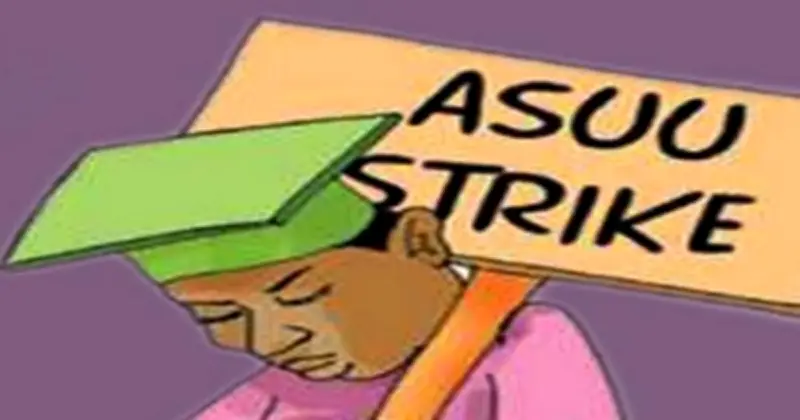
The Academic Staff Union of Universities (ASUU) has issued a 14-day ultimatum to branches in 20 Nigerian universities to resolve outstanding issues with their respective university authorities and governments or face industrial action. The decision was reached during the union’s National Executive Council (NEC) meeting held at the University of Abuja on August 8 and 9, 2026.
Reasons Behind the Ultimatum
ASUU’s latest move is linked to what the union described as the poor and selective implementation of the 2025 agreement reached with the Federal Government. The agreement was intended to address some of the long-running problems affecting lecturers and Nigeria’s public university system after years of negotiations. Under the agreement, academic staff were expected to receive a 40 per cent salary increase from January 1, 2026, alongside revised academic allowances and commitments on research, infrastructure and other university-related issues.
However, ASUU has complained that the agreement has not been implemented uniformly across universities. The union has particularly raised concerns about delayed payments, outstanding allowances, funding and the failure of some state governments to implement provisions of the agreement in their universities.
Full List of 20 Universities Affected
The 20 universities named in the latest ASUU resolution are:
- Nasarawa State University, Keffi
- Ibrahim Badamasi Babangida University, Lapai
- University of Medical Sciences, Ondo
- Gombe State University
- Plateau State University, Bokkos
- Adekunle Ajasin University, Akungba-Akoko
- University of Education and Entrepreneurship, Akamkpa, Cross River State
- Abia State University, Uturu
- Imo State University, Owerri
- Niger Delta University, Amassoma
- Taraba State University, Jalingo
- Ambrose Alli University, Ekpoma
- Olusegun Agagu University of Science and Technology, Okitipupa
- Enugu State University of Science and Technology
- Kaduna State University
- Kano State University of Science and Technology, Wudil
- Northwest University, Kano
- University of Africa, Toru-Orua
- Bayelsa Medical University
- Emmanuel Alayande University of Education, Oyo
The affected universities are predominantly state-owned institutions, meaning state governments are central to resolving many of the issues. The union’s decision does not mean that all 20 universities have already shut down. Instead, the affected ASUU branches were authorised to issue 14-day ultimatums. If their demands are not addressed, the branches may proceed with industrial action.
Escalation and Previous Warnings
The situation is already more serious at some of the affected institutions, where local ASUU branches have taken or threatened separate action over unresolved issues. At Nasarawa State University, for instance, the ASUU branch has moved beyond an ultimatum and declared an indefinite strike over the non-implementation of the agreement and outstanding entitlements.
The current ultimatum follows several earlier warnings from different ASUU zones. In July, ASUU's Benin and Yola zones threatened indefinite strike action in 11 state-owned universities across Edo, Delta, Ondo, Adamawa, Borno, Taraba and Yobe states. The union had given the affected state governments until the end of July to implement the financial provisions of the 2025 agreement. The latest national decision, therefore, comes after months of pressure on state governments to domesticate and implement the agreement in their universities.
Government Position and Historical Context
In April 2026, Education Minister Tunji Alausa declared that the era of strikes in Nigerian tertiary institutions was permanently over. Alausa said the government had resolved its longstanding disputes with ASUU, with about 90 to 95 per cent of tertiary institutions having started paying the approved increase. ASUU's subsequent statements showed that the union did not consider the dispute fully resolved. In May, its Lagos Zone said CATA, EAA and Professorial Allowance had not been mainstreamed into salaries as agreed. It also cited outstanding salary and promotion arrears, unremitted deductions and salaries withheld during the 2022 strike. The zone said federal universities and some state universities had implemented the agreement, while the affected institutions in Edo, Delta and Ondo had not.
ASUU’s current threat also brings back memories of the union’s prolonged nationwide strike in 2022. The 2022 strike lasted 234 days and became one of the longest disruptions of Nigeria’s university system in recent years. The dispute involved issues including university funding, earned academic allowances, salary-related matters, revitalisation of public universities and the renegotiation of previous agreements.
ASUU has not announced a nationwide strike at this stage. The immediate issue is the 14-day ultimatum issued through the affected branches. If the outstanding issues are not resolved, more branches could begin industrial action, after which the union’s national leadership would have to determine whether the dispute should be escalated. For now, the countdown gives the Federal Government, state governments and university authorities a window to resolve the disagreements before they become another widespread disruption of academic activities.




