
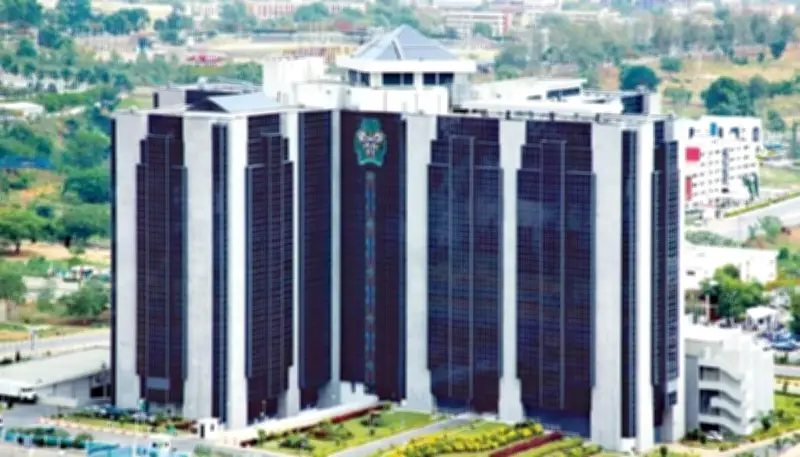
The Central Bank of Nigeria (CBN) has maintained its benchmark interest rate at 27.50% for the second consecutive meeting, keeping the Monetary Policy Rate (MPR) unchanged as borrowing costs for businesses and consumers remain above 30%. The decision, announced on Tuesday by CBN Governor Olayemi Cardoso after the Monetary Policy Committee (MPC) meeting in Abuja, defied expectations of a rate cut from some analysts and renewed calls from economists for a reduction to stimulate economic growth.
MPC Holds Rate Steady Amid Inflation Concerns
The MPC voted unanimously to retain the MPR at 27.50%, the highest level in over two decades, with the asymmetric corridor around the MPR also unchanged at +100/-300 basis points. The Cash Reserve Ratio (CRR) for banks was kept at 50.00%, and the Liquidity Ratio remained at 30.00%. This marks the first time the committee has held rates steady since the tightening cycle began in May 2022, when the MPR stood at 11.50%.
Cardoso stated that the decision was based on the need to anchor inflation expectations, despite a slight moderation in headline inflation to 33.40% in June from 33.95% in May. “The committee noted that while inflation has begun to trend downwards, it remains elevated, and the risks to price stability are still tilted to the upside,” Cardoso said. He cited factors such as food price pressures, energy costs, and fiscal policy uncertainties as reasons for the cautious stance.
Economists Renew Calls for Rate Cuts
Following the announcement, several economists and business groups renewed their calls for the CBN to begin cutting rates to lower borrowing costs and revive economic activity. The Lagos Chamber of Commerce and Industry (LCCI) described the rate hold as “a missed opportunity to signal a shift towards growth-supportive policies.” LCCI Director General Dr. Chinyere Almona said, “With the real sector struggling under the weight of high interest rates, we urge the MPC to consider a gradual easing in the coming months to unlock credit to businesses and households.”
Financial analyst and former presidential aide Dr. Okechukwu Unegbu argued that the CBN’s focus on inflation alone is harming growth. “Borrowing costs above 30% are killing small businesses and deterring investment. The CBN needs to acknowledge that the economy cannot grow with such tight monetary conditions,” he said. He noted that the current MPR, when adjusted for inflation, implies a real interest rate of about -5.9%, suggesting that monetary policy is not as tight as it appears.
Impact on Businesses and Borrowers
The rate hold means that commercial banks’ lending rates will likely remain above 30% for the foreseeable future, as banks typically price loans at the MPR plus a spread. The average maximum lending rate in Nigeria currently stands at around 31%, according to CBN data, while some small business loans carry rates of up to 35%. This has stifled credit expansion, with private sector credit growing by only 12% year-on-year in June, well below the CBN’s target of 20%.
Manufacturers have been particularly hard hit. The Manufacturers Association of Nigeria (MAN) reported that the sector’s capacity utilization fell to 52% in the first quarter of 2026, down from 58% a year earlier, partly due to high borrowing costs. MAN President Francis Meshioye said, “We are operating in a very difficult environment. The high cost of funds is forcing many factories to scale back production and lay off workers.”
Inflation Outlook and Future Policy Path
The CBN’s decision comes as the National Bureau of Statistics (NBS) reported that headline inflation eased for the second consecutive month in June, but core inflation (excluding volatile food and energy prices) remained sticky at 28.1%. Food inflation, which accounts for the largest share of the consumer basket, stood at 37.5% in June, down from 38.1% in May.
Analysts expect the MPC to maintain its tightening bias until inflation falls decisively below 30%. However, some economists predict that the committee may start cutting rates in the fourth quarter of 2026 if the fiscal authority implements measures to reduce the deficit and lower food prices. The International Monetary Fund (IMF) has advised the CBN to keep monetary policy tight until inflation is firmly on a downward trajectory, but also urged the government to address supply-side constraints.
Market Reaction
The Nigerian Stock Exchange (NGX) reacted negatively to the rate hold, with the All-Share Index falling by 0.8% on Tuesday to close at 102,450 points. Bond yields rose slightly, with the 10-year government bond yield increasing by 5 basis points to 19.2%, as investors priced in a prolonged period of high rates. The naira remained relatively stable, trading at N1,540 per dollar on the official market, as the CBN continued its foreign exchange interventions.
In the money market, the overnight lending rate (NIBOR) climbed to 32.5% from 31.8% a day earlier, reflecting tight liquidity conditions. The CBN mopped up N1.2 trillion from the banking system through its Open Market Operations (OMO) auctions in the past week, keeping interbank rates elevated.




