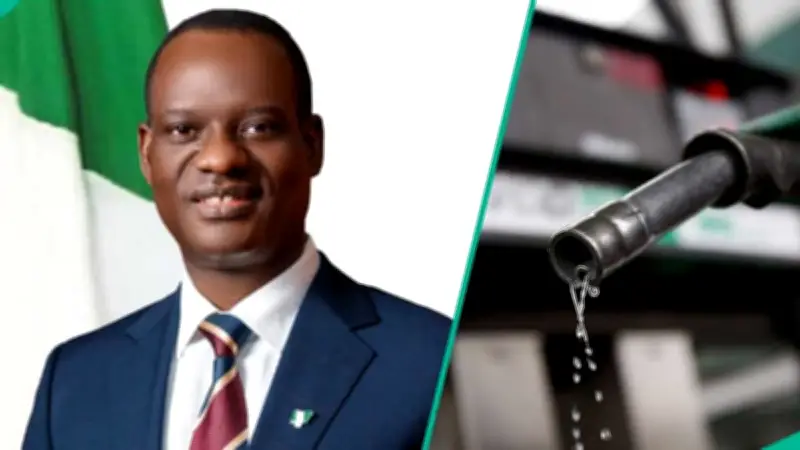
The federal government has officially dismissed reports claiming it plans to introduce a fuel tax in Nigeria, describing the allegations as misleading and reiterating that the levy is not part of its current policy agenda. Finance Minister and Coordinating Minister of the Economy, Taiwo Oyedele, issued the clarification on his official X account on Tuesday, October 20, 2026, following widespread media speculation.
Minister Clarifies Misrepresented Interview Comments
Oyedele stated that his remarks during an interview with ARISE News had been taken out of context, leading to the false narrative. In his words: “In my interview with ARISE News, I was clear: a fuel tax is not on the table.”
The minister further emphasized that imposing an additional tax on petrol under the current economic conditions would be insensitive to Nigerians still grappling with the effects of subsidy removal. He added: “Having removed the fuel subsidy, it would be insensitive for government to impose a fuel tax at this time.”
Origin of the Controversy
The controversy began following Oyedele's comments during an interview on the sidelines of the 2026 annual meetings of the International Monetary Fund (IMF) and the World Bank in Bangkok, Thailand. During that discussion, the minister highlighted how some countries generate revenue from petroleum products, noting that taxes account for between 20% and 80% of petrol pump prices in certain nations, as reported by Nigerian Tribune.
He also observed that several African countries impose multiple taxes on petroleum products. Oyedele explained that introducing a fuel tax while petrol subsidies were still in place would have been counterproductive, as the government would effectively have been paying the tax itself. He argued that the priority should be to grow incomes faster than prices rise rather than suppress prices.
Government’s Stance on Fuel Taxation Post-Subsidy Removal
His comments were subsequently interpreted in reports as suggesting that the government could introduce a fuel tax once economic conditions improved and household incomes increased. However, the minister's latest clarification firmly rejected that interpretation, stating that the government had not announced any plans to introduce the levy.
The controversy comes amid ongoing concerns about the cost of living following the removal of petrol subsidies in 2023, which contributed to higher transportation and operating costs for households and businesses across the country.
Broader Economic Context and Naira Projections
Earlier, Legit.ng reported that Oyedele cautioned that restoring petrol subsidies could push the naira as low as N4,000 to the dollar, warning that even a hint of policy reversal would be enough to rattle financial markets. He made these remarks at a press briefing following the IMF and World Bank annual meetings in Bangkok, Thailand, on Monday, October 19, according to a BusinessDay report.
The minister said foreign and local investors would not wait for a formal policy announcement before reacting. This latest clarification on the fuel tax issue is expected to ease concerns among Nigerians and investors, reaffirming the government's commitment to fiscal discipline without additional tax burdens on petroleum products.