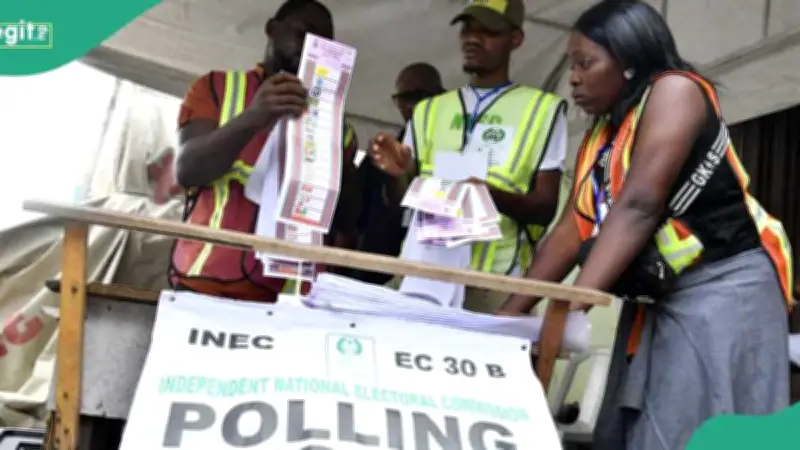
The Independent National Electoral Commission (INEC) and the Nigeria Police Force (NPF) have both stated they will take action against politicians who issue threatening or inflammatory statements, as political tensions rise ahead of the 2027 general elections. According to a report published on Sunday, September 6, both bodies spoke to The Punch in response to growing public concern over a series of provocative remarks made by politicians across several states in recent months.
Pattern of Inflammatory Statements
Among the early remarks that drew attention was a warning by Oyo State Governor Seyi Makinde on April 25, at an opposition leaders' meeting in Ibadan, where he cautioned against forced defections by referencing the political violence of the First Republic. "Operation Wetie started from here. This is the same Wild Wild West," Makinde said. The phrase refers to attacks in Nigeria's Western Region in the 1960s, during which political opponents were doused with petrol and set ablaze.
On May 2, former NNPP Board of Trustees secretary Buba Galadima urged citizens at a stakeholders' meeting in Abuja to carry "bottles and jerrycans of kerosene" to polling units in 2027. Osun State Senator Francis Fadahunsi was later captured in a viral video allegedly issuing death threats to members of the Accord Party.

Other cases included the Kuje Area Council chairman reportedly warning non-APC supporters to leave the council area, the Borno State Commissioner for Youth and Sports threatening to flog those who refused to back the party, and the Yobe APC chairman urging women whose husbands blocked them from voting APC to seek divorce.
What the Law Says
Under the Electoral Act, Section 97(1) bars any party, candidate or individual from directly or indirectly threatening another person with force or violence during a campaign. Section 132 criminalises the use or threat of force to influence voting, with convictions carrying a fine of N2 million or three years in prison.
INEC's Media Adviser, Adedayo Oketola, said the commission could issue formal queries and sanction parties under the Code of Conduct for Political Parties. He noted that Section 96(7) of the Electoral Act prescribes fines of up to N5 million and 12 months in prison for candidates, and N10 million for non-compliant parties on a first offence.
Police spokesperson Anietie Iniedu said the force would prosecute anyone whose statements threatened public peace. "Incitement is a criminal offence and we will not spare anyone trying to heat up the politics with inciteful comments," he said.
Civil Society Demands Action
Yiaga Africa's Executive Secretary, Samson Itodo, criticised what he called a dual standard in how security agencies treated politicians versus ordinary citizens, saying: "It is as if there are two separate justice systems in the country: one for the elites and the other for the masses."
Human rights lawyer Jiti Ogunye argued that politicians persisted with threats because they had faced no meaningful consequences. "Violence, threats and inflammatory statements have become part and parcel of their armoury to attain or forcibly retain power," he said.
The ruling APC, through National Secretary Ajibola Basiru, denied encouraging political violence, saying the party believed in campaigning on its record in government.
Earlier, Legit.ng reported that the Muslim Rights Concern (MURIC) called for the immediate sack of the INEC chairman, Joash Amupitan. The executive director of the Islamic group, Prof. Ishaq Akintola, posited that Amupitan cannot be trusted.