
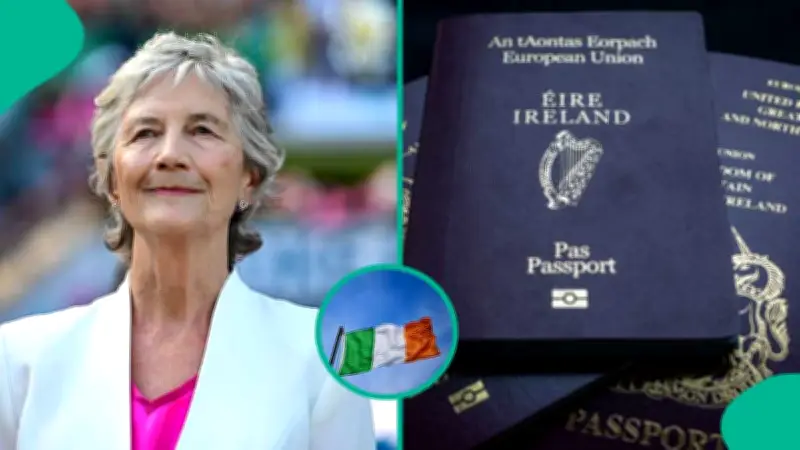
Ireland's immigration authority has outlined six key documents that foreign nationals must prepare before they can submit an application for Irish citizenship by naturalisation. According to the Irish Immigration Service, all applicants are required to upload a certified copy of their birth certificate, regardless of which category they fall under. The specific documents requested vary depending on the application type, which may include adult, minor, refugee, or spouse or civil partner of an Irish citizen.
Required Documents for Irish Citizenship
For the majority of applicants, the Irish government requires the following six documents:
- A certified birth certificate confirming legal identity;
- A certified copy of the biometric page of a passport or travel document proving identity and nationality;
- Proof of residency for each year of the qualifying period;
- Identity documents meeting a 150-point verification threshold;
- An Irish Residence Permit (IRP) card confirming lawful presence in the country; and
- A legal declaration confirming that the information submitted is accurate.
The 150-point verification system is a standard method used by Irish authorities to establish identity. Applicants must provide a combination of documents that add up to at least 150 points, with higher points assigned to primary documents like passports and lower points to secondary items such as utility bills.
Affidavits such as residency, passport, or birth affidavits may only be submitted in exceptional circumstances where the original document genuinely cannot be obtained. Submitting an affidavit in place of a document that is available may result in the application being returned or delayed.
Extra Requirements for Spouses and Civil Partners
Foreign nationals applying through marriage or a civil partnership with an Irish citizen face additional conditions. To be eligible, the applicant must have lived in Ireland for at least three years following at least three years of marriage or civil partnership. This ensures that the relationship is genuine and subsisting.
As part of this process, the Irish spouse or civil partner is required to sign a statutory declaration before a solicitor, commissioner for oaths, peace commissioner, or notary public. The declaration confirms that the marriage or civil partnership is genuine, that the couple remains together, and that both parties share the same home.
Refugees and applicants relying on Irish descent or association may also be required to provide additional supporting documents specific to those categories. For example, refugees must submit their refugee status documentation, while those claiming Irish descent must provide evidence linking them to an Irish-born ancestor.
Application Categories and Process
The Irish Naturalisation and Immigration Service (INIS) processes applications under several categories: adult applicants, minors, refugees, stateless persons, and spouses or civil partners of Irish citizens. Each category has its own set of documentary requirements, though the six core documents listed above apply to most.
Applicants must ensure all documents are certified by a qualified professional, such as a solicitor or notary public. Documents not in English or Irish must be accompanied by a certified translation.
In a related development, Ireland's Department of Justice released an official guide outlining the requirements foreigners must meet before submitting a citizenship application. The guide covers seven key steps, including eligibility checks, document certification, residency proof, and fee payment. It is designed to help applicants navigate the process smoothly and avoid common pitfalls.
The Irish citizenship application fee is currently €175 for adults, with additional fees for processing and certification. Processing times vary, but applicants are advised to expect a wait of several months to over a year.
Impact and Statistics
According to recent figures from the Irish Central Statistics Office, over 10,000 foreign nationals applied for Irish citizenship in the past year, with a significant proportion from non-EU countries such as Nigeria, India, and Brazil. The new document list aims to streamline the process and reduce delays caused by incomplete applications.
The 150-point identity verification threshold is a key requirement that many applicants find challenging. It requires careful planning to ensure that the submitted documents collectively meet the points target. Common combinations include a passport (80 points) plus a driver's licence (70 points) or a passport plus a utility bill and bank statement (30 points each).
Applicants are encouraged to start gathering documents early, as certified copies and translations can take time. The Irish Immigration Service warns that applications with missing or incorrect documents may be returned without processing, causing further delays.
For more detailed information, applicants can visit the official INIS website or consult with an immigration solicitor. The official guide published by the Department of Justice is also available online and provides a step-by-step overview of the entire application process.




