
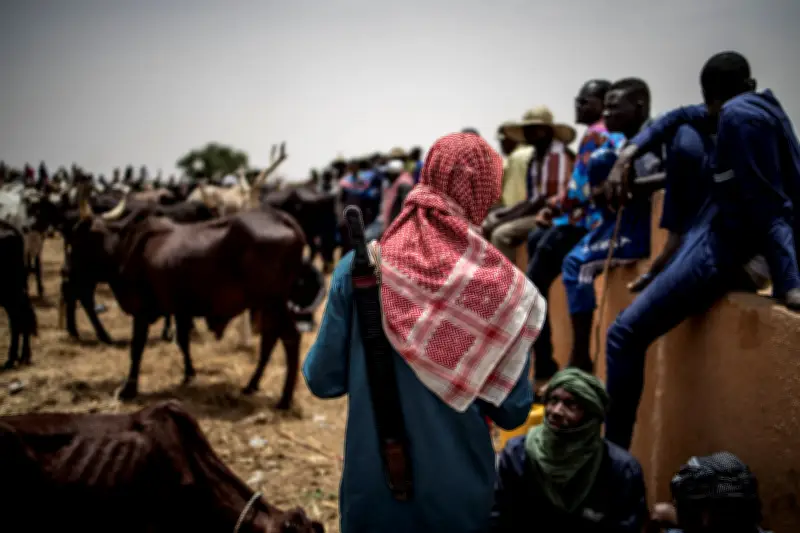
The Niger State Government has made it obligatory for pastoralists entering the state to first obtain an official permit, a decisive move aimed at bolstering security and bringing livestock movement under strict regulation.
Commissioner for Nomadic and Pastoral Affairs, Umar Rabe, disclosed this at the New Niger Quarterly Media Briefing on Government Performance and Citizens Engagement Forum, as conveyed in a statement released to journalists. He explained that the measure is designed to distinguish genuine pastoralists from criminals who may be hiding under the guise of herding to perpetrate acts of banditry, kidnapping, and cattle rustling.
“Pastoralists entering Niger State must obtain official permission from the state government. Anyone who fails to do so risks being regarded as a cattle rustler,” Mr Rabe said.
Mr Rabe added that the policy will particularly target pastoralists entering through border local government areas from neighbouring states, where the lack of monitoring has allowed criminals to infiltrate communities. He stressed that the government's objective is not to deny legitimate herders access, but to ensure that all movement is documented and that those with criminal intentions are quickly identified and stopped.
The commissioner noted that the policy is a critical component of a broader strategy to end years of insecurity that have prevented many farmers from accessing their farmlands, subsequently leading to food shortages in parts of the state. Without a controlled system, he argued, it would be impossible to know who is entering the state and for what purpose, thereby creating an environment where criminals can easily exploit the absence of regulation.
Background: A Ministry Created to Fill a Data Gap
Mr Rabe traced the root of the problem to a lack of data. Before the Ministry of Nomadic and Pastoral Affairs was established on August 23, 2022, the government did not have accurate records on pastoralists operating in Niger State. This gap made it difficult to plan for their needs and to monitor security threats associated with herding activities.
He said with the political will of Governor Mohammed Bago, the government now possesses comprehensive information about the leadership of pastoralist groups across the state. “We know them by the associations they belong to and their respective chairmen in various localities,” he added.
Over the next three years, the government plans to build a comprehensive database containing details of pastoralists, the number of livestock they own, and their exact locations. This profiling exercise, Mr Rabe said, would also enable the government to provide essential social amenities to pastoral communities, such as potable water and other basic services. In addition, empowerment programmes have been designed for women and youths in these communities, while new strategies are being developed to reduce the frequent conflicts between herders and farmers.
Police Weigh In: Freedom of Movement vs. Security
Also speaking at the briefing, the Commissioner of Police, Adamu Elleman, represented by the Police Public Relations Officer, SP Wasiu Abiodun, attributed the influx of pastoralists into Niger State to rising insecurity in neighbouring states. He noted that while the Nigerian Constitution guarantees every citizen the right to freedom of movement, security agencies will collaborate with the state government to profile incoming pastoralists and prevent criminal elements from taking advantage of that provision.
“Law-abiding pastoralists who are fleeing insecurity elsewhere will continue to enjoy protection, but persons with criminal intentions will not be allowed to undermine public safety,” he said.
Security Context: Recent Operations and Incidents
This latest measure comes amid sustained efforts by the Niger State Government and security agencies to address insecurity, including banditry and cattle rustling. On 17 May 2026, the Niger State Police Command announced the recovery of 67 rustled cattle during a joint security operation in Munya Local Government Area. Suspected criminal elements were also arrested in separate operations across the state.
These actions follow repeated military offensives against armed groups operating in Shiroro and other affected local government areas in recent months. Tragically, the state has also witnessed deadly clashes between farmers and herders; in one reported incident, 48 people were killed. The combination of these events underscores the urgent need for a regulated herding system, which the new permit policy aims to provide.
The permit system is expected to be enforced in collaboration with community leaders and security agencies. By maintaining accurate records, the government will be able to track movement patterns, identify unusual activities, and respond more effectively to emerging threats. The state government believes that through profiling, database development, community empowerment, and inter-agency collaboration, lasting peace and improved food security can be achieved in Niger State.




