
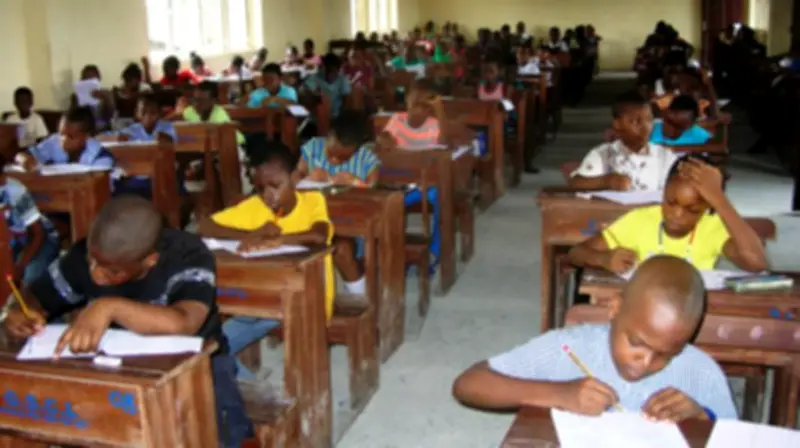
The Federal Government of Nigeria has formally scrapped the 6-3-3-4 system of education, replacing it with a linear 12-year schooling model that covers primary to the end of secondary education. The old system, introduced in 1982 after its formulation in 1977, allocated six years for primary school, three years for junior secondary school (JSS), three years for senior secondary school (SSS), and a minimum of four years for university education.
Minister Cites Dropout Crisis
Minister of Education Tunji Alausa announced the change on 1 July, stating that the transition from JSS 3 to SSS 1 created a bottleneck. He noted that Nigeria has 20 million dropouts from primary to junior secondary school. “We have 80,000 public primaries and about 15,000 Junior Secondary schools. That is a ratio of one-to-eight,” Alausa said. He argued that the 6-3-3-4 system contributed to the high number of out-of-school children.
Lack of Debate Sparks Criticism
Education is on the Concurrent Legislative List in the 1999 Constitution, meaning federal and state governments share responsibility, with heavy private sector involvement. Critics argue that the government failed to hold broad consultations before abolishing the system, similar to recent controversial changes to the National Youth Service Corps (NYSC) scheme. The 6-3-3-4 system was originally introduced after extensive national discourse, with a curriculum tailored to pre-career paths and labour demands, including technical and business subjects.
Curriculum Overhaul Previously Attempted
In 2025, the Federal Ministry of Education and the Nigerian Educational Research and Development Council (NERDC) reduced JSS subjects from 18 to 12 and SSS subjects from 20 to 9, citing curriculum overload. The junior and senior secondary split was designed to identify pupils with lower academic abilities and guide them toward vocational skills. Passing JSS was a prerequisite for SSS.
Root Causes Ignored, Say Experts
Stakeholders argue that blaming the 6-3-3-4 system for the 20 million out-of-school children is disingenuous. Insecurity, especially in northern Nigeria, teacher shortages, dilapidated infrastructure, poverty, and early marriage practices are key drivers. Data from the ICIR shows that between April 2024 and May 2026, 26 schools were attacked, leading to the kidnapping of 2,416 students. Many children in IDP camps in Borno, Benue, and Plateau remain out of school. Some rescued Chibok girls refused to return to school due to trauma.
Funding Shortfalls Persist
Alausa lamented that three out of four children at basic education level cannot read age-appropriate text by age 10. However, as of 18 March 2026, ₦97.88 billion in UBEC funds remained unclaimed because states refused to provide 50% counterpart funding. Only 21 states have ever accessed these funds. UNESCO warns of a “generational catastrophe” without foundational investments. Former UBEC Executive Secretary Hamid Bobboyi noted in 2024 that only 499,202 teachers were available against a requirement of 694,078, leaving a deficit of 194,876. In many communities, PTAs hire teachers, merge classes, and pupils learn on bare floors.
Policy Reversal Criticized
A stakeholder stated, “Right now, the problem is not restructuring, it is the provision of a better learning environment, laboratories, infrastructure, and qualified teachers.” Critics say the 6-3-3-4 system did not fail; rather, the government failed through inadequate financing and implementation. The lack of technical equipment, workshops, electricity, and trained personnel meant the system never truly took off. Similar policy flip-flops include the removal of History from the curriculum, only recently reinstated after public outcry, and the proposed hike of WASSCE and NECO fees to ₦50,000, which was quickly retracted.
Observers warn that education is too sensitive to be left to politicians alone. Nigeria requires sustained investment, not cosmetic restructuring, to achieve desired outcomes.




