
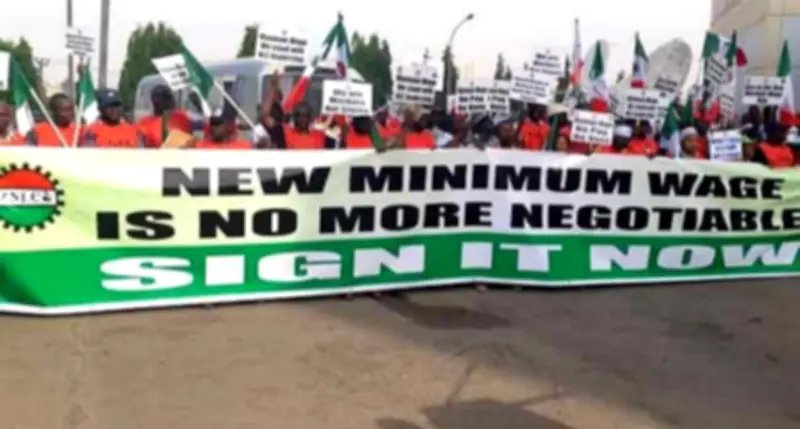
The Nigeria Labour Congress (NLC) has declared that the current N70,000 national minimum wage is no longer sustainable, announcing plans to commence negotiations with the Federal Government for a new wage structure. The labour body insists that workers' basic needs can no longer be met by the existing wage amid soaring inflation and escalating living costs.
NLC President Calls for N500,000 Minimum Wage
Speaking at the Rights of Workers Summit in Birnin Kebbi on Thursday, NLC President Joe Ajaero, represented by Deputy President Audu Titus Amba, said workers should prepare for fresh negotiations. He argued that the current minimum wage falls short of meeting workers' basic needs.
“Anything less than N500,000 cannot cater for workers. The current minimum wage is due for review, and we will soon begin negotiations with the government,” Ajaero stated.
TUC Echoes Concerns Over Eroded Purchasing Power
Also addressing the summit, Trade Union Congress (TUC) President Festus Osifo, represented by Secretary-General Nuhu Toro, highlighted that worsening economic conditions had eroded workers' purchasing power. He cited rising food prices, transport fares, rent, and inflation as key factors rendering the current wage inadequate.
Background: N70,000 Minimum Wage Signed into Law in 2024
President Bola Tinubu signed the current national minimum wage bill into law on July 29, 2024, raising it from N30,000 to N70,000 per month. The legislation followed extensive negotiations with organized labour and included a provision to review the wage structure every three years.
The NLC's demand for N500,000 represents a significant leap from the current N70,000, reflecting the union's assessment of the economic realities facing Nigerian workers. The proposed figure is over seven times the existing minimum wage, underscoring the severity of the cost-of-living crisis.
Impact on Workers and the Economy
If implemented, a N500,000 minimum wage would have far-reaching implications for both workers and the broader economy. For workers, it would provide much-needed relief from the pressures of inflation, which has eroded the value of wages across the country. For the government and employers, it would necessitate substantial budget adjustments and could impact pricing structures across various sectors.
The NLC's announcement signals the beginning of what is likely to be a contentious negotiation process, with labour unions pushing for a wage that reflects the true cost of living, while the government must balance these demands with fiscal sustainability.
Looking Ahead: Negotiations and Expectations
As both sides prepare for negotiations, the NLC has made its position clear. The union is demanding a wage that it believes will allow workers to live with dignity, despite the economic challenges facing the nation. The outcome of these negotiations will be closely watched by millions of Nigerian workers, who have seen their purchasing power decline steadily over the years.
The NLC's call for N500,000 is not just a number; it is a statement about the current state of the Nigerian economy and the struggles of the working class. Whether the government will meet this demand remains to be seen, but the union has signaled that it will not back down from its position.




