
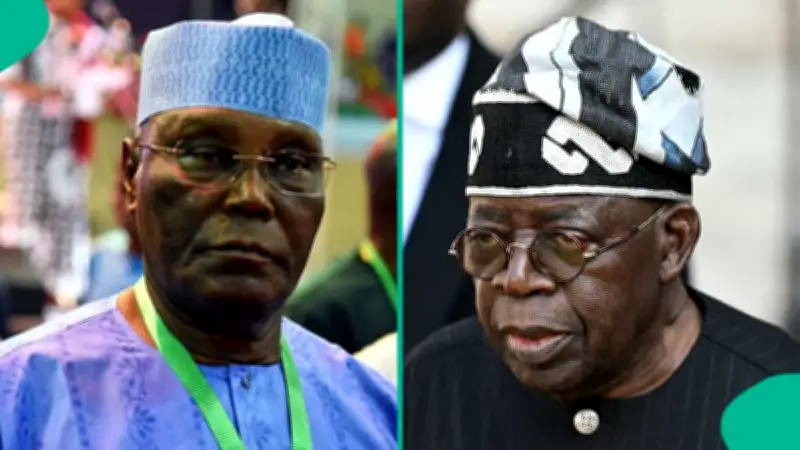
The Presidency has publicly challenged former Vice President Atiku Abubakar over his promise to restore fuel subsidies if he wins the 2027 presidential election, calling the proposal fiscally irresponsible and legally problematic. Bayo Onanuga, Special Adviser to President Bola Tinubu on Information and Strategy, issued a statement on August 20, 2026, arguing that Atiku's plan contradicts his own earlier stance.
Atiku's Shift and the Presidency's Rebuttal
Onanuga pointed out that before losing the 2023 election, Atiku had publicly supported the removal of the subsidy regime. The presidency's statement rejected Atiku's suggestion that scrapping the subsidy created a N30 trillion windfall, describing the figure as a figment of his imagination.
Onanuga clarified that fuel subsidy was never a cash reserve but rather a cost absorbed by the Nigerian National Petroleum Company (NNPC) each time it sold petrol below supply cost. He noted that the Nigerian government still owes trillions of naira in unpaid subsidy costs sitting in NNPC's books.
Legal and Structural Obstacles
The Petroleum Industry Act, which took effect in June 2023, legally ended the subsidy arrangement. Onanuga said restoring it would require Atiku to identify a funding source, outline a new pump price, and potentially push for amendments to the existing law.
The presidency also pointed to structural changes in Nigeria's petroleum sector as a reason the old model can no longer apply. The Dangote Refinery now supplies a significant volume of locally refined petrol, a development Onanuga said would not have happened under a subsidy regime. He argued that Atiku's proposal, if implemented, would threaten smaller domestic refineries, lead to job losses, and end Nigeria's newly established exports of refined products to Europe, Asia, and the United States.
Fiscal Impact and Questions for Atiku
Onanuga said the roughly N15 trillion that previously went into the subsidy now flows to the three tiers of government. In July 2026, the federation account shared about N3 trillion among federal, state, and local governments, a record figure he credited to the removal of the fuel price discount.
He asked Atiku to answer specific questions: what the annual cost of the programme would be, which revenue stream would fund it, whether the government would borrow to cover it, and how payments would be shielded from the corruption that plagued the old regime.
Alternative Solutions and Political Context
The statement acknowledged that rising fuel and transport costs remain a genuine burden on Nigerian households, but argued that restoring subsidies is not a sustainable answer. Onanuga pointed to the government's push for Compressed Natural Gas, which he said is about 70 per cent cheaper than petrol, as a more workable path to reducing energy costs for citizens.
He called on Atiku and other political actors to present Nigerians with the full legal and fiscal details of any subsidy restoration plan before the 2027 vote.
Separately, FCT Minister Nyesom Wike dismissed Atiku as a "voodoo economist," accusing him of shifting positions on fuel subsidy policy, while insisting that President Tinubu remains the frontrunner heading into the 2027 presidential election. Wike made the remarks on Thursday, August 20, during a media briefing held while he inspected infrastructure projects across Abuja.




