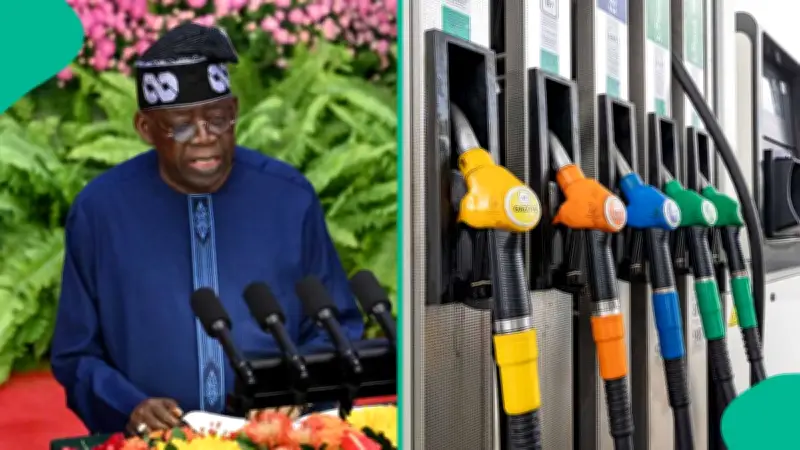
The Presidency has officially responded to former Vice-President Atiku Abubakar's promise to restore the petrol subsidy, warning that such a reversal would undermine ongoing petroleum sector reforms, create legal and fiscal complications, and deter investment in local refining capacity, including the Dangote Refinery. This comes as petrol prices climb to N1400 per litre in several states, intensifying public debate over the policy.
Presidency's Strong Warning on Subsidy Reversal
Presidential spokesperson Bayo Onanuga, in a series of posts, dismissed Atiku's proposal as retrogressive, fiscally unsustainable, and driven by "desperation to win the presidency." He emphasised that Nigeria's petroleum landscape has fundamentally changed since President Bola Tinubu announced the end of fuel subsidy on May 29, 2023, the day he was sworn into office.
President Tinubu himself weighed in during a meeting with Osun State Governor Ademola Adeleke at the State House, describing Atiku's position as a reflection of "his high level of ignorance in governance and economy."

N15.8 Trillion Generated Since Subsidy Removal
Finance Minister Taiwo Oyedele provided concrete figures to support the government's stance, stating that the policy shift delivered measurable fiscal gains. He put the total resources freed up for the federation at N15.8 trillion between June 2023 and December 2025, with N5.4 trillion going to the Federal Government and N10.4 trillion distributed among states and local governments.
Atiku, now the presidential candidate of the African Democratic Congress (ADC), had actually backed subsidy removal during the 2023 elections. He has since reversed course, arguing that Nigerians have not seen the promised benefits. He now proposes a controlled support mechanism tied to domestic refining, where crude allocations would be tracked to ensure savings reach consumers rather than disappear into an opaque system.
Economists Split on the Debate
Prof. Uche Uwaleke, President of the Capital Market Academics of Nigeria, said the real question was not about cheaper petrol but about how best to use scarce public resources to improve lives over the long term. He acknowledged that the old subsidy regime had been a burden on public finances while enabling smuggling and rent-seeking.
"The success of subsidy removal should not be measured simply by whether government stopped paying the subsidy. It should be measured by whether it succeeded in converting that difficult sacrifice into a more productive economy, stronger public services, increased domestic production and a better quality of life for the ordinary Nigerian," he said.
Development economist Prof. Ken Ife was equally opposed to restoring blanket subsidies, saying Nigeria could not fix deep-seated problems through artificial price-slashing. "In broad macroeconomic terms, and even in development economies, you do not subsidise consumption. What you subsidise is production," he said, adding that borrowing to fund subsidy payments would violate the Fiscal Responsibility Act.
Public Hardship and Calls for Accountability
On the ground, however, the picture looks different. Civil servant Ibrahim Abbas said the only tangible result he and his colleagues had felt since 2023 was economic hardship and a collapse in the Naira's purchasing power, making Atiku's proposal "attractive to ordinary Nigerians." Retired civil servant Sule Aliu echoed that view, saying the economy had been particularly harsh on retirees since the policy change.
Atiku has also challenged President Tinubu to account for the proceeds of fuel subsidy removal, demanding answers to the question "Where is the money?" The debate continues as petrol prices hit N1400 in several states, with economists and civil servants offering sharply divided views on whether scrapping the subsidy has benefited ordinary Nigerians.