
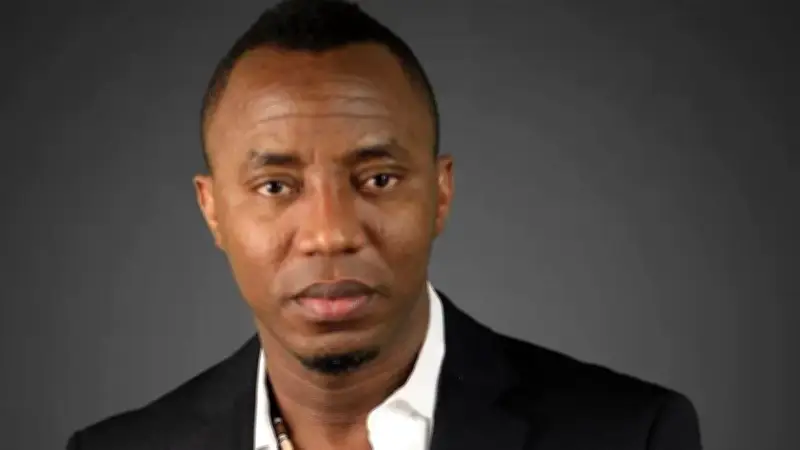
Omoyele Sowore, the African Action Congress (AAC) presidential candidate, has identified three key government offices he believes are the primary drivers of corruption in Nigeria. In a recent interview with Lucky Udu, Sowore singled out the Office of the Accountant General of the Federation, the Ministry of Finance, and the Office of the Auditor General of the Federation as the most corrupt institutions in the country.
Sowore's Accusations
Sowore alleged that these three offices are "largely responsible for corruption" in Nigeria. He claimed that double payments and other financial irregularities are rampant within these institutions, allowing public funds to be siphoned off with impunity. The AAC candidate asserted that the systemic corruption in these offices has hindered national development and eroded public trust in the government.
"If someone is trying to pay one contractor three times, the AI will detect it," Sowore said, explaining how his proposed technological solutions would work. He argued that the current oversight mechanisms are inadequate and have failed to prevent widespread financial malfeasance.
AI as a Solution
Vowing to overhaul the system if elected in the next general election, Sowore promised to deploy Artificial Intelligence (AI) to curb waste and tackle corruption across government institutions. He believes that AI-driven systems can monitor financial transactions in real-time, flagging suspicious activities and preventing fraudulent payments before they occur.
"At the end you would have eliminated the ministry of finance, the auditor general's office and that of the accountant general because those are the three offices in Nigeria that are largely responsible for corruption," he stated, suggesting that AI could render these traditional oversight bodies obsolete if they fail to reform.
Technology-Centric Presidency
Highlighting his vision for a technology-driven administration, Sowore emphasized that his presidency would focus on the Fourth Industrial Revolution. This revolution, he explained, is centered around artificial intelligence, advanced computing, blockchain technology, and decentralized banking systems.
"The presidency of Sowore is going to be about technology. It is going to be built on the fourth industrial revolution which is a revolution that is around artificial intelligence, the power of computing, blockchain technology and decentralized banking," he said.
Sowore also predicted a major shift in the global financial landscape, asserting that "very soon, digital currency will flood the world and your central bank will become archaic." This forward-looking approach, he argues, would not only enhance transparency but also position Nigeria as a leader in technological innovation on the African continent.
Implications for Governance
The AAC candidate's remarks come amid growing concerns about corruption in Nigeria, which has consistently ranked poorly on global transparency indices. According to Transparency International's 2023 Corruption Perceptions Index, Nigeria scored 25 out of 100, indicating a high level of perceived corruption. Sowore's proposals, if implemented, could significantly alter how government finances are managed and audited.
However, critics question the feasibility of such sweeping technological changes in a country with significant infrastructure and digital literacy gaps. Nonetheless, Sowore remains confident that his tech-centric approach is the key to unlocking Nigeria's potential and restoring integrity to public service.
As the election season heats up, Sowore's bold statements are likely to spark further debate on the role of technology in governance and the fight against corruption in Nigeria.




