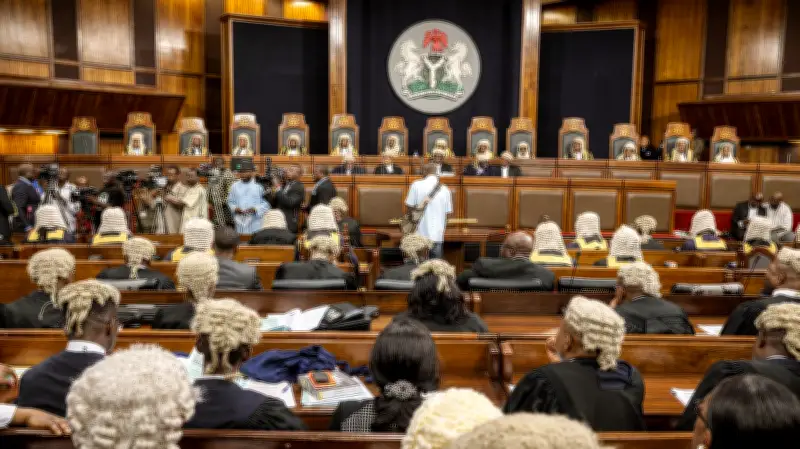
Nigeria's democracy is at risk without urgent judicial reforms, a Supreme Court Justice has declared. Justice Mohammed Baba Idris, delivering the keynote address at the 2026 Law Week of the Nigerian Bar Association in Benin City, Edo State, warned that democracy cannot thrive where justice is delayed, compromised, or subjected to political interference.
Judiciary as Last Line of Defence
Speaking on the theme 'Repositioning for Effective Justice Delivery and Democratic Stability in Nigeria,' Justice Idris said the survival of constitutional democracy depends on the strength, credibility, independence, and efficiency of the judiciary. He noted that while Nigeria has recorded democratic progress since 1999, serious challenges threaten public confidence in democratic institutions.
'Where justice is compromised or denied, the foundations of stability are inevitably eroded. Where courts are weakened or perceived as lacking independence, the democratic order becomes increasingly vulnerable,' he said.
Major Challenges Identified
Justice Idris highlighted seven major challenges confronting justice delivery in Nigeria: delays in adjudication, inadequate funding and infrastructure, corruption concerns, political interference, technological deficiencies, insecurity, and growing disregard for court orders. He lamented that prolonged delays have become a troubling feature, with some litigations lasting for years or even decades.
'It is not uncommon for litigants who initiated proceedings to pass away before the final determination of their cases,' he said.
He also raised concerns over poor funding and slow implementation of constitutional guarantees for judicial financial autonomy. Many courts operate under difficult conditions, lacking modern technological facilities, digital infrastructure, and adequate support systems.
Corruption and Political Interference
While acknowledging that most judicial officers are persons of integrity, Justice Idris said allegations and perceptions of corruption undermine public trust. He warned that political actors intimidating courts, influencing outcomes, or disregarding lawful court orders pose a serious threat to the rule of law.
'A democracy cannot flourish where judgments of competent courts are ignored with impunity,' he stated.
Proposed Reforms
To address these challenges, Justice Idris proposed sweeping reforms, including strengthening judicial independence, expanding technological innovation, modernizing procedural laws, enhancing judicial education, promoting ethical accountability, and widening access to justice. He advocated for electronic filing systems, virtual hearings, and digital case management platforms to improve efficiency.
He also called for expanding alternative dispute resolution mechanisms and specialized courts for cybercrime, taxation, financial crimes, and maritime disputes. He stressed that reforming the justice sector is a collective responsibility requiring commitment from the judiciary, executive, legislature, legal practitioners, civil society, media, and citizens.
Call to Action
Justice Idris said Nigeria stands at a critical point in its constitutional evolution and urged stakeholders to embrace reforms that will strengthen democratic institutions and uphold the rule of law. 'The responsibility is ours. The moment is now. The future of our democracy depends substantially upon the reforms we are prepared to undertake today in order to secure tomorrow,' he declared.