From campaign partners to courtroom adversaries
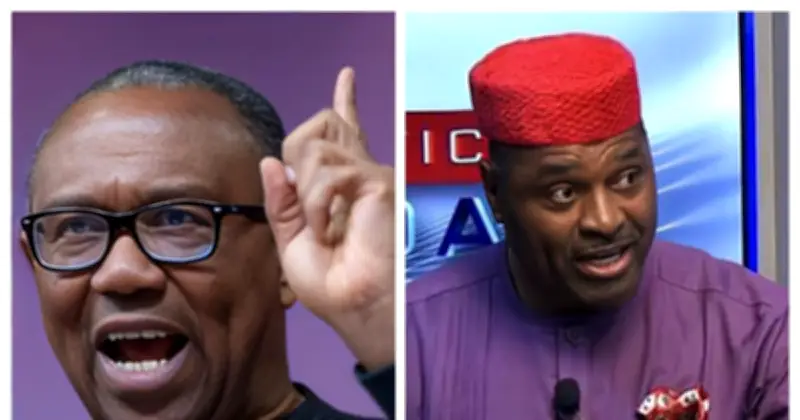
Peter Obi, the former Labour Party presidential candidate and current leader of the Nigerian Democratic Congress (NDC), has filed a ₦5 billion defamation lawsuit against Kenneth Okonkwo, the actor-turned-politician who once served as his spokesperson. The legal action stems from comments Okonkwo made during a televised interview on Channels Television's Sunrise Daily programme on June 8, 2026.
According to legal documents submitted by Obi's lawyer, Alex Ejesieme (SAN), Okonkwo's remarks included serious allegations that painted Obi as corrupt and dishonest. Among the claims were that Obi and some South-East NDC leaders collected ₦10 million bribes from House of Representatives aspirants for nomination tickets, that Obi fabricated the party's candidate list at a hotel in Abuja, and that he frequently traveled abroad to collect money from individuals. Okonkwo also allegedly warned viewers that voting for the NDC and Obi meant voting for criminality.
The fallout and demands
Obi's legal team issued a pre-action notice demanding an immediate retraction, a public apology across all major media platforms within seven days, and ₦5 billion in damages. The notice described Okonkwo's comments as "extremely grave, damaging and reckless imputations of bribery, extortion, fraud, financial dishonesty and criminality." Obi, who has cultivated a public image centered on transparency and anti-corruption, viewed the allegations as a direct attack on his political reputation.
However, a twist emerged when Obunike Ohaegbu, the NDC aspirant Okonkwo claimed was the victim of the ₦10 million extortion, appeared on the same programme to deny the story. Ohaegbu stated categorically that Peter Obi never demanded money from him and that he never told Okonkwo otherwise. This public denial weakened Okonkwo's defense significantly.
What happens next?
As the seven-day ultimatum ticks away, all eyes are on Kenneth Okonkwo, who is himself a lawyer. He faces a choice: either produce alternative proof to support his claims or issue the demanded apology to avoid a prolonged courtroom battle. The lawsuit marks a bitter end to what was once a close political alliance, highlighting the high stakes of defamation in Nigeria's political landscape.