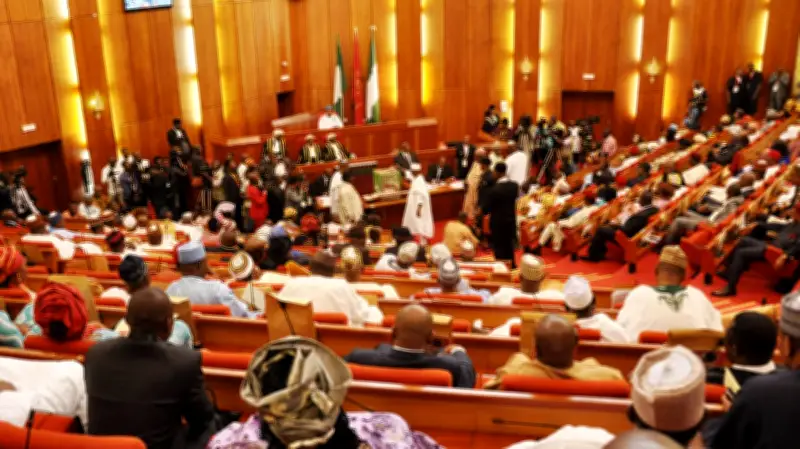
The Nigerian Senate on Wednesday moved to confront growing pressure on the nation's judiciary with far-reaching legislative proposals aimed at expanding the capacity of two of the country's most critical courts. The upper chamber is considering amendments that would increase the number of Justices of the Court of Appeal from 70 to 110, and expand the Federal High Court from 70 to 90 judges, in what lawmakers describe as an urgent response to an increasingly overburdened justice system.
Proposals and Bipartisan Support
The proposals, contained in two separate bills sponsored by Senate Leader, Senator Opeyemi Bamidele, scaled second reading during plenary with unanimous support, marking a rare bipartisan agreement on judicial reform. Leading debate on the Court of Appeal (Amendment) Bill, 2026 (SB. 991), Bamidele painted a picture of a judiciary struggling to keep pace with Nigeria's expanding legal landscape.
He told colleagues that the Court of Appeal, established under Section 237 of the 1999 Constitution (as amended) as the pivotal link between trial courts and the Supreme Court, is now facing a workload that has grown beyond its structural capacity. The appellate court, which handles appeals from the Federal High Court, State High Courts, National Industrial Court, election tribunals, Sharia Courts of Appeal and Customary Courts, has in recent years become the central battleground for Nigeria's most consequential disputes.
Drivers of Case Surge
According to Bamidele, the surge in cases is driven by a combination of population growth, expanding economic activity, rising electoral litigation, constitutional disputes, and increasingly complex commercial transactions. He warned that without urgent intervention, the delays in appellate justice would deepen, undermining public confidence in the legal system and slowing down final resolution of critical national disputes.
Federal High Court Overwhelmed
A similar concern was raised regarding the Federal High Court, which lawmakers described as a cornerstone institution handling disputes tied to Nigeria's economic and national security architecture. Its jurisdiction covers sensitive and high-stakes matters including taxation, customs and excise duties, banking and financial regulation, aviation, telecommunications, immigration, citizenship, intellectual property, money laundering, terrorism financing, and electoral disputes into specified offices.
Senators noted that the volume and complexity of these cases have risen sharply in recent years, reflecting both Nigeria's expanding economy and the growing sophistication of financial and governance-related litigation. If passed into law, the bills would raise the Court of Appeal bench to 110 justices, adding 40 new judicial officers, while the Federal High Court would receive an additional 20 judges to bring its strength to 90.
Expected Benefits
Lawmakers argue that the expansion is necessary not only to reduce case backlog but also to improve the speed of hearings, strengthen panel composition, and enhance access to justice for citizens and businesses alike.
Unanimous Backing at Second Reading
The proposals received unanimous endorsement at second reading, with senators describing the reforms as a timely response to what they called a "structural imbalance" between Nigeria's growing population and its judicial capacity. Following the debate, both bills were referred to relevant Senate committees for further legislative scrutiny, including consultations with judicial stakeholders.
Beyond legislative language, the debate underscored a deeper concern within the Senate: a justice system struggling to maintain pace with the demands of a rapidly changing society. As Senator Bamidele summed up in his lead debate, the reforms are not merely administrative, but foundational to governance itself, aimed at strengthening the rule of law, restoring confidence in the courts, and ensuring that justice delivery does not become collateral damage of national growth.
The bills now proceed to committee stage, where further details of implementation, funding, and judicial deployment are expected to be examined.