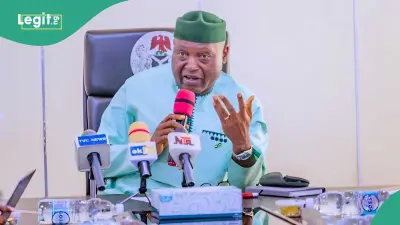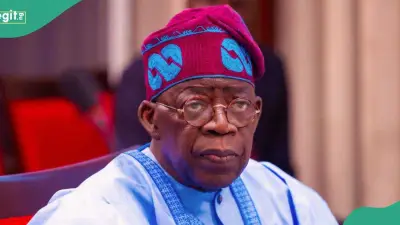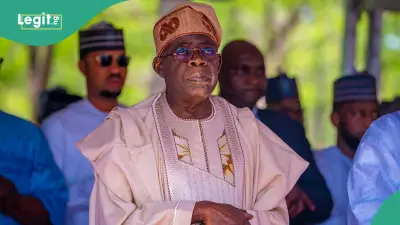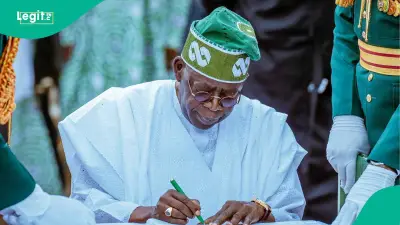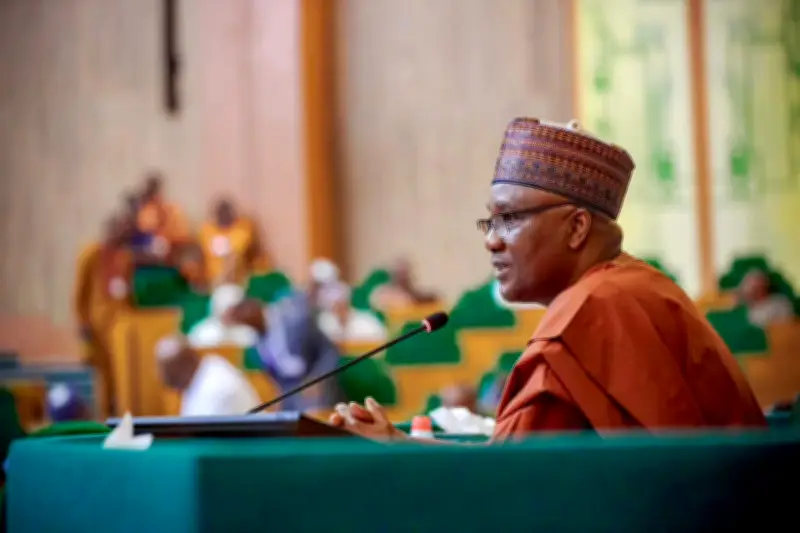
Three years after its inauguration, the 10th House of Representatives has emerged as one of the most active, controversial, and politically consequential legislative chambers in Nigeria’s democratic history. Led by Speaker Abbas Tajudeen and Deputy Speaker Benjamin Kalu, the 360-member House commenced proceedings on 13 June 2023 with promises to deepen legislative reforms, strengthen oversight of the executive, and make the legislature more responsive to citizens’ concerns.
Legislative Productivity and Key Bills
Since then, lawmakers have processed thousands of bills, embarked on ambitious constitutional amendment efforts, approved major economic reforms, and positioned themselves at the centre of national debates on security, taxation, and governance. According to House leadership, within the first three years, lawmakers introduced 2,747 bills, of which 363 successfully passed all legislative stages—89 in the first session, 148 in the second, and 126 during the just-concluded third session. Of these, 57 are Executive bills, 95 are concurrence bills from the Senate, and 2,595 are private members’ bills.
The House deliberated on 220 motions; 192 were referred to standing committees, 28 to ad hoc committees, and 121 were admitted as matters of urgent public importance. Lawmakers also considered 48 public petitions. Notable legislations passed include the Tax Reform Bills, the Student Loan (Access to Higher Education) Amendment Bill, the National Minimum Wage Bill, the National Anthem Bill, the Electoral Act Amendment Bill, and the Electricity Act Amendment Bill. The House also passed annual appropriation bills, supplementary appropriation bills, defence-related bills, cybercrime bills, regional development commission bills, and the Rivers State Emergency Rule resolution.
Constitution Review and Electoral Reforms
The constitutional amendment process, chaired by Deputy Speaker Benjamin Kalu, remains one of the most ambitious assignments. The committee conducted zonal public hearings across all six geopolitical zones and received hundreds of memoranda. Proposals include electoral and judicial reforms, local government autonomy, fiscal federalism measures, the Reserved Seats for Women Bill to improve female representation, and security sector reforms. A key proposal is the establishment of state police to decentralise policing powers, aimed at improving responses to banditry, kidnapping, insurgency, and communal conflicts. Critics argue state governors might misuse such powers against opponents. Some reforms, like the reserved seats initiative, remain works in progress due to the complexity of constitutional amendments requiring approval by two-thirds of both chambers and endorsement by at least 24 state Houses of Assembly.
Security Interventions and National Dialogue
Recognising insecurity as a pressing challenge, the House convened a National Dialogue on State Policing and broader security reform discussions involving lawmakers, security agencies, traditional rulers, civil society organisations, and policy experts. It adopted a comprehensive security reform resolution containing 54 recommendations covering intelligence gathering, inter-agency coordination, military operations, and community security frameworks.
Political Changes and Defections
The political complexion of the House has changed considerably since June 2023. At inauguration, the APC controlled 178 seats, PDP 115, Labour Party 35, NNPP 19, APGA 5, and smaller parties held the rest. Court judgments nullified some elections, notably appellate court decisions that sacked several Plateau State lawmakers elected on the PDP platform. The PDP suffered a steady erosion of its ranks due to its prolonged leadership crisis, with lawmakers defecting to other platforms. The registration of the Nigeria Democratic Congress (NDC) accelerated political realignments. By the third anniversary, the APC’s numerical strength had expanded considerably, while the emergence of the NDC reshaped opposition politics ahead of the 2027 general election.
Leadership Stability and Minority Leadership Changes
Speaker Tajudeen and Deputy Speaker Kalu retained their positions, but the minority caucus saw changes. After Kingsley Chinda resigned as minority leader and defected to the APC, the House announced a new minority leadership: Fred Agbedi (PDP, Bayelsa) as minority leader, Abdulsamad Dasuki (ADC, Sokoto) as deputy minority leader, and Mansur Soro (APM, Bauchi) as minority whip. In 2024, the House reshuffled its 134 standing committees—the highest number since 1999—reassigning chairs including Abdulmumin Jibrin to housing and habitat, Oluwole Oke to foreign affairs, and Mamudu Abdullahi to judiciary.
Controversies and Grief
The House faced several controversies. A dispute over the replacement of Mr Chinda as minority leader led to allegations of forged signatures. Deputy spokesperson Philip Agbese alleged his signature was forged on a document endorsing Ikenga Ugochinyere, but opposition lawmakers produced video evidence showing him signing it. Debate over President Tinubu’s tax reform programme erupted when Abdulsamad Dasuki alleged that published versions of tax laws differed from those passed by the National Assembly, prompting a House investigation and re-gazetting. APC lawmaker Ibrahim Auyo claimed lawmakers paid between ₦1 million and ₦3 million to process bills, motions, and petitions—a claim rejected by House leadership. The approval of emergency rule in Rivers State in March 2025 caused tensions, with lawmakers engaging in shouting matches.
The House also mourned the deaths of Deputy Chief Whip Oriyomi Onanuga, Isa Dogonyaro, Abdulkadir Danbuga, Olaide Akinremi, and Yaya Tongo at different times, creating vacancies and triggering bye-elections. Valedictory sessions provided rare moments of unity across party lines.
Differing Assessments
Assessments of the House’s performance vary sharply. Philip Agbese, deputy spokesperson, argued that the 10th session distinguished itself through unprecedented legislative productivity, robust oversight, and citizen engagement. “The 10th House of Representatives, under Rt. Hon. Tajudeen Abbas has recorded remarkable achievements since its inauguration. In three years, it has introduced over 2,200 bills, passed hundreds into law, and strengthened oversight through extensive committee work and site visits,” he said. He cited the Student Loan Act, electricity reforms, tax reforms, and cybercrime legislation as evidence of impact.
However, civil society groups offer a more cautious assessment. Auwal Rafsanjani, Executive Director of the Civil Society Legislative Advocacy Centre (CISLAC), acknowledged legislative productivity but emphasised that “legislative output should not be measured solely by the quantity of bills passed but by their quality, inclusiveness, implementation and impact on citizens’ lives.” He noted weak implementation of oversight findings, limited transparency in constituency projects and budget implementation, concerns over legislative independence, insufficient citizen participation, and inadequate responses to insecurity and economic hardship. “Ultimately, the true measure of the House’s performance will not be the number of bills passed or motions adopted, but its ability to advance accountability, protect democratic institutions, improve governance outcomes, and respond effectively to the needs and aspirations of Nigerians,” he said.
Verdict at Three Years
Three years into its tenure, the 10th House of Representatives remains a study in contrasts: energetic yet controversial, productive yet frequently criticised, reform-minded yet accused of insufficient independence from the executive. As lawmakers enter the final stretch before the 2027 elections, the defining question is whether its activism will translate into lasting institutional reforms and measurable improvements in governance. The answer may ultimately determine how history remembers the 10th House of Representatives.