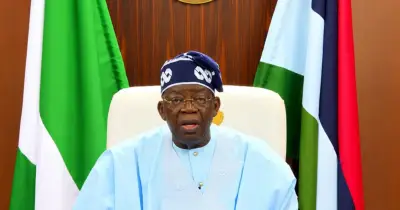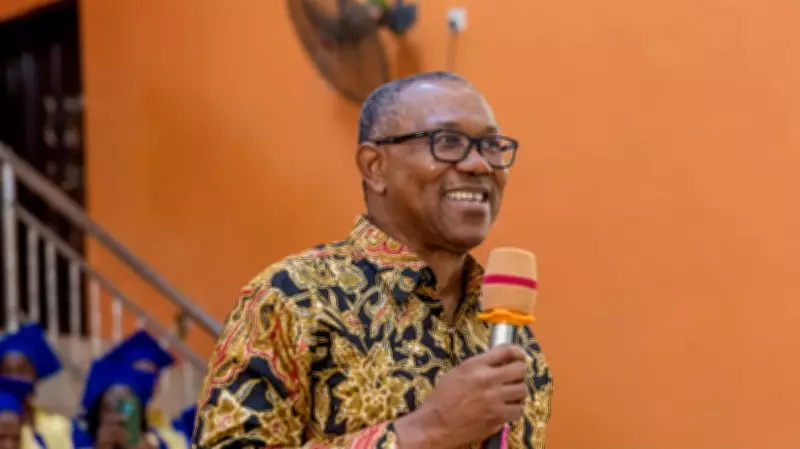
Former Labour Party presidential candidate Peter Obi has expressed concern over Nigeria's escalating debt servicing obligations, describing them as a mounting pressure on the nation's fiscal space. In a post on his official X handle on Monday, Obi reacted to President Bola Ahmed Tinubu's recent comment during a foreign tour that Nigeria is projected to spend approximately $11.6 billion on debt servicing. Obi warned that this figure should alarm anyone concerned about the country's long-term economic stability and development trajectory.
Borrowing Not Inherently Harmful
Obi argued that borrowing is not inherently harmful when managed prudently, but its effectiveness hinges on how the funds are utilized. He cited countries like Japan, the United Kingdom, the United States, the United Arab Emirates, Singapore, and Indonesia as examples of economies with high debt levels that channel borrowing into productive sectors such as education, healthcare, infrastructure, and innovation. According to Obi, such investments generate long-term economic returns and enhance repayment capacity, making debt more sustainable despite high levels of indebtedness.
Nigeria's Different Case
However, Obi noted that Nigeria's case differs significantly. He alleged that a large share of past borrowing has been directed toward consumption rather than productive investments, with limited visible developmental outcomes to justify the rising debt profile. The former Anambra State governor also pointed out that a substantial portion of the debt currently being serviced was accumulated under the present administration, which he said has continued to borrow at a significant pace.
Recent Borrowing Commitments
Obi listed recent external borrowing commitments, including about $5 billion from First Abu Dhabi Bank in the United Arab Emirates, $1 billion via UK Export Finance through Citibank London, a proposed $1.25 billion facility from the World Bank, and an additional $516 million arranged through Deutsche Bank. These commitments bring recent external loan commitments to approximately $7.8 billion. He added that ongoing domestic bond issuances have further increased the country's debt stock.
Budgetary Imbalance
Against this backdrop, Obi referenced Nigeria's 2026 budget, noting that allocations to health (₦2.46 trillion), education (₦2.56 trillion), and poverty alleviation (₦865 billion) amount to about ₦5.885 trillion combined. He contrasted this with debt servicing costs estimated at about $11.6 billion (roughly ₦17–₦18 trillion depending on exchange rate assumptions), which he said is nearly three times the combined allocation to the three critical sectors. According to him, this imbalance reflects a troubling fiscal reality in which debt obligations are increasingly crowding out investments in human capital development and poverty reduction.
Implementation Challenges
The former Labour Party presidential candidate cautioned that even where budgetary allocations exist, full implementation is not always guaranteed, while efficiency and accountability challenges may reduce their impact. He called for a re-evaluation of Nigeria's borrowing strategy to ensure that debt is used for productive purposes that can generate future revenue and support sustainable development.