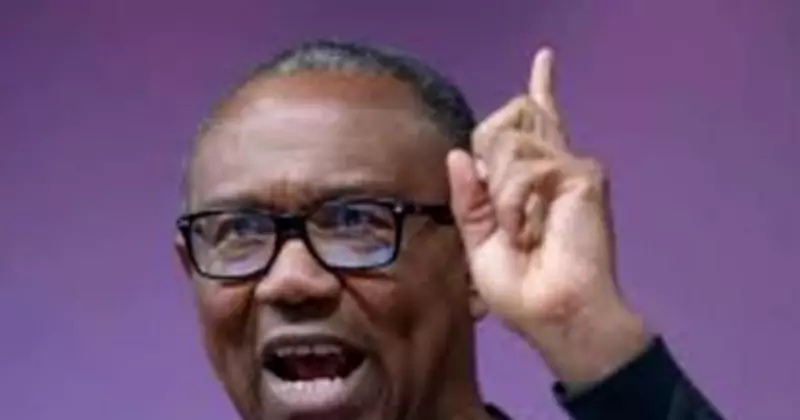
Former presidential candidate of the Labour Party, Peter Obi, has declared that he would not remain in office beyond four years if elected president of Nigeria. Obi made this statement during a recent interview, explaining that the country's dire situation demands urgent leadership and accountability, not prolonged tenure.
Obi's Stance on One-Term Presidency
When asked why he prefers a single term, Obi responded emphatically: "For stability. I will not stay a day longer than four years. I will not stay a day, a day with a gun in my head longer than four years." He emphasized that his commitment to a one-term presidency is rooted in the need for stability and decisive action.
Criticism of Current Administration
Obi used the opportunity to lambast the current government's handling of the economy, security, and agriculture. He noted that Nigeria's debt has skyrocketed under the present administration, stating, "What we have now is only two years that somebody used to borrow more than all the previous governments put together." He also condemned the persistent killings across the country, questioning how a president can remain in Abuja while hundreds die in Jos, Niger, or Benue without taking decisive action.
Agriculture and Food Import Policies
The former Anambra State governor criticized the government's agricultural policies, particularly the reliance on food imports. He pointed out the irony of war-torn Ukraine donating grain to Nigeria, saying, "Ukraine that is at war is donating grain to Nigeria. Look at what happened to us with our farmers." Obi argued that instead of supporting local farmers during crises, the government imported food, effectively undermining the agricultural sector.
Obi's Continued Advocacy
Since emerging as a major contender in the 2023 presidential election, Obi has remained vocal on governance, public spending, and economic reforms. His latest comments come amid growing national discourse on Nigeria's rising debt profile, food inflation, and security challenges in several states. The issue of presidential tenure continues to be a recurring topic in Nigerian politics, especially regarding leadership accountability and performance.