
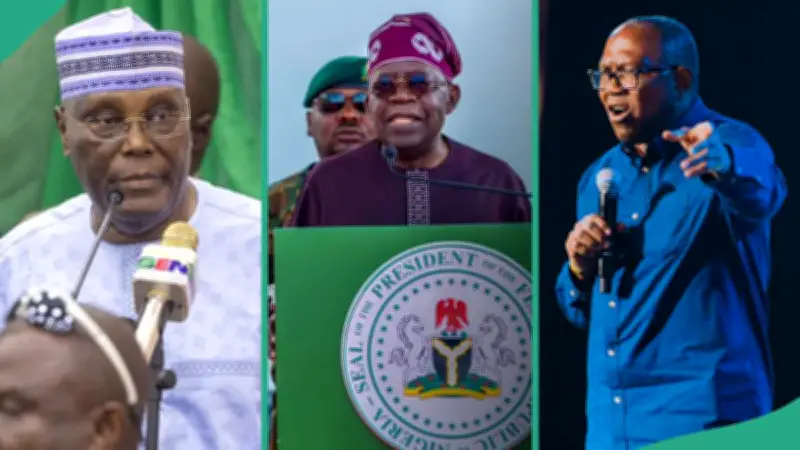
As Nigeria approaches the 2027 general elections, a significant shift is emerging: the most consequential decisions are being made not inside party secretariats, but around coalition tables. Political analysts suggest that the candidate who controls the most effective political alliance may hold the decisive advantage, regardless of party affiliation.
Opposition Talks and G-100 Push for Unity
Opposition leaders across Nigeria are in active discussions about fielding a single presidential candidate for 2027, a move that would require setting aside individual party interests in favour of a unified challenger. The G-100, a group of influential figures pressing for opposition solidarity, has been pushing the same message: fragmented parties cannot win alone.
Currently, the 2027 presidential race is between President Bola Tinubu of the ruling All Progressives Congress (APC), former Vice President Atiku Abubakar of the African Democratic Congress (ADC), and Nigeria Democratic Congress (NDC)'s Peter Obi. The opposition's discussion of a joint candidate reflects a recognition that no single party currently has the reach or resources to defeat the incumbent alone.
Wike's Pro-Tinubu Coalition Signals Broad Tent Strategy
Meanwhile, Nyesom Wike, the Federal Capital Territory Minister, has been openly talking about assembling a large political coalition to back President Bola Tinubu's re-election bid. His framing suggests that the strength of any presidential run in 2027 will rest on the breadth of its political architecture, not its party platform.
The pro-Tinubu coalition effort signals that even an incumbent president sees value in constructing a broad tent rather than relying solely on the ruling APC. This represents a meaningful shift in how Nigerian presidential politics is being approached. Historically, party affiliation, particularly membership of a ruling party with access to federal resources, has been considered a major factor in determining electoral outcomes.
Alliances Over Party Structures: A New Political Logic
What is emerging from all three developments is the same strategic logic: in 2027, the candidate who controls the most effective political alliance may hold the decisive advantage, regardless of which party's flag he or she is running under. The current landscape suggests that personalities, interest groups, regional power brokers, and cross-party structures may carry more weight than the party label at the top of a ballot.
If this trend holds, the 2027 election could effectively become a contest between two large, multi-interest coalitions rather than a traditional party-versus-party race. Voters may find themselves choosing between blocs defined by the figures and factions within them, with party identity playing a secondary role.
Implications for Nigerian Electoral Politics
That outcome would mark a significant evolution in Nigerian electoral politics, placing fresh importance on negotiation, deal-making, and the ability to hold together diverse political interests under a single presidential project.
In a related development, Legit.ng earlier reported that Senator Saliu Mustapha picked the PDP senatorial nomination form on Friday, hours after announcing his resignation from the APC. Mustapha's move sets up a direct 2027 electoral clash with Kwara Governor AbdulRahman AbdulRazaq, who holds the APC ticket for the same district. Former Senate President Bukola Saraki and opposition stakeholders were reportedly involved in courting the senator to the PDP.




