
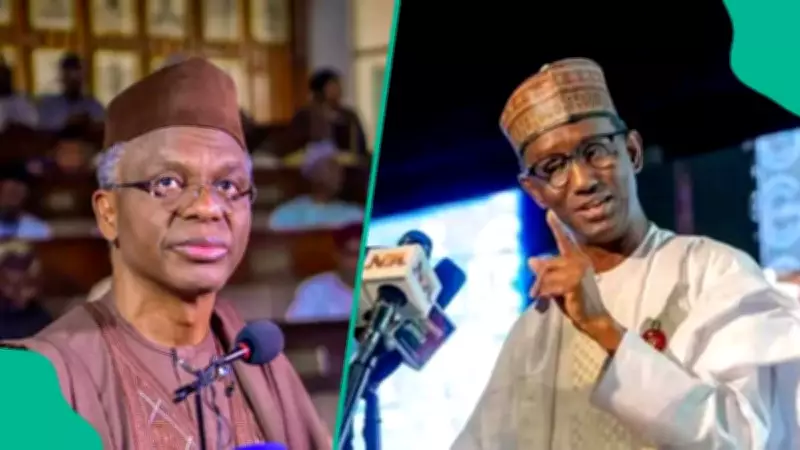
The Unraveling of a Political Brotherhood
Political history often focuses on grand speeches and decisive battles, but some of the most significant shifts occur in the quiet breakdown of alliances. The deteriorating relationship between Nasir El-Rufai and Nuhu Ribadu represents one such pivotal moment in Nigerian politics, where former allies have become bitter rivals in a struggle for influence and legacy.
Historical Parallels of Broken Alliances
Throughout history, political partnerships have frequently collapsed under the weight of competing ambitions. In ancient Rome, the strategic alliance between Julius Caesar and Pompey disintegrated into civil war following personal and political tensions. Centuries later, American founding fathers Thomas Jefferson and John Adams experienced a similar rupture, spending years as political adversaries before eventually reconciling.
These historical patterns find contemporary resonance in Nigeria, where the once-close relationship between El-Rufai and Ribadu has transformed into a public confrontation. What began as shared reformist goals during the Obasanjo administration has evolved into a complex power struggle with implications for national security and political stability.
The Reformist Partnership That Once Was
Between 2003 and 2007, both men served as prominent figures in President Olusegun Obasanjo's reform agenda. Ribadu pioneered the Economic and Financial Crimes Commission (EFCC), pursuing high-profile corruption cases with unprecedented vigor. Simultaneously, El-Rufai, as Minister of the Federal Capital Territory, implemented controversial urban reforms that challenged established interests in Abuja.
Their collaboration extended beyond professional duties, with accounts suggesting Ribadu provided personal support to El-Rufai during family tragedies. This depth of connection makes their current estrangement particularly significant, indicating that their rift involves more than mere political disagreement.
Contrasting Personalities and Approaches
The two politicians embody dramatically different styles of leadership and communication. El-Rufai operates with fiery rhetoric and public confrontation, earning a reputation as an outspoken intellectual unafraid of controversy. His recent allegations about phone tapping and toxic chemical procurement have generated significant media attention.
In contrast, Ribadu maintains a more reserved demeanor, preferring institutional channels and measured responses. As National Security Adviser, he wields considerable influence through official mechanisms rather than public declarations. This dichotomy between El-Rufai's vocal approach and Ribadu's quiet authority has become increasingly apparent as their conflict has escalated.
The Turning Points in Their Relationship
The first visible strain emerged around 2011 when Ribadu accepted a presidential nomination that reportedly surprised El-Rufai. Their political paths continued to diverge through various party realignments until both became supporters of President Bola Tinubu's 2023 campaign.
The decisive rupture occurred during Tinubu's ministerial appointments, when El-Rufai's nomination was unexpectedly withdrawn. El-Rufai publicly suggested that a damaging security report from Ribadu's office contributed to this outcome, though these claims remain unverified. This incident transformed their private tensions into open hostility, with El-Rufai explicitly declaring the end of their friendship.
Broader Implications for Nigerian Politics
This conflict extends beyond personal animosity to reflect deeper structural issues within Nigeria's political landscape. Observers note that the rivalry may involve positioning for the 2031 presidential election, when power is expected to return to northern Nigeria. Ribadu's current position as National Security Adviser places him strategically within power structures, while El-Rufai's exclusion from ministerial appointments has left him operating from outside formal government channels.
The public nature of their dispute raises concerns about how personal rivalries might affect national governance. As both men trade accusations about security matters and political conspiracies, questions arise about whether this conflict serves public interests or merely represents a struggle for personal relevance and power.
Character Assessments and Leadership Questions
Former President Obasanjo's published criticisms of El-Rufai's loyalty and truthfulness add another dimension to this political drama. In his memoir "My Watch," Obasanjo described El-Rufai as having "a penchant for reputation savaging" and questioned his consistency in maintaining loyalties.
These character assessments contrast with Ribadu's reputation for institutional discipline and measured responses. The fundamental question emerging from their conflict concerns what qualities Nigerians should prioritize in their leaders: intellectual brilliance or reliable character, outspoken advocacy or quiet competence.
The Path Forward and National Consequences
As this political drama continues to unfold, its impact extends beyond the two individuals involved. Their public feud occurs against a backdrop of significant national challenges, including economic pressures and security concerns. Some observers question whether this conflict distracts from more pressing issues requiring governmental attention.
Political history suggests that reconciliation remains possible, as demonstrated by numerous historical examples of former rivals eventually finding common ground. However, for now, the El-Rufai-Ribadu conflict represents a significant development in Nigeria's political landscape, revealing the complex interplay between personal ambition, political survival, and national governance in contemporary Nigerian politics.




