
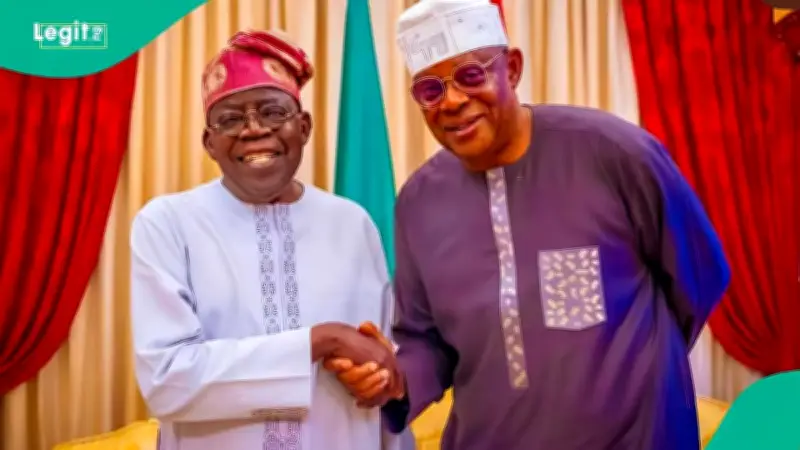
Public affairs commentator Simsim Jaga has examined the growing political influence of House of Representatives member James Abiodun Faleke, questioning the lawmaker’s long-term ambitions and his role within the All Progressives Congress (APC). In a commentary titled “Faleke’s Rising Influence: What Does He Really Want?”, Jaga traced Faleke’s political journey from the 2015 Kogi state governorship election to his current position as one of the prominent political figures associated with President Bola Tinubu.
From 2015 Kogi Election to National Prominence
Jaga began his assessment with the 2015 Kogi governorship election, in which Faleke was the running mate to the late Prince Abubakar Audu, the APC candidate. Audu was leading in the election when he died on November 22, 2015, during the collation of results. Following Audu’s death, Faleke argued that, as his running mate, he should inherit the mandate and be declared governor-elect. He communicated his position to the Independent National Electoral Commission (INEC) and challenged the APC’s decision to replace Audu with Yahaya Bello, who had finished second in the party’s primary. The dispute eventually reached the Supreme Court, which ruled against Faleke.
Jaga described the episode as a defining chapter in Faleke’s political career and one that helped shape his emergence as a prominent political actor. The commentary comes amid renewed debate within the APC following the party’s defeat in the August 15, 2026, Osun governorship election.
Osun Defeat Renews Questions About APC Strategy
Jaga linked the latest scrutiny of Faleke to the APC’s defeat in the 2026 Osun governorship election. Governor Ademola Adeleke defeated the APC candidate, Bola Oyebamiji, with 511,067 votes against Oyebamiji’s 444,815 votes. Faleke was involved in the APC campaign and was among the party figures who participated in the electioneering efforts. His public exchanges with Afrobeats singer Davido over allegations concerning the conduct of the election also attracted attention during the campaign.
According to Jaga, the defeat has generated questions within APC circles about the party’s campaign strategy and the influence of key political actors. The commentator noted that some Osun APC stakeholders had blamed former governor Gboyega Oyetola for the defeat, while other accounts had raised questions about campaign strategy and the role of different political actors. Jaga noted that the claims remained subjects of political debate.
Faleke’s History of Political Controversy
Jaga also examined previous political controversies in which Faleke’s name had allegedly featured. He cited the political crisis in the Edo State House of Assembly, where he said Faleke was mentioned in political circles in connection with developments surrounding the speakership. He also referred to the 2016 crisis in the Kogi State House of Assembly, during which a legislator allegedly accused Faleke of contributing to instability in the chamber.
Jaga said it remained debatable whether Faleke had directly intervened in those episodes or whether his name had become associated with broader political disputes. He nevertheless noted the frequency with which Faleke had surfaced during major political battles.
What Are Faleke’s Political Ambitions?
The commentator argued that the bigger question was not simply Faleke’s current influence but where his political trajectory could lead. Faleke’s political journey from the Lagos political establishment to the House of Representatives has brought him close to the centre of political power. Jaga said this trajectory had fuelled speculation about possible future roles for Faleke, including the governorship of Kogi State and leadership positions within the National Assembly.
He also referred to speculation about a possible future presidential ambition. Jaga stressed, however, that these remained political speculation and were not established plans announced by Faleke. The commentator added that there have also been reports that some of Faleke’s associates have advised him to concentrate on Tinubu’s 2027 re-election campaign rather than pursue a Kogi governorship project that could unsettle the APC’s existing structure in the state.
The Tinubu Factor and 2027 Outlook
For Jaga, Faleke’s growing political profile also raises questions about the relationship between influential political allies and the wider Tinubu political project. The commentator argued that the APC’s defeat in Osun should prompt an assessment of the party’s internal operations, particularly its campaign planning and management of political relationships.
Jaga said Tinubu’s political strength had partly rested on his ability to build and manage political networks. He cautioned, however, that political networks could become liabilities when loyalty to individual political actors begins to compete with loyalty to the broader political project. Jaga concluded that Faleke’s rising profile may ultimately be less about his current activities than what his influence could mean for the APC ahead of the 2027 general election.
He posed a central question: whether Faleke was simply an influential ally helping to advance Tinubu’s political project or whether he was building an independent political base that could eventually compete with it. For now, Jaga said the answer remained unclear. He argued that following the APC’s setback in Osun, Tinubu and the ruling party may need to pay closer attention to political dynamics within their own camp as they prepare for the 2027 elections.




