
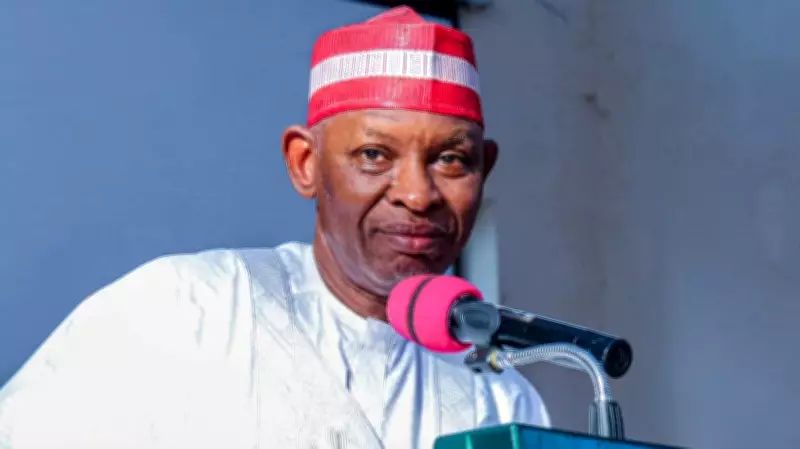
Why Murtala Sule Garo Is the Right Deputy for Governor Abba in 2027
As Kano State steadily progresses toward the 2027 general elections, political alignments, quiet negotiations, and strategic calculations are already shaping the region's power dynamics. Beyond mere slogans and elite endorsements, one reality remains constant: Kano politics has its winning card firmly rooted at the grassroots level. It is within this context that I argue Alhaji Murtala Sule Garo is the ideal candidate to deputize Governor Abba Kabir Yusuf in 2027. This interplay between Governor Abba's temperament and Garo's grassroots credibility becomes both relevant and compelling for the state's future.
Grassroots Mobilization as a Key Factor
Kano is not a state where elections are decided solely in boardrooms or through high-level meetings. Wards, polling units, community leaders, and informal networks still play a decisive role in determining electoral outcomes. Over the years, Garo has built a reputation as one of the most effective grassroots mobilizers in Kano. His political strength is not rooted in noise or visibility on social media platforms, but in deep, genuine connections with ordinary people, including traders, youths, elders, and local influencers who ultimately decide or influence votes at the ballot box.
As political competition intensifies, particularly with Senator Barau Jibrin's growing ambition to consolidate control within the APC in Kano, grassroots strength becomes even more critical. Barau's strategy appears increasingly elite-driven, focused on institutional control and party structure manipulation. Historically, in Kano, elite consolidation without popular backing often collapses during elections. Alhaji Murtala Sule Garo represents the opposite approach: his style is inherently people-driven. His relevance is amplified precisely at a time when mass mobilization, rather than mere party supremacy, will determine who governs Kano in 2027.
Cross-Camp Acceptance and Non-Toxic Politics
Most importantly and interestingly, Garo remains one of the very few political figures who can safely traverse the Kwankwasiyya political camp without facing hostility or rejection. This is simply because he is a natural giver and a bridge builder. Across political divides, Garo is widely regarded as someone who empowers rather than exploits, who builds people up rather than merely harvesting votes for personal gain.
Closely related to this is his deliberate avoidance of toxic politics. In an era marked by insults, misinformation, factional hatred, and character assassination, Garo has consistently chosen restraint over provocation. He does not trade in abuse, ethnic baiting, or political demonization. This mature political conduct has earned him respect even among opponents and explains his unusual acceptability across rival camps, making him a unifying figure in a often divisive landscape.
Relationship with Ganduje and Political Stability
Equally important is Garo's long-standing relationship with Former Governor Abdullahi Umar Ganduje. Ganduje's political machinery has always relied on trusted grassroots operators who understand the political terrain beyond official statistics and surface-level analysis. Garo has remained central to this network, not just as a loyal ally but as a dependable mobilizer who can translate political decisions into popular acceptability and support.
However, Garo's closeness to Ganduje has not distanced him from the people. On the contrary, he remains accessible and grounded, an increasingly rare quality in contemporary politics where elites often lose touch with their constituents. His ability to position himself astride political elites and grassroots communities makes him a stabilizing force rather than a polarizing figure, which is crucial for maintaining harmony in Kano's volatile political environment.
The Role of Deputy Governor in 2027
The deputy governorship in Kano cannot be treated as a ceremonial position in the coming political cycle. The next administration will face significant opposition pressure and heightened public expectations. It will require a deputy governor who can defend the administration politically, mobilize support at critical moments, and neutralize opposition narratives at the community level. Garo fits into this role not as an alternative power centre, but as a political shock absorber, someone capable of reinforcing Governor Abba's leadership rather than competing with it for influence or control.
Ultimately, the argument for Garo is not about sentiment, personal loyalty, or factional advantage. Rather, it is about political realism; a clear-eyed view of how politics plays out in Kano State. Kano's political history rewards leaders who understand the streets as much as the system. If Governor Abba's 2027 ambition is about consolidation, stability, and electoral strength, choosing a deputy with proven grassroots credibility, cross-camp acceptance, and a record of non-toxic politics will surely prove decisive for success.
Yassir is a political analyst. He writes from Kano.




