
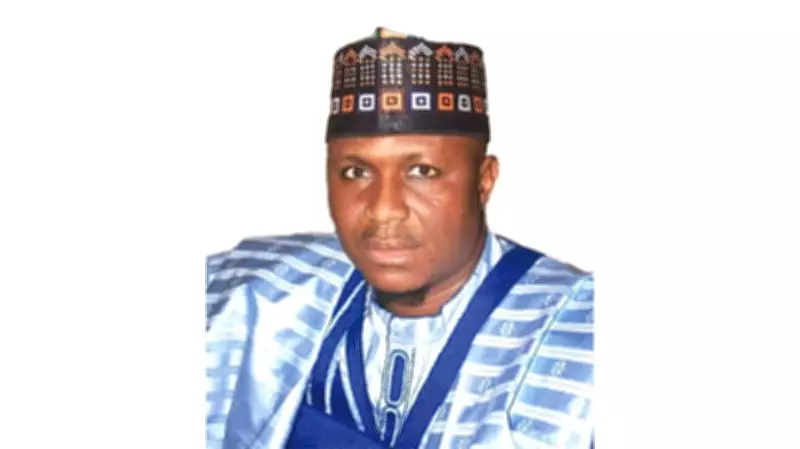
Why Ibrahim Lamido's Departure from APC is a Blessing for Sokoto Politics
In the often turbulent landscape of Nigerian politics, the departure of a sitting senator from a ruling party is typically framed as a seismic event – a blow to the party and an indication of a looming crisis in its ranks. However, the recent announcement by Senator Ibrahim Lamido, representing Sokoto East Senatorial District, that he has resigned from the All Progressives Congress (APC) is being met with a reaction that defies conventional political logic. Rather than regret over his exit, the response from the APC Sokoto State chapter has been one of wild jubilation, signaling a deeper narrative about his political relevance.
A Party's Relief: Celebrating an Exit
When a political party greets the departure of one of its serving senators as a huge relief and even celebrates it, it speaks volumes about that individual's relevance, or lack thereof, within the party structure. As one party member, Garba Idris, bluntly put it, the resignation of Lamido is a good riddance to bad rubbish, and it is absolutely of no consequence. These sentiments did not emerge in a vacuum; they reflect a long-standing frustration with a man widely perceived as having long abandoned the party before formalizing his exit.
Stripped of media embellishment, Lamido's resignation is neither a political earthquake nor a hint of a crisis in the APC. Instead, it is a predictable and inconsequential footnote that creates no vacuum within the party. His exit, announced via a post on X (formerly Twitter), cited persistent insecurity and the welfare of his constituents as justification. To the uninitiated, these sound like the grievances of a principled politician, but to those who have watched his lackluster trajectory, it appears more as a desperate gambit of a political adventurer.
Questionable Motives and Timing
The timing of his resignation further undermines his stated motives. Why now? Which people? And what has he done to alleviate their suffering? Why not earlier, when the alleged failures he decries were worse? The absence of clear, coherent answers suggests that his decision is less about principle and more about political repositioning. In Nigeria, a predatory brand of politics has emerged, where individuals like Lamido treat parties as mere Special Purpose Vehicles (SPVs) to be boarded during election seasons and abandoned once they have reached their destination.
Lamido's relationship with the APC appears largely transactional, reflecting a broader pattern in which some political actors treat parties as mere vehicles for electoral success. It is a well-documented irony that a man now claiming to stand for the good people of Sokoto East was, by most accounts, unable to secure a majority in his own polling unit, ward, or local government area during the 2023 elections. Worst still, he has been an absentee representative, forgetting that he was carried across the finish line by the formidable machinery of the APC.
Performance and Accountability Issues
Beyond questions of loyalty lies a more fundamental issue – performance. Lamido's justification for his resignation hinges on concern for his constituents, particularly regarding insecurity and poverty. This raises an unavoidable question: While no one can deny the security challenges facing the country, especially in the North West, what did the distinguished senator do about it? Lamido's record in the Senate reflects a troubling absence of impact. He has neither sponsored a bill nor moved a motion since assuming office, and in a legislative environment where even symbolic actions can amplify critical issues, his silence was deafening.
This lack of engagement underscores a performance that is disappointing and wholly indefensible. Unfortunately, the mass media often fails in its responsibility to hold figures like Lamido accountable by neglecting to ask hard questions. Journalism, at its best, holds power to account; it does not serve as a megaphone for unverified claims. In this case, many outlets failed to ask obvious questions, such as where are the motions or bills to support his claims about insecurity.
Governance and Real Work in Sokoto
Lamido ought to know that representation goes beyond being addressed as distinguished. It demands active engagement, legislative initiative, and persistent advocacy. To now claim that he is leaving the APC out of concern for his constituents without any demonstrable record of effort is political deception of the highest order. Meanwhile, the real work of governance continues in Sokoto State. To the credit of the APC-led administration under Governor Ahmed Aliyu, governance has remained the priority.
Since taking office, Governor Ahmed Aliyu has demonstrated a clear commitment to addressing insecurity through sustained logistical support to security agencies, improved coordination, and strengthened grassroots structures such as the Community Guard Corps. His administration's consistent efforts and collaboration with federal authorities underscore a focused approach to restoring peace in the state. Ongoing infrastructure projects, healthcare reforms, and educational initiatives suggest a government focused on delivering its mandate.
Conclusion: A Stable Future for Sokoto
There is little doubt that his failed attempt to factionalize the APC in Sokoto State is responsible for his decision to run from the party. Although the APC Constitution clearly outlines sanctions for anti-party activities, the party chose not to discipline Lamido due to his political irrelevance. Political parties cannot function effectively if members are free to undermine them without consequence. Enforcement of party constitutions is essential for maintaining credibility and coherence.
Thankfully, with the experience of Lamido, the party appears to be moving towards a model where character, competence, and discipline are non-negotiable. His descent from political beneficiary to internal saboteur is instructive. The APC in Sokoto remains an Iroko tree; a thousand Ibrahim Lamidos throwing pebbles at its trunk cannot shake it. His exit creates no vacuum; rather, it allows the party to focus on leaders who understand that power is a trust. For the people of Sokoto East, the implications are immediate: they deserve a representative who actively engages in lawmaking and delivers tangible results.




