
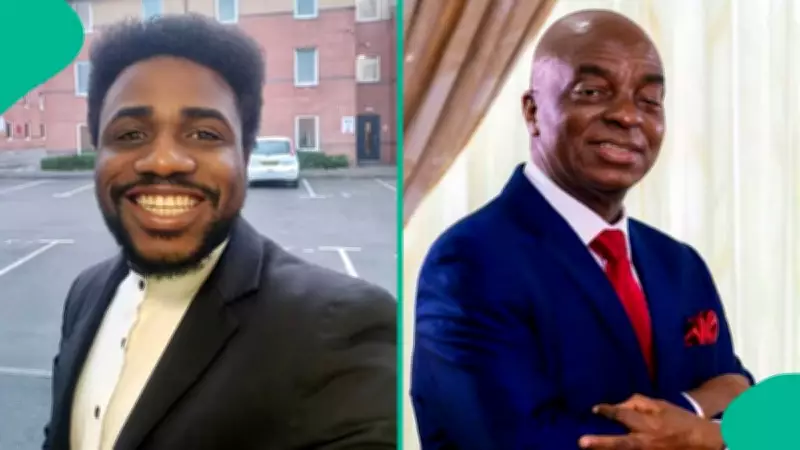
Nigerian Man Envisions Bishop Oyedepo as President, Sparks Widespread Debate
A Nigerian man has ignited a significant conversation across social media platforms by sharing his perspective on what Nigeria might resemble if Bishop David Oyedepo, the founder of Living Faith Church Worldwide, were to assume the role of the country's president. The individual, identified on the microblogging platform X as @Prestigious_Gt, posted a video of the prominent cleric delivering a sermon during a church service, which served as the catalyst for this speculative discussion.
Video Sermon Highlights Early Spiritual Foundation
In the shared video clip, Bishop Oyedepo recounted his early spiritual journey, detailing how he committed his life to God at the age of fifteen. He explained that after becoming born again, he encountered a biblical passage describing believers as kings, an idea he credited with fundamentally shaping his mindset from a young age. This personal testimony formed the basis of the online user's admiration and subsequent political speculation.
Social Media User Praises Leadership and Organizational Skills
The X user responded to the sermon with enthusiastic praise for the cleric's intelligence and leadership capabilities. "No wonder he is so successful, he has had a strong mentality since 15 years of age," the user wrote in the post that has since garnered substantial attention. The individual further elaborated on his vision, suggesting that if Bishop Oyedepo were to lead Nigeria, the nation might operate with the same level of organization and structure observed across the global network of Winners' Chapel branches.
According to the post, the cleric's demonstrated ability to manage and expand a worldwide religious organization indicates strong leadership qualities that could potentially translate to national governance. The user explicitly stated, "I always say pastor Oyedepo is a very intelligent man and if he happens to rule this country, our life would have been like the way winners chapel all over the world is." He additionally encouraged others to read some of Bishop Oyedepo's published works to gain deeper insight into what he described as the pastor's distinctive leadership philosophy.
Mixed Reactions Flood Social Media Platforms
The speculative post generated diverse and passionate responses from other social media users, reflecting broader societal debates about leadership and governance in Nigeria. Some commenters expressed strong support for the idea, praising Bishop Oyedepo's spiritual influence and organizational achievements.
User @PwettyTem commented, "I look at him every time and I thank God he connected me to him spiritually. I listen to his teachings everyday btw. If you come close to me, you will feel the connectivity. My mind set is very different from the norms."
However, other users expressed skepticism and outright disagreement with the premise. @lordleomax offered a contrasting perspective, stating, "He won't do better as the president of this country. When they say the problem of this country is leadership, they are not referring to the lack of quality personalities that will lead but how we conceive, confer and idealise leadership in this part of the world."
Another user, @O_S_Samuel, added a note of caution with the comment, "Bishop oyedepo is truly blessed but don't ever imagine him being the president, he might fail woefully." These opposing viewpoints highlight the complex and often polarized nature of political discourse in contemporary Nigerian society.
Contextual Background and Related Developments
This discussion emerges within a broader context of public interest in religious figures and their potential influence on national leadership. Notably, the conversation references previous coverage involving Bishop David Abioye, who marked his 65th birthday recently and had previously shared a powerful birthday message for Bishop Oyedepo during the latter's 71st birthday celebration in 2025. These interconnected narratives underscore the ongoing public fascination with the intersection of spiritual leadership and national governance in Nigeria.
The original post and subsequent reactions continue to circulate across digital platforms, stimulating conversations about:
- The qualities desired in national leadership
- The potential translation of religious organizational skills to political governance
- Public perceptions of prominent religious figures in secular roles
- The broader debate about Nigeria's leadership challenges and potential solutions
As the discourse evolves, it reflects deeper societal questions about governance models, leadership selection, and the role of faith-based organizations in national development. The conversation remains active, with new participants continuing to contribute diverse perspectives on this speculative yet compelling topic.




