
Tinubu's Aide Firmly Rejects Peter Obi's Assertion of Nigeria as a One-Party State
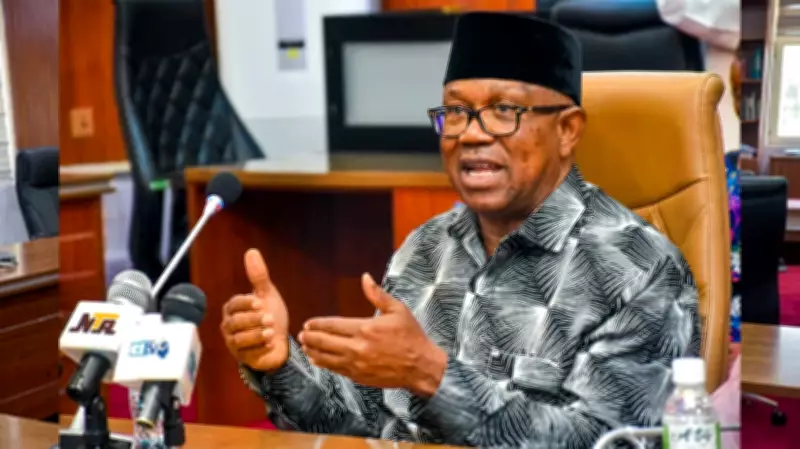
Olusegun Dada, a Special Assistant to President Bola Tinubu on Social Media, has issued a sharp rebuttal to former presidential candidate Peter Obi's recent claim that Nigeria is being steered towards a one-party system. Dada described Obi's statement as not only misleading but also an insult to the intelligence of sensible Nigerians who are aware of the country's vibrant multi-party democracy.
Obi's Call to Defend Democracy Sparks Controversy
Peter Obi, who contested the presidency and now leads the African Democratic Congress (ADC), had earlier voiced concerns about efforts to transform Nigeria into a one-party state. In a public address, Obi declared, "We are saying that our democracy must not be killed. We say NO to a one-party system, and for that, today, we're calling out Nigerians who believe in unity, peace, and security of our country to join us as we defend democracy in our land." He emphasized that he, along with other ADC leaders and democracy advocates, is actively resisting what he perceives as a threat to Nigeria's political pluralism.
Dada's Strong Rebuttal and Defense of Nigeria's Political Landscape
In a swift and forceful response, Olusegun Dada dismissed Obi's agenda as "dead on arrival." He pointed to concrete data to counter the claim, stating, "Mr Obi, there are 21 registered political parties by @inecnigeria in Nigeria as of today. Almost half of these parties have elected representatives in both national and sub-national governments in Nigeria." Dada further highlighted that the Labour Party, on which Obi previously contested before switching to the ADC, still maintains elected representatives in the national assembly and controls Abia State, underscoring the diversity of political representation.
Dada accused Obi of attempting to paint Nigeria as a one-party state due to what he termed the "self-inflicted shot to leg" of Obi's current political vehicle, the ADC. He asserted that such rhetoric undermines the reality of Nigeria's democratic framework and disrespects citizens who value the existing multi-party system. This exchange highlights ongoing tensions in Nigeria's political discourse, with leaders clashing over interpretations of democratic health and governance.




