
The Origins of Ifa Divination
The origin of the Yoruba consulting oracle, known as Ifa, is traceable to the people's oral tradition way back in antiquity. Olodumare, the supreme God of the Yoruba, mandated his arch-prophet, Orunmila, to deploy his God-given wisdom to organize and manage human society. Orunmila lived both in heaven and on earth, having access to heavenly places while dwelling among men. On one occasion, Orunmila's human nature prevailed. One of his children insulted him, and he became so enraged that he decided to return to heaven. After his departure, society fell into great distress. Many entreaties were made for him to return to Ile-Ife, his ancestral base on earth, but Orunmila rebuffed them. Eventually, he offered the people an oracle to be consulted whenever they needed his counsel or assistance. This timeless oracle is Ifa.
The practical utility of Ifa in the affairs of the people through divination is perhaps its best-known function. Ifa embodies the totality of Yoruba intellectual culture and serves as the scripture of Yoruba religion, with texts containing over 4,906 chapters. Orunmila, the founder of the Ifa system, is a human being deified as an orisa, or messenger of God. There is no matter on which Ifa may not be consulted. Though a sacerdotal institution, Ifa's secular precepts are couched in scientific formulae or theorems. In Yoruba cosmology, no knowledge lies outside Ifa's purview, and it is widely consulted on an infinite range of issues. The acknowledgment of Ifa's eclectic knowledge is rendered in the Yoruba idiomatic expression: "Omoran bi Ifa 'o si" — a knowledgeable one like Ifa does not exist. Ifa divination is the medium for learning the mind or will of God regarding, for instance, the suitability of a candidate for obaship.
The Symbolism of the Calabash Choice
Popular narrations detail the facts of coronation rites of kings, even though only initiates are admitted. Covered calabashes containing different household culinary items — such as salt, cloves, cooking oils, pepper, bitter kola, and honey — figuratively representing the projected tenure of the incoming oba are presented before him for his choice. This symbolic ceremony presumably determines the trajectory of the oba's reign. Peace, tranquility, social development, and business growth are encoded in the oba's choice, as are pain, disaster, plague, distress, and a general sense of unease. When a king's reign is marked by social agony, economic distress, afflictions, plagues, war, insecurity, and banditry, it is generally believed that the king made a choice evidencing that state of affairs.
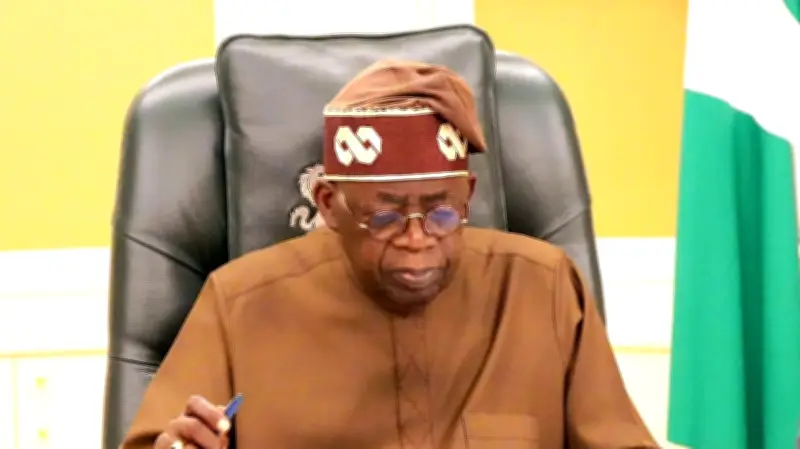
The contemporary state of things in Nigeria appears to suggest that at "coronation," the Tinubu presidency's choice foreshadowed an uneasy situation by its probable selection of an empty calabash, or one containing pepper, charcoal, or a parrot's eggs — each representing abdication, social unrest, death, or an ominous fate. A weary or sad situation is the end result of a wrong choice. Its symptoms fatally suggest that there can be no real substitutes. This situation is sadly true in its perceptual values; its effects are felt everywhere and by everyone. Its symbolism is a form of transcendental knowledge, but peace and joy cannot be arrived at in a vacuum. The people are today objects and subjects of the unsurmountable dilemma of someone else's wrong choice or ill preparation. The lack of effort of imagination on the part of the people may be ascribed to them as their own flaw that has contributed to their epic tragedy. In it all, Ifa has been the predictive agent pointing toward results or consequences that were unheeded.
The Myth of Sisyphus and Tinubu's Labor
Perceptive watchers of the Nigerian condition have likened it to the parallel drawn by mythographers from the story of Sisyphus, a king of Corinth condemned to roll a huge stone uphill, only for it to roll down again. His labor, known as a 'Sisyphean task,' demands endless and often fruitless effort. The futility of man's endeavors is well captured in the myth of Sisyphus. Classical mythologists may have clairvoyantly envisioned the reign of President Bola Tinubu in this story. Tinubu has publicly approved the lores of the lackluster administration of Muhammadu Buhari, his predecessor. Buhari, who in popular estimation ran the country aground by his indifference to or alleged connivance with perpetrators of terrorism, banditry, kidnappings, and graft, is the hero of Tinubu. Buhari's policies and programs Tinubu has sworn to continue under a nebulous Renewed Hope agenda.
For reasons of political expediency, Tinubu has turned a blind eye and a deaf ear to issues threatening the continued corporate existence of Nigeria. But Karma, that unyielding record keeper, has noted Tinubu's role in egging Buhari on even as the latter despoiled the land, rendered the fields grey, and made homes desolate. It appears that the Buhari/Tinubu era is the sad chapter of national history closest to the gory nightmare of the Biafran debacle — the tragic experiences of an unnecessary war, the moral predicament of society, material hardship, the failure of national institutions, the repudiation of age-long societal values, the establishment of a new debilitating ethos in public responsibility, the ascendancy of a vile generation of unfeeling leaders, and the emergence of a national elite that is duplicitous and complicit with evil.
The Tinubu labor, like the excruciating labor of Sisyphus, appears to be a contradiction in terms. It is labor in the wrong direction and thus in vain because it contradicts the conditions for fruitful labor. Even the avowed skills of a Master Strategist are inadequate to prevent the cataclysmic fall of a stone predestined to roll back each time in faithful obedience to the unalterable law of nature.
Ifa's Wisdom on Choices
In Otura Meji, Ifa discloses a hidden truth: Every human being sent by Olodumare to the earth must go before the Orisa-nla to choose the blessings he desires, with the condition that he cannot choose more than one blessing. Whatever a man's preference — be it wealth, fame, wives, progeny, or prosperity of any kind — the choice is free and unlimited except by the protocol of one blessing per man. Our heavenly choice determines our earthly life; a wrong choice above results in suffering below. This is akin to the choice an oba confronts at the beginning; his choice determines the success or otherwise of his reign. By deductive reasoning, we can all safely guess the choice the leader made at the beginning. The Bible observes in Proverbs 29:2: "When the righteous are in authority, the people rejoice. But when the wicked beareth rule, the people mourn." The people of Nigeria are mourning.




