
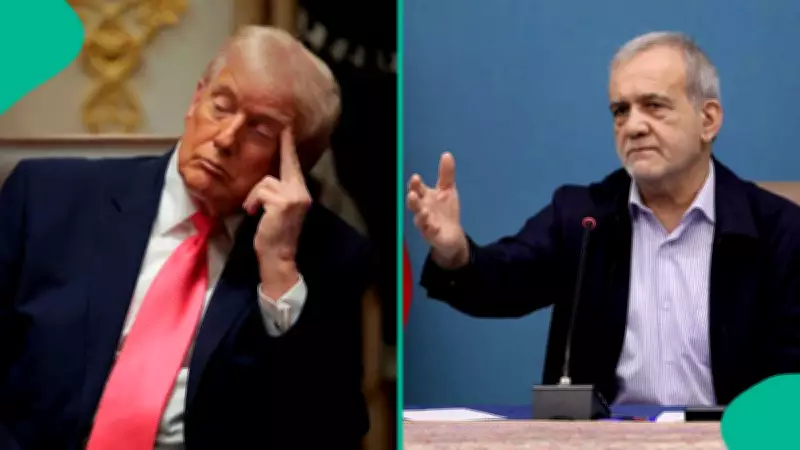
Trump's Personal Gauge for Ending Iran War as Casualties Increase
President Donald Trump has asserted that the ongoing military conflict with Iran will terminate solely when he personally deems the moment appropriate, emphasizing he will know the war is over "when I feel it in my bones." This statement was made during an interview on The Brian Kilmeade Show, nearly two weeks after joint United States and Israeli strikes against Iran commenced, with Trump maintaining that victory is already within grasp.
Confidence in Swift Post-Conflict Recovery
During the interview, Trump expressed optimism about a rapid stabilization following the cessation of hostilities. He remarked, "When it's over –– and I don't think it's going to be long –– when it's over, this is going to bounce back so fast." This perspective comes as the death toll mounts and regional tensions intensify, highlighting the high stakes of the conflict.
Trump's Unilateral Decision-Making on War Conclusion
When questioned about the criteria for ending the war, Trump reiterated his reliance on personal intuition, stating, "When I feel it. When I feel it in my bones." Pressed on whether this would be a collaborative decision, he praised key administration and military figures, including Dan Caine, Defence Secretary Pete Hegseth, Secretary of State Marco Rubio, and Vice President JD Vance, noting, "I've got all good people. We've got a great group."
Evolving Timelines and Declarations of Victory
Trump has provided fluctuating estimates regarding the war's duration. Initially, two days after the attacks began, he suggested the operation might last "four to five weeks" or longer. A week later, on March 9, he described the campaign as "an excursion into something that had to be done," adding, "We're getting very close to finishing that too." By Wednesday, in comments to Axios, Trump claimed there was "nothing left" to bomb in Iran, insisting U.S. forces were advancing faster than anticipated and asserting, "Any time I want it to end, it will end." Later that same day, at a rally in Kentucky, he declared that Washington had already secured victory, stating the conflict was "over."
Regional Escalation and Protests
As the war enters its third week, protests have erupted in Tel Aviv, with demonstrators criticizing Israel's attacks on Iran. This unrest coincides with heightened tensions across the Middle East, as reported by Al Jazeera. The Iranian government has launched missile barrages at Israel and claimed responsibility for attacks on U.S. bases in Iraq and Kuwait. On March 15, Tehran escalated its rhetoric, vowing to kill Israeli Prime Minister Benjamin Netanyahu, with Iran's IRNA news agency posting on X, "IRGC vows to pursue and kill 'child-killer' Netanyahu if he is still alive." In response, Israel has targeted key figures within Iran's leadership, further complicating the geopolitical landscape.
Implications for Global Security and Diplomacy
Trump's comments underscore a highly personalized approach to military strategy, raising questions about the role of diplomatic channels and international cooperation in conflict resolution. The shifting timelines and declarations of victory reflect the volatile nature of the situation, with potential repercussions for regional stability and global security. As casualties continue to rise, the international community watches closely, awaiting clearer signals on the path to peace.




